Taylor & Francis

African Journalism Studies Template

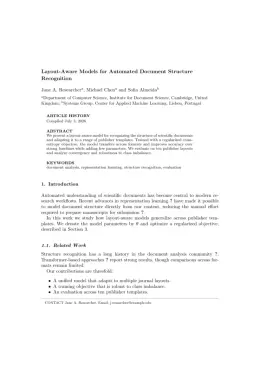
Write in a clean editor, then format for African Journalism Studies in one click — DocuGuru applies the official Taylor & Francis template with author–year references and exports a submission-ready PDF plus the editable LaTeX source. Free to start.

About the African Journalism Studies format

African Journalism Studies is a peer-reviewed journal published by Taylor & Francis, covering Media Studies and Communication, Social Media and Politics, Media Influence and Politics.

PublisherTaylor & Francis
Reference styleAuthor–year (Chicago, T&F)
Author–year — (Smith, 2023) in the text
Smith, Ada, Ben Jones, and Cara Lee. 2023. "A Representative Article Title." African Journalism Studies 12 (3): 45–58.

Formats any DOI in African Journalism Studies style. No sign-up.

Publishes research inMedia Studies and Communication Social Media and Politics Media Influence and Politics African history and culture studies African studies and sociopolitical issues
ISSN2374-3670
Citation impact (2-yr)1.11
h-index29
i10-index108
Total citations3,559
Top institutions publishing hereUniversity of Johannesburg
Journal websitewww.tandfonline.com
You getA submission-ready PDF and the editable LaTeX source — ready to submit.

Papers published in African Journalism Studies per year

60
2015
38
2016
29
2017
37
2018
28
2019
25
2020
47
2021
22
2022
21
2023
28
2024
38
2025

Citation impact of African Journalism Studies by publication year

592
2015
454
2016
389
2017
476
2018
662
2019
272
2020
385
2021
135
2022
66
2023
78
2024
8
2025

Citations each year’s papers have accumulated so far — the most recent years are still building up.

Most-cited papers in African Journalism Studies

An Exploratory Study of “Fake News” and Media Trust in Kenya, Nigeria and South Africa

Herman Wasserman, Dani Madrid‐Morales · 2 Jan 2019

In recent years, concerns about the perceived increase in the amount of “fake news” have become prevalent in discussions about media and politics, particularly in the United States and Europe. However, debates around “fake news”, even if some object to the use of the term due to it being loosely defined, appear to speak of…

#ThisFlag and #ThisGown Cyber Protests in Zimbabwe: Reclaiming Political Space

Simbarashe Gukurume · 3 Apr 2017

Recently there has been an increasing appropriation of and research on social media technologies in public protests. Thus, taking the #ThisFlag and #ThisGown movements in Zimbabwe, this article examines the role of social media as a mobilising tool in social movements and the creative appropriation of social media technologies by citizens to reclaim their political…

Artificial Intelligence and Journalism: An Agenda for Journalism Research in Africa

Ammina Kothari, Sally Ann Cruikshank · 1 Dec 2021

Globally, newsrooms are adopting various forms of artificial intelligence (AI) as part of the newsgathering, production and distribution process. Western countries and China, in particular, are leading the innovation of AI in newsrooms—testing technologies that include machine learning, automated content creation and moderation and speech-to-text programs. The adoption of AI in newsrooms, and research of…

Decolonising Digital Media Research Methods: Positioning African Digital Experiences as Epistemic Sites of Knowledge Production

Alette Schoon, Hayes Mawindi Mabweazara, Tanja Bosch et al. · 1 Oct 2020

This introductory essay argues for a decolonial approach that privileges qualitative methods in ways that position African digital experiences as “epistemic sites” of knowledge production in their own right in digital media scholarship. In proffering this argument, we challenge and confront elements of the global knowledge system, which are driven by an implicit “civilising mission”…

Pictures, Protests and Politics: Mapping Twitter Images during South Africa’s Fees Must Fall Campaign

Tanja Bosch, Bruce Mutsvairo · 3 Apr 2017

News media have often been criticised for framing social protests in negative ways, particular through photojournalism. While news photographs can shape the public's understanding of social and political events, research has shown that journalists often portray dramatic, violent or sensationalist images. This paper shifts the focus from mainstream news media, to explore how citizens themselves…


African Journalism Studies template — frequently asked questions

How do I write a paper in the African Journalism Studies format?
In DocuGuru you write your manuscript in a normal editor — no LaTeX setup required — and select the African Journalism Studies template. When you export, DocuGuru compiles the paper into the official Taylor & Francis format and hands you a submission-ready PDF along with the editable LaTeX source.
What reference style does African Journalism Studies use?
African Journalism Studies uses Author–year (Chicago, T&F) references, shown as author–year markers such as (Smith, 2023) in the text. DocuGuru formats every in-text citation and the reference list in this exact style automatically. A reference appears like this: Smith, Ada, Ben Jones, and Cara Lee. 2023. "A Representative Article Title." African Journalism Studies 12 (3): 45–58.
Do I need to know LaTeX to submit to African Journalism Studies?
No. DocuGuru generates the interact LaTeX class and compiles the PDF for you in the background, so you get a Taylor & Francis-ready African Journalism Studies document without writing any LaTeX. If you do want it, the LaTeX source is included in the export.
Can I import an existing draft into the African Journalism Studies template?
Yes. Paste or upload your current manuscript — Word, LaTeX, Markdown, or plain text — and DocuGuru reflows it into the African Journalism Studies format with correct headings, figures, tables, and author–year citations.
Who publishes African Journalism Studies?
African Journalism Studies is a multidisciplinary journal published by Taylor & Francis. DocuGuru's African Journalism Studies template matches Taylor & Francis's official submission format.
Can I export a submission-ready African Journalism Studies PDF?
Yes — DocuGuru produces a PDF built with the official African Journalism Studies template (the interact class) that is ready to submit to Taylor & Francis, together with the matching LaTeX source files.
How much does the African Journalism Studies template cost?
You can start writing in the African Journalism Studies template for free. Exporting the final submission-ready African Journalism Studies PDF and LaTeX source is part of DocuGuru's paid plans — see the app for current pricing.
Use the African Journalism Studies template