SAGE

The International Journal of Ocean and Climate Systems Template

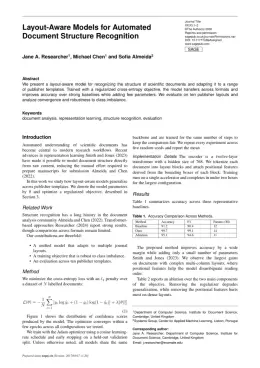
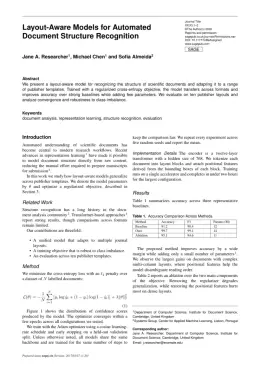
Write in a clean editor, then format for The International Journal of Ocean and Climate Systems in one click — DocuGuru applies the official SAGE template with author–year references and exports a submission-ready PDF plus the editable LaTeX source. Free to start.

About the The International Journal of Ocean and Climate Systems format

The International Journal of Ocean and Climate Systems is a peer-reviewed journal published by SAGE, covering Coastal and Marine Dynamics, Oceanographic and Atmospheric Processes, Ocean Waves and Remote Sensing.

PublisherSAGE
Reference styleAuthor–year (Harvard)
Author–year — (Smith, 2023) in the text
Smith, A., Jones, B. and Lee, C. (2023) 'A representative article title', The International Journal of Ocean and Climate Systems, 12(3), pp. 45–58.

Formats any DOI in The International Journal of Ocean and Climate Systems style. No sign-up.

Publishes research inCoastal and Marine Dynamics Oceanographic and Atmospheric Processes Ocean Waves and Remote Sensing Tropical and Extratropical Cyclones Research Wave and Wind Energy Systems
ISSN1759-3131
h-index19
i10-index41
Total citations1,331
Article processing charge$900
Top institutions publishing hereIndian Institute of Technology Madras
Journal websitejournals.sagepub.com
You getA submission-ready PDF and the editable LaTeX source — ready to submit.

Papers published in The International Journal of Ocean and Climate Systems per year

22
2010
21
2011
21
2012
18
2013
22
2014
11
2015
17
2016
13
2017

Citation impact of The International Journal of Ocean and Climate Systems by publication year

135
2010
174
2011
173
2012
207
2013
118
2014
39
2015
193
2016
287
2017

Citations each year’s papers have accumulated so far — the most recent years are still building up.

Most-cited papers in The International Journal of Ocean and Climate Systems

Integration of wave energy and other marine renewable energy sources with the needs of coastal societies

Richard Manasseh, S. A. Sannasiraj, Kathleen L. McInnes et al. · 19 Jan 2017

Marine renewable energy has the potential to solve both the energy-security and coastal-protection problems affecting coastal societies. In this article, the potential benefits arising from the combination of marine renewable energy technologies with infrastructural needs for coastal protection and other local needs are analysed. Classifications of technologies are developed to inform future coastal planning. Explanations…

Wave attenuation in presence of mangroves: A sensitivity study for varying bottom slopes

K. G. Parvathy, Prasad K. Bhaskaran · 24 Apr 2017

Mangroves thrive in the intertidal areas (interface between land and sea) of tropical and sub-tropical belt and play an important role in overall attenuation of nearshore waves. Multiple interactions of waves with mangrove trunks and roots and bottom friction are the two primary mechanisms responsible for wave attenuation in mangrove forests. Earlier studies, comprising both…

Understanding the effects of seawall construction using a combination of analytical modelling and remote sensing techniques: Case study of Fansa, Gujarat, India

R. Balaji, S. Sathish Kumar, Ankita Misra · 5 Jun 2017

The effect of seawall on the adjacent beaches and coastal dynamics has not been well documented in literature. The purpose and function of coastal structures, especially seawalls, have often been misunderstood, as in some cases, seawalls lead to coastal erosion, contrary to protecting the shoreline for which they are generally constructed. Seawalls have been reportedly…

Estimation of bathymetry along the coast of Mangaluru using Landsat-8 imagery

Jagalingam Pushparaj, Arkal Vittal Hegde · 10 Dec 2016

Determining the bathymetry of ocean is important for many aspects such as generating navigational charts, to study changes in the seafloor profile, sea level rise, and beach erosion. Traditionally, the bathymetry of ocean was determined by a hydrographic ship carrying an echo sounder instrument which was cost effective but time consuming and also often inaccessible…

Optimal design of air turbines for oscillating water column wave energy systems: A review

Tapas K. Das, Paresh Halder, Abdus Samad · 1 Feb 2017

Oscillating water column wave energy harvesting system uses pneumatic power to run a turbine and generate power. Both reaction (mainly Wells turbine) and impulse type turbines are tested in oscillating water column system and the performances are investigated. Reaction turbines are easy to install, and the operating range is narrow and possesses higher peak efficiency.…

The International Journal of Ocean and Climate Systems template — frequently asked questions

How do I write a paper in the The International Journal of Ocean and Climate Systems format?
In DocuGuru you write your manuscript in a normal editor — no LaTeX setup required — and select the The International Journal of Ocean and Climate Systems template. When you export, DocuGuru compiles the paper into the official SAGE format and hands you a submission-ready PDF along with the editable LaTeX source.
What reference style does The International Journal of Ocean and Climate Systems use?
The International Journal of Ocean and Climate Systems uses Author–year (Harvard) references, shown as author–year markers such as (Smith, 2023) in the text. DocuGuru formats every in-text citation and the reference list in this exact style automatically. A reference appears like this: Smith, A., Jones, B. and Lee, C. (2023) 'A representative article title', The International Journal of Ocean and Climate Systems, 12(3), pp. 45–58.
Do I need to know LaTeX to submit to The International Journal of Ocean and Climate Systems?
No. DocuGuru generates the sagej LaTeX class and compiles the PDF for you in the background, so you get a SAGE-ready The International Journal of Ocean and Climate Systems document without writing any LaTeX. If you do want it, the LaTeX source is included in the export.
Can I import an existing draft into the The International Journal of Ocean and Climate Systems template?
Yes. Paste or upload your current manuscript — Word, LaTeX, Markdown, or plain text — and DocuGuru reflows it into the The International Journal of Ocean and Climate Systems format with correct headings, figures, tables, and author–year citations.
Who publishes The International Journal of Ocean and Climate Systems?
The International Journal of Ocean and Climate Systems is a multidisciplinary journal published by SAGE. DocuGuru's The International Journal of Ocean and Climate Systems template matches SAGE's official submission format.
Can I export a submission-ready The International Journal of Ocean and Climate Systems PDF?
Yes — DocuGuru produces a PDF built with the official The International Journal of Ocean and Climate Systems template (the sagej class) that is ready to submit to SAGE, together with the matching LaTeX source files.
How much does the The International Journal of Ocean and Climate Systems template cost?
You can start writing in the The International Journal of Ocean and Climate Systems template for free. Exporting the final submission-ready The International Journal of Ocean and Climate Systems PDF and LaTeX source is part of DocuGuru's paid plans — see the app for current pricing.

Use the The International Journal of Ocean and Climate Systems template