SAGE

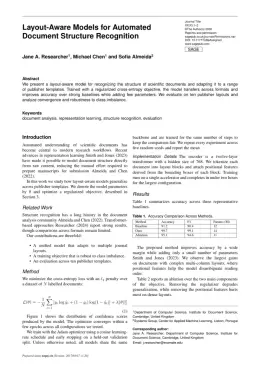
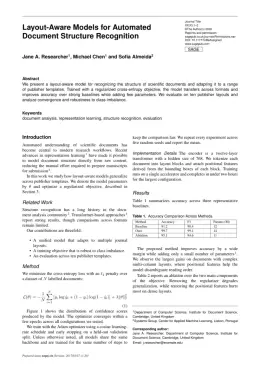
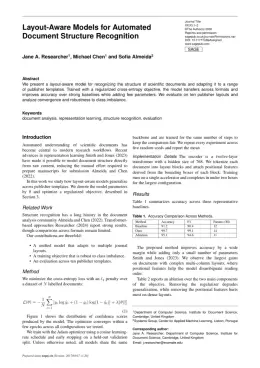
The Cleft Palate-Craniofacial Journal Template

Write in a clean editor, then format for The Cleft Palate-Craniofacial Journal in one click — DocuGuru applies the official SAGE template with author–year references and exports a submission-ready PDF plus the editable LaTeX source. Free to start.

About the The Cleft Palate-Craniofacial Journal format

The Cleft Palate-Craniofacial Journal is a peer-reviewed journal published by SAGE, covering Cleft Lip and Palate Research, Craniofacial Disorders and Treatments, Nasal Surgery and Airway Studies.

PublisherSAGE
Reference styleAuthor–year (Harvard)
Author–year — (Smith, 2023) in the text
Smith, A., Jones, B. and Lee, C. (2023) 'A representative article title', The Cleft Palate-Craniofacial Journal, 12(3), pp. 45–58.

Formats any DOI in The Cleft Palate-Craniofacial Journal style. No sign-up.

Publishes research inCleft Lip and Palate Research Craniofacial Disorders and Treatments Nasal Surgery and Airway Studies Orthodontics and Dentofacial Orthopedics Tracheal and airway disorders
ISSN1055-6656
Citation impact (2-yr)1.18
h-index124
i10-index2,632
Total citations113,816
Top institutions publishing hereUniversidade de São Paulo
Journal websitewww.cpcjournal.org
You getA submission-ready PDF and the editable LaTeX source — ready to submit.

Papers published in The Cleft Palate-Craniofacial Journal per year

145
2014
142
2015
130
2016
108
2017
214
2018
158
2019
251
2020
296
2021
239
2022
216
2023
220
2024
343
2025

Citation impact of The Cleft Palate-Craniofacial Journal by publication year

2.8K
2014
2.8K
2015
2.2K
2016
1.8K
2017
3K
2018
2.1K
2019
2.8K
2020
2.5K
2021
1.6K
2022
1K
2023
607
2024
229
2025

Citations each year’s papers have accumulated so far — the most recent years are still building up.

Most-cited papers in The Cleft Palate-Craniofacial Journal

Presurgical Nasoalveolar Molding in Infants with Cleft Lip and Palate

Barry H. Grayson, Pedro E. Santiago, Lawrence E. Brecht et al. · 1 Nov 1999

Presurgical infant orthopedics has been employed since the 1950s as an adjunctive neonatal therapy for the correction of cleft lip and palate. In this paper, we present a paradigm shift from the traditional methods of presurgical infant orthopedics. Some of the problems that the traditional approach failed to address include the deformity of the nasal…

Universal Parameters for Reporting Speech Outcomes in Individuals with Cleft Palate

Gunilla Henningsson, David P. Kuehn, Debbie Sell et al. · 1 Jan 2008

OBJECTIVE: To achieve consistency and uniformity in reporting speech outcomes in individuals born with cleft palate with or without cleft lip using perceptual parameters that characterize their speech production behavior regardless of the language or languages spoken. DESIGN: A working group of six individuals experienced in speech and cleft palate was formed to develop a…

Prevalence at Birth of Cleft Lip with or without Cleft Palate: Data from the International Perinatal Database of Typical Oral Clefts (IPDTOC)

IPDTOC Working Group · 27 May 2010

As part of a collaborative project on the epidemiology of craniofacial anomalies, funded by the National Institutes for Dental and Craniofacial Research and channeled through the Human Genetics Programme of the World Health Organization, the International Perinatal Database of Typical Orofacial Clefts (IPDTOC) was established in 2003. IPDTOC is collecting case-by-case information on cleft lip…

Validity and Reliability of Craniofacial Anthropometric Measurement of 3D Digital Photogrammetric Images

Julielynn Y Wong, Albert K. Oh, Eiichi Ohta et al. · 1 May 2008

BACKGROUND: Direct anthropometry performed during a patient examination is the standard technique for quantifying craniofacial dysmorphology, as well as for surgical planning and outcome assessment. Several new technologies have been designed to computerize anthropometric measurements, including three-dimensional (3D) digital photogrammetry. These digital systems have the advantage of acquiring patient craniofacial surface images quickly and noninvasively.…

Presurgical Nasoalveolar Orthopedic Molding in Primary Correction of the Nose, Lip, and Alveolus of Infants Born With Unilateral and Bilateral Clefts

Barry H. Grayson, Court B. Cutting · 1 May 2001

This addendum to the "State of the Art Dental Treatment of Predental and Infant Patients With Clefts and Craniofacial Anomalies," by Prahl-Andersen (Cleft Palate Craniofac J. 2000;37:528532), offers an extended perspective on this controversial subject. This article reviews the role of combined nasal and alveolar (nasoalveolar) molding in the primary correction of the nose, lip,…

The Cleft Palate-Craniofacial Journal template — frequently asked questions

How do I write a paper in the The Cleft Palate-Craniofacial Journal format?
In DocuGuru you write your manuscript in a normal editor — no LaTeX setup required — and select the The Cleft Palate-Craniofacial Journal template. When you export, DocuGuru compiles the paper into the official SAGE format and hands you a submission-ready PDF along with the editable LaTeX source.
What reference style does The Cleft Palate-Craniofacial Journal use?
The Cleft Palate-Craniofacial Journal uses Author–year (Harvard) references, shown as author–year markers such as (Smith, 2023) in the text. DocuGuru formats every in-text citation and the reference list in this exact style automatically. A reference appears like this: Smith, A., Jones, B. and Lee, C. (2023) 'A representative article title', The Cleft Palate-Craniofacial Journal, 12(3), pp. 45–58.
Do I need to know LaTeX to submit to The Cleft Palate-Craniofacial Journal?
No. DocuGuru generates the sagej LaTeX class and compiles the PDF for you in the background, so you get a SAGE-ready The Cleft Palate-Craniofacial Journal document without writing any LaTeX. If you do want it, the LaTeX source is included in the export.
Can I import an existing draft into the The Cleft Palate-Craniofacial Journal template?
Yes. Paste or upload your current manuscript — Word, LaTeX, Markdown, or plain text — and DocuGuru reflows it into the The Cleft Palate-Craniofacial Journal format with correct headings, figures, tables, and author–year citations.
Who publishes The Cleft Palate-Craniofacial Journal?
The Cleft Palate-Craniofacial Journal is a multidisciplinary journal published by SAGE. DocuGuru's The Cleft Palate-Craniofacial Journal template matches SAGE's official submission format.
Can I export a submission-ready The Cleft Palate-Craniofacial Journal PDF?
Yes — DocuGuru produces a PDF built with the official The Cleft Palate-Craniofacial Journal template (the sagej class) that is ready to submit to SAGE, together with the matching LaTeX source files.
How much does the The Cleft Palate-Craniofacial Journal template cost?
You can start writing in the The Cleft Palate-Craniofacial Journal template for free. Exporting the final submission-ready The Cleft Palate-Craniofacial Journal PDF and LaTeX source is part of DocuGuru's paid plans — see the app for current pricing.

Use the The Cleft Palate-Craniofacial Journal template