
3,792 citations
Cite
SaveGo to paper →
SAGE
The American Review of Public Administration Template
Write in a clean editor, then format for The American Review of Public Administration in one click — DocuGuru applies the official SAGE template with author–year references and exports a submission-ready PDF plus the editable LaTeX source. Free to start.
About the The American Review of Public Administration format
The American Review of Public Administration is a peer-reviewed journal published by SAGE, covering Public Policy and Administration Research, Nonprofit Sector and Volunteering, Local Government Finance and Decentralization. Over its lifetime it has published 1,729 papers, which have received 57,727 citations.
| Publisher | SAGE |
|---|---|
| Reference style | Author–year (Harvard) Author–year — (Smith, 2023) in the text Smith, A., Jones, B. and Lee, C. (2023) 'A representative article title', The American Review of Public Administration, 12(3), pp. 45–58.
Formats any DOI in The American Review of Public Administration style. No sign-up. |
| Publishes research in | Public Policy and Administration Research Nonprofit Sector and Volunteering Local Government Finance and Decentralization E-Government and Public Services Management and Organizational Studies |
| ISSN | 0275-0740 |
| Citation impact (2-yr) | 2.5 |
| h-index | 109 |
| i10-index | 856 |
| Top institutions publishing here | Florida State University |
| Journal website | arp.sagepub.com |
| You get | A submission-ready PDF and the editable LaTeX source — ready to submit. |
Papers published in The American Review of Public Administration per year
Citation impact of The American Review of Public Administration by publication year
Citations each year’s papers have accumulated so far — the most recent years are still building up.
Most-cited papers in The American Review of Public Administration
The aim of this article is to clarify the nature of the management style most suited to the emergence of networked governance. The paradigms of traditional public administration and new public management sit uncomfortably with networked governance. In contrast, it is argued the public value management paradigm bases its practice in the systems of dialogue…
1,312 citations
Cite
SaveGo to paper →
This article argues that current public management theory is not fit for purpose—if it ever has been. It argues that it contains two fatal flaws—it focuses on intraorganizational processes at a time when the reality of public services delivery is interorganizational, and it draws upon management theory derived from the experience of the manufacturing sector…
823 citations
Cite
SaveGo to paper →
Citizen participation in the decisions that affect their lives is an imperative of contemporary society. For the first half of the 20th century, citizens relied on public officials and administrators to make decisions about public policy and its implementation. The latter part of the 20th century saw a shift toward greater direct citizen involvement. This…
778 citations
Cite
SaveGo to paper →
This article examines the problem of effective interagency communication among organizations and the role of information technologies to achieve effective communication and decision-making goals in emergencies. It explores what factors contribute to effective interorganizational communication and decision making and what factors inhibit their development. The theoretical framework draws on the literature of emergency communication and…
690 citations
Cite
SaveGo to paper →
Related journal templates
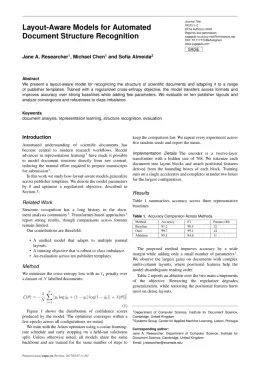
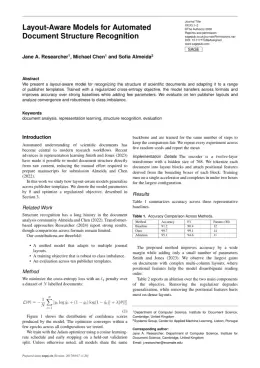
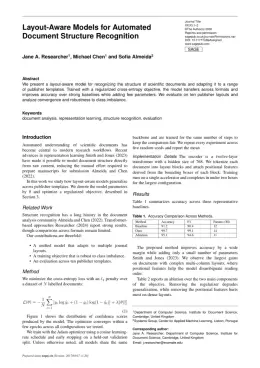
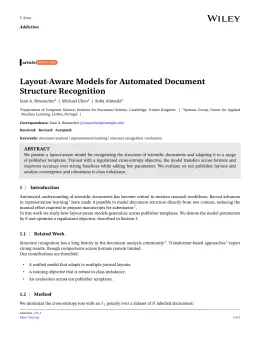
The American Review of Public Administration template — frequently asked questions
How do I write a paper in the The American Review of Public Administration format?
In DocuGuru you write your manuscript in a normal editor — no LaTeX setup required — and select the The American Review of Public Administration template. When you export, DocuGuru compiles the paper into the official SAGE format and hands you a submission-ready PDF along with the editable LaTeX source.
What reference style does The American Review of Public Administration use?
The American Review of Public Administration uses Author–year (Harvard) references, shown as author–year markers such as (Smith, 2023) in the text. DocuGuru formats every in-text citation and the reference list in this exact style automatically. A reference appears like this: Smith, A., Jones, B. and Lee, C. (2023) 'A representative article title', The American Review of Public Administration, 12(3), pp. 45–58.
Do I need to know LaTeX to submit to The American Review of Public Administration?
No. DocuGuru generates the sagej LaTeX class and compiles the PDF for you in the background, so you get a SAGE-ready The American Review of Public Administration document without writing any LaTeX. If you do want it, the LaTeX source is included in the export.
Can I import an existing draft into the The American Review of Public Administration template?
Yes. Paste or upload your current manuscript — Word, LaTeX, Markdown, or plain text — and DocuGuru reflows it into the The American Review of Public Administration format with correct headings, figures, tables, and author–year citations.
What is The American Review of Public Administration?
SAGE journal (sagej). It is a multidisciplinary journal, published by SAGE.
Can I export a submission-ready The American Review of Public Administration PDF?
Yes — DocuGuru produces a PDF built with the official The American Review of Public Administration template (the sagej class) that is ready to submit to SAGE, together with the matching LaTeX source files.
How much does the The American Review of Public Administration template cost?
You can start writing in the The American Review of Public Administration template for free. Exporting the final submission-ready The American Review of Public Administration PDF and LaTeX source is part of DocuGuru's paid plans — see the app for current pricing.