SAGE

Substance Abuse Research and Treatment Template

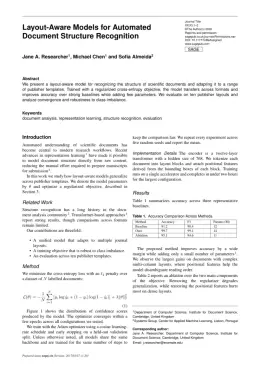
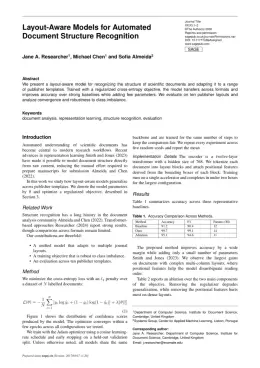
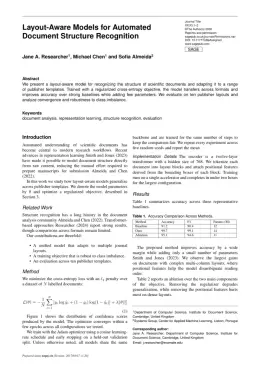
Write in a clean editor, then format for Substance Abuse Research and Treatment in one click — DocuGuru applies the official SAGE template with author–year references and exports a submission-ready PDF plus the editable LaTeX source. Free to start.

About the Substance Abuse Research and Treatment format

Substance Abuse Research and Treatment is a peer-reviewed journal published by SAGE, covering Substance Abuse Treatment and Outcomes, Opioid Use Disorder Treatment, Prenatal Substance Exposure Effects.

PublisherSAGE
Reference styleAuthor–year (Harvard)
Author–year — (Smith, 2023) in the text
Smith, A., Jones, B. and Lee, C. (2023) 'A representative article title', Substance Abuse Research and Treatment, 12(3), pp. 45–58.

Formats any DOI in Substance Abuse Research and Treatment style. No sign-up.

Publishes research inSubstance Abuse Treatment and Outcomes Opioid Use Disorder Treatment Prenatal Substance Exposure Effects HIV, Drug Use, Sexual Risk Cannabis and Cannabinoid Research
ISSN1178-2218
h-index41
i10-index192
Total citations7,289
Article processing charge$1,500
Open accessYes
Top institutions publishing hereUniversity of Oslo
Journal websitejournals.sagepub.com
You getA submission-ready PDF and the editable LaTeX source — ready to submit.

Papers published in Substance Abuse Research and Treatment per year

12
2012
19
2013
14
2014
33
2015
23
2016
23
2017
18
2018
30
2019
41
2020
29
2021
56
2022
57
2023

Citation impact of Substance Abuse Research and Treatment by publication year

248
2012
622
2013
178
2014
983
2015
711
2016
760
2017
512
2018
684
2019
513
2020
448
2021
589
2022
509
2023

Citations each year’s papers have accumulated so far — the most recent years are still building up.

Most-cited papers in Substance Abuse Research and Treatment

“Don’t Judge a Book by Its Cover”: A Qualitative Study of Methadone Patients’ Experiences of Stigma

Julia Woo, Anuja Bhalerao, Monica Bawor et al. · 1 Jan 2017

INTRODUCTION: Despite its efficacy and widespread use, methadone maintenance treatment (MMT) continues to be widely stigmatized. Reducing the stigma surrounding MMT will help improve the accessibility, retention, and treatment outcomes in MMT. METHODS: Semi-structured interviews were conducted with 18 adults undergoing MMT. Thematic content analysis was used to identify overarching themes. RESULTS: In total, 78%…

How Social Relationships Influence Substance Use Disorder Recovery: A Collaborative Narrative Study

Henning Pettersen, Anne Landheim, Ivar Skeie et al. · 1 Jan 2019

Individuals with a substance use disorder (SUD) often have fewer social support network resources than those without SUDs. This qualitative study examined the role of social relationships in achieving and maintaining stable recovery after many years of SUD. Semi-structured interviews were conducted with 18 participants, each of whom had been diagnosed with a SUD and…

Moving on From Representativeness: Testing the Utility of the Global Drug Survey

Monica J. Barratt, Jason Ferris, Renee Zahnow et al. · 1 Jan 2017

A decline in response rates in traditional household surveys, combined with increased internet coverage and decreased research budgets, has resulted in increased attractiveness of web survey research designs based on purposive and voluntary opt-in sampling strategies. In the study of hidden or stigmatised behaviours, such as cannabis use, web survey methods are increasingly common. However,…

Evaluating Nicotine Levels Selection and Patterns of Electronic Cigarette use in a Group of “Vapers” Who Had Achieved Complete Substitution of Smoking

Konstantinos Farsalinos, Giorgio Romagna, Dimitris Tsiapras et al. · 1 Jan 2013

BACKGROUND: Electronic cigarettes (ECs) are alternative-to-smoking nicotine delivery devices; consumers (commonly called vapers) use them in order to reduce or completely substitute smoking. The European Commission has released a proposal for a new Tobacco Product Directive that might reduce availability of nicotine-containing products, including ECs. In this study, the EC use patterns in subjects who…

Gabapentin for Off-Label Use: Evidence-Based or Cause for Concern?

Alyssa M. Peckham, Kirk E. Evoy, Leslie Ochs et al. · 1 Jan 2018

Gabapentin is widely used in the United States for a number of off-label indications, often as an alternative to opioid therapy. Increasing evidence has emerged suggesting that gabapentin may not be as benign as once thought and may be associated with substance abuse in concert with opioids. With concerns for safety mounting, it is prudent…

Substance Abuse Research and Treatment template — frequently asked questions

How do I write a paper in the Substance Abuse Research and Treatment format?
In DocuGuru you write your manuscript in a normal editor — no LaTeX setup required — and select the Substance Abuse Research and Treatment template. When you export, DocuGuru compiles the paper into the official SAGE format and hands you a submission-ready PDF along with the editable LaTeX source.
What reference style does Substance Abuse Research and Treatment use?
Substance Abuse Research and Treatment uses Author–year (Harvard) references, shown as author–year markers such as (Smith, 2023) in the text. DocuGuru formats every in-text citation and the reference list in this exact style automatically. A reference appears like this: Smith, A., Jones, B. and Lee, C. (2023) 'A representative article title', Substance Abuse Research and Treatment, 12(3), pp. 45–58.
Do I need to know LaTeX to submit to Substance Abuse Research and Treatment?
No. DocuGuru generates the sagej LaTeX class and compiles the PDF for you in the background, so you get a SAGE-ready Substance Abuse Research and Treatment document without writing any LaTeX. If you do want it, the LaTeX source is included in the export.
Can I import an existing draft into the Substance Abuse Research and Treatment template?
Yes. Paste or upload your current manuscript — Word, LaTeX, Markdown, or plain text — and DocuGuru reflows it into the Substance Abuse Research and Treatment format with correct headings, figures, tables, and author–year citations.
Who publishes Substance Abuse Research and Treatment?
Substance Abuse Research and Treatment is a multidisciplinary journal published by SAGE. DocuGuru's Substance Abuse Research and Treatment template matches SAGE's official submission format.
Can I export a submission-ready Substance Abuse Research and Treatment PDF?
Yes — DocuGuru produces a PDF built with the official Substance Abuse Research and Treatment template (the sagej class) that is ready to submit to SAGE, together with the matching LaTeX source files.
How much does the Substance Abuse Research and Treatment template cost?
You can start writing in the Substance Abuse Research and Treatment template for free. Exporting the final submission-ready Substance Abuse Research and Treatment PDF and LaTeX source is part of DocuGuru's paid plans — see the app for current pricing.

Use the Substance Abuse Research and Treatment template