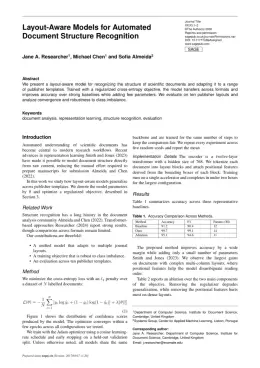
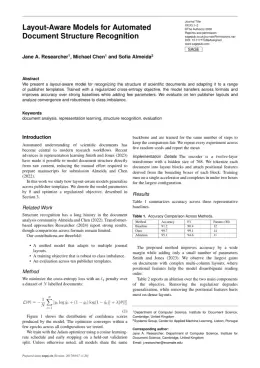
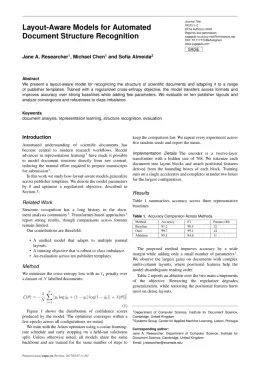
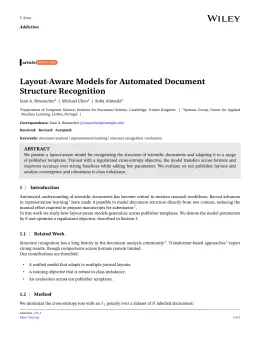
About the Psychological Science format
Psychological Science is a peer-reviewed journal published by SAGE, covering Neural and Behavioral Psychology Studies, Social and Intergroup Psychology, Visual perception and processing mechanisms. Over its lifetime it has published 6,124 papers, which have received 812,007 citations.
| Publisher | SAGE |
|---|
| Reference style | Author–year (Harvard) Author–year — (Smith, 2023) in the text
Smith, A., Jones, B. and Lee, C. (2023) 'A representative article title', Psychological Science, 12(3), pp. 45–58.
Formats any DOI in Psychological Science style. No sign-up.
|
|---|
| Publishes research in | Neural and Behavioral Psychology Studies Social and Intergroup Psychology Visual perception and processing mechanisms Child and Animal Learning Development Psychology of Moral and Emotional Judgment |
|---|
| ISSN | 0956-7976 |
|---|
| Citation impact (2-yr) | 5.54 |
|---|
| h-index | 415 |
|---|
| i10-index | 4,808 |
|---|
| Top institutions publishing here | Stanford University |
|---|
| Journal website | pss.sagepub.com |
|---|
| You get | A submission-ready PDF and the editable LaTeX source — ready to submit. |
|---|
Papers published in Psychological Science per year
Citation impact of Psychological Science by publication year
Citations each year’s papers have accumulated so far — the most recent years are still building up.
Most-cited papers in Psychological Science
False-Positive Psychology
Joseph P. Simmons, Leif D. Nelson, Uri Simonsohn · 17 Oct 2011
In this article, we accomplish two things. First, we show that despite empirical psychologists' nominal endorsement of a low rate of false-positive findings (≤ .05), flexibility in data collection, analysis, and reporting dramatically increases actual false-positive rates. In many cases, a researcher is more likely to falsely find evidence that an effect exists than to…
Required Sample Size to Detect the Mediated Effect
Matthew S. Fritz, David P. MacKinnon · 1 Mar 2007
Mediation models are widely used, and there are many tests of the mediated effect. One of the most common questions that researchers have when planning mediation studies is, "How many subjects do I need to achieve adequate power when testing for mediation?" This article presents the necessary sample sizes for six of the most common…
Fitness Effects on the Cognitive Function of Older Adults
Stanley J. Colcombe, Arthur F. Kramer · 1 Mar 2003
A meta-analytic study was conducted to examine the hypothesis that aerobic fitness training enhances the cognitive vitality of healthy but sedentary older adults. Eighteen intervention studies published between 1966 and 2001 were entered into the analysis. Several theoretically and practically important results were obtained. Most important fitness training was found to have robust but selective…
The Constructive, Destructive, and Reconstructive Power of Social Norms
P. Wesley Schultz, Jessica M. Nolan, Robert B. Cialdini et al. · 1 May 2007
Despite a long tradition of effectiveness in laboratory tests, normative messages have had mixed success in changing behavior in field contexts, with some studies showing boomerang effects. To test a theoretical account of this inconsistency, we conducted a field experiment in which normative messages were used to promote household energy conservation. As predicted, a descriptive…
The New Statistics
Geoff Cumming · 12 Nov 2013
We need to make substantial changes to how we conduct research. First, in response to heightened concern that our published research literature is incomplete and untrustworthy, we need new requirements to ensure research integrity. These include prespecification of studies whenever possible, avoidance of selection and other inappropriate data-analytic practices, complete reporting, and encouragement of replication.…