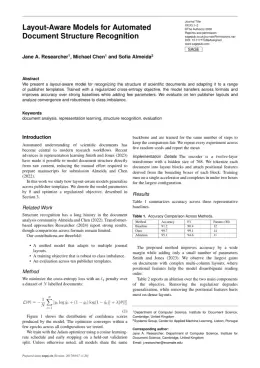
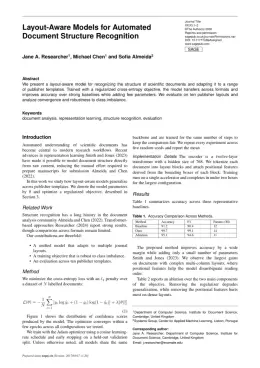
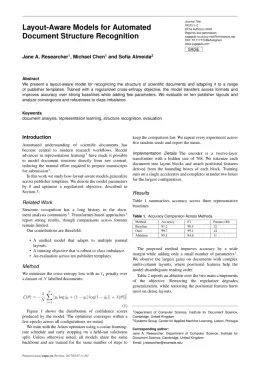
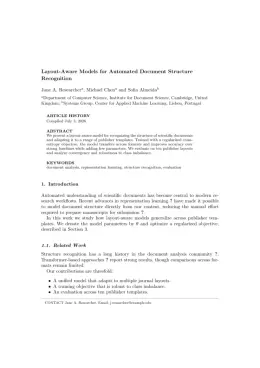
About the Political Research Quarterly format
Political Research Quarterly is a peer-reviewed journal published by SAGE, covering Electoral Systems and Political Participation, Gender Politics and Representation, Social Media and Politics. Over its lifetime it has published 2,952 papers, which have received 104,145 citations.
| Publisher | SAGE |
|---|
| Reference style | Author–year (Harvard) Author–year — (Smith, 2023) in the text
Smith, A., Jones, B. and Lee, C. (2023) 'A representative article title', Political Research Quarterly, 12(3), pp. 45–58.
Formats any DOI in Political Research Quarterly style. No sign-up.
|
|---|
| Publishes research in | Electoral Systems and Political Participation Gender Politics and Representation Social Media and Politics Political Influence and Corporate Strategies Judicial and Constitutional Studies |
|---|
| ISSN | 1065-9129 |
|---|
| Citation impact (2-yr) | 1.7 |
|---|
| h-index | 138 |
|---|
| i10-index | 1,611 |
|---|
| Top institutions publishing here | University of Iowa |
|---|
| Journal website | www.sagepub.com |
|---|
| You get | A submission-ready PDF and the editable LaTeX source — ready to submit. |
|---|
Papers published in Political Research Quarterly per year
Citation impact of Political Research Quarterly by publication year
Citations each year’s papers have accumulated so far — the most recent years are still building up.
Most-cited papers in Political Research Quarterly
Case Selection Techniques in Case Study Research
Jason Seawright, John Gerring · 9 Feb 2008
How can scholars select cases from a large universe for in-depth case study analysis? Random sampling is not typically a viable approach when the total number of cases to be selected is small. Hence attention to purposive modes of sampling is needed. Yet, while the existing qualitative literature on case selection offers a wide range…
The Impact of Public Opinion on Public Policy: A Review and an Agenda
Paul Burstein · 1 Mar 2003
This article considers the impact of public opinion on public policy, asking: (1) how much impact it has; (2) how much the impact increases as the salience of issues increases; (3) to what extent the impact of public opinion may be negated by interest groups, social movement organizations, political parties, and elites; (4) whether responsiveness…
Race and Gender Cues in Low-Information Elections
Monika L. McDermott · 1 Dec 1998
Previous research has demonstrated that in low-information elections voters compensate for a lack of information by taking informational short-cuts, based on candidate cues, to make voting decisions. To date, this research has focused on candidate party identification and incumbency cues. This article argues that candidate demographic cues, specifically race and gender, also play an influential…
Considerations on Mainstreaming Intersectionality
Rita Kaur Dhamoon · 22 Sep 2010
This article identifies five key considerations for adopting and mainstreaming intersectionality: the language and concepts that are used; the complexities of difference and how to navigate this complexity; the choice of focusing on identities, categories, processes, and/or systems; the model that is used to explain and describe mutually constituted differences; and the principles that determine…
Gender as a Factor in the Attribution of Leadership Traits
Deborah Alexander, Kristi Andersen · 1 Sep 1993
The candidate evaluation literature has emphasized the contribution of both candidate characteristics and voter characteristics (e.g., party identification) to candidate appraisals. But the literature on attribution and sex role stereotypes suggests that women candidates may be evaluated differently than their male counterparts. This paper presents the results of a survey of 98 voters in which…