SAGE

Perfusion Template

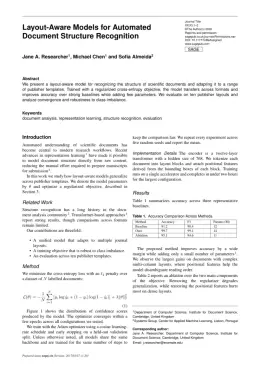
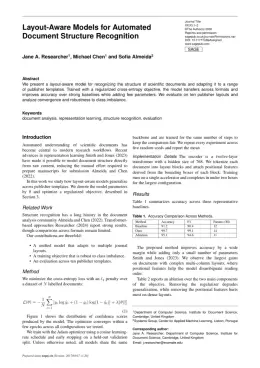
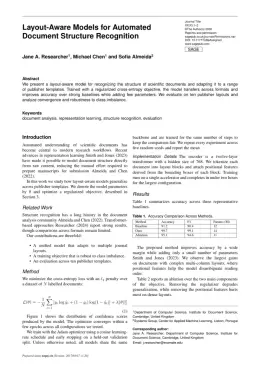
Write in a clean editor, then format for Perfusion in one click — DocuGuru applies the official SAGE template with author–year references and exports a submission-ready PDF plus the editable LaTeX source. Free to start.

About the Perfusion format

Perfusion is a peer-reviewed journal published by SAGE, covering Mechanical Circulatory Support Devices, Cardiac and Coronary Surgery Techniques, Cardiac Arrest and Resuscitation.

PublisherSAGE
Reference styleAuthor–year (Harvard)
Author–year — (Smith, 2023) in the text
Smith, A., Jones, B. and Lee, C. (2023) 'A representative article title', Perfusion, 12(3), pp. 45–58.

Formats any DOI in Perfusion style. No sign-up.

Publishes research inMechanical Circulatory Support Devices Cardiac and Coronary Surgery Techniques Cardiac Arrest and Resuscitation Cardiac Ischemia and Reperfusion Cardiac, Anesthesia and Surgical Outcomes
ISSN0267-6591
Citation impact (2-yr)1.18
h-index66
i10-index1,325
Total citations43,105
Top institutions publishing hereHammersmith Hospital
Journal websiteprf.sagepub.com
You getA submission-ready PDF and the editable LaTeX source — ready to submit.

Papers published in Perfusion per year

146
2014
118
2015
98
2016
120
2017
124
2018
141
2019
229
2020
201
2021
232
2022
217
2023
230
2024
175
2025

Citation impact of Perfusion by publication year

2.4K
2014
1.5K
2015
1K
2016
1.3K
2017
1.9K
2018
1.5K
2019
1.8K
2020
1.4K
2021
1.3K
2022
721
2023
488
2024
92
2025

Citations each year’s papers have accumulated so far — the most recent years are still building up.

Most-cited papers in Perfusion

Research using qualitative, quantitative or mixed methods and choice based on the research

Kevin McCusker, Serdar Günaydın · 6 Nov 2014

Research is fundamental to the advancement of medicine and critical to identifying the most optimal therapies unique to particular societies. This is easily observed through the dynamics associated with pharmacology, surgical technique and the medical equipment used today versus short years ago. Advancements in knowledge synthesis and reporting guidelines enhance the quality, scope and applicability…

Inflammatory cytokine inhibition of erythropoiesis in patients implanted with a mechanical circulatory assist device

Christopher N. Pierce, Douglas F. Larson · 1 Mar 2005

Mechanical circulatory assist devices (MCADs) are increasingly utilized independently of cardiac transplantation in the management of heart failure. Though MCAD use incorporates inherent mechanical risks, the inevitable onset of chronic anemia, with its associated morbidity and mortality, is also a significant concern. MCAD support has been correlated with elevated plasma levels of inflammatory cytokines TNF-alpha,…

Safe time limits of aortic cross-clamping and cardiopulmonary bypass in adult cardiac surgery

Juha Nissinen, Fausto Biancari, Jan-Ola Wistbacka et al. · 1 Sep 2009

OBJECTIVES: We evaluated the impact of aortic cross-clamping time (XCT) and cardiopulmonary bypass time (CPBT) on the immediate and late outcome after adult cardiac surgery and attempted to identify their safe time limits. METHODS: This study includes 3280 patients who underwent adult cardiac surgery of various complexities. Myocardial protection was achieved with tepid continuous antegrade/retrograde…

A successful modification of ultrafiltration for cardiopulmonary bypass in children

SK Naik, A Knight, MJ Elliott · 1 Jan 1991

Total body water (TBW) is increased after cardiopulmonary bypass (CPB) resulting in tissue oedema and organ dysfunction. Ultrafiltration has been used to reduce this accumulation of water, although conventional ultrafiltration seemed ineffective in reducing the rise in TBW after CPB in our clinical experience. We describe a modified technique in which ultrafiltration is performed in…

Perfusion template — frequently asked questions

How do I write a paper in the Perfusion format?
In DocuGuru you write your manuscript in a normal editor — no LaTeX setup required — and select the Perfusion template. When you export, DocuGuru compiles the paper into the official SAGE format and hands you a submission-ready PDF along with the editable LaTeX source.
What reference style does Perfusion use?
Perfusion uses Author–year (Harvard) references, shown as author–year markers such as (Smith, 2023) in the text. DocuGuru formats every in-text citation and the reference list in this exact style automatically. A reference appears like this: Smith, A., Jones, B. and Lee, C. (2023) 'A representative article title', Perfusion, 12(3), pp. 45–58.
Do I need to know LaTeX to submit to Perfusion?
No. DocuGuru generates the sagej LaTeX class and compiles the PDF for you in the background, so you get a SAGE-ready Perfusion document without writing any LaTeX. If you do want it, the LaTeX source is included in the export.
Can I import an existing draft into the Perfusion template?
Yes. Paste or upload your current manuscript — Word, LaTeX, Markdown, or plain text — and DocuGuru reflows it into the Perfusion format with correct headings, figures, tables, and author–year citations.
Who publishes Perfusion?
Perfusion is a multidisciplinary journal published by SAGE. DocuGuru's Perfusion template matches SAGE's official submission format.
Can I export a submission-ready Perfusion PDF?
Yes — DocuGuru produces a PDF built with the official Perfusion template (the sagej class) that is ready to submit to SAGE, together with the matching LaTeX source files.
How much does the Perfusion template cost?
You can start writing in the Perfusion template for free. Exporting the final submission-ready Perfusion PDF and LaTeX source is part of DocuGuru's paid plans — see the app for current pricing.

Use the Perfusion template