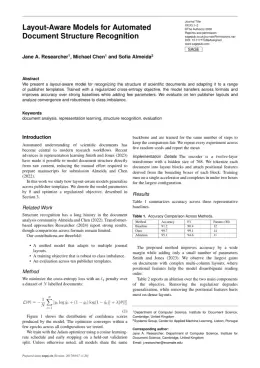
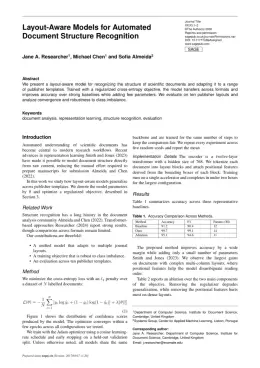
About the Organizational Research Methods format
Organizational Research Methods is a peer-reviewed journal published by SAGE, covering Management and Organizational Studies, Psychometric Methodologies and Testing, Job Satisfaction and Organizational Behavior. Over its lifetime it has published 958 papers, which have received 172,288 citations.
| Publisher | SAGE |
|---|
| Reference style | Author–year (Harvard) Author–year — (Smith, 2023) in the text
Smith, A., Jones, B. and Lee, C. (2023) 'A representative article title', Organizational Research Methods, 12(3), pp. 45–58.
Formats any DOI in Organizational Research Methods style. No sign-up.
|
|---|
| Publishes research in | Management and Organizational Studies Psychometric Methodologies and Testing Job Satisfaction and Organizational Behavior Qualitative Comparative Analysis Research Social and Intergroup Psychology |
|---|
| ISSN | 1094-4281 |
|---|
| Citation impact (2-yr) | 5.96 |
|---|
| h-index | 184 |
|---|
| i10-index | 705 |
|---|
| Top institutions publishing here | George Mason University |
|---|
| Journal website | www.sagepub.com |
|---|
| You get | A submission-ready PDF and the editable LaTeX source — ready to submit. |
|---|
Papers published in Organizational Research Methods per year
Citation impact of Organizational Research Methods by publication year
Citations each year’s papers have accumulated so far — the most recent years are still building up.
Most-cited papers in Organizational Research Methods
Seeking Qualitative Rigor in Inductive Research
Dennis A. Gioia, Kevin G. Corley, Aimee L. Hamilton · 24 Jul 2012
For all its richness and potential for discovery, qualitative research has been critiqued as too often lacking in scholarly rigor. The authors summarize a systematic approach to new concept development and grounded theory articulation that is designed to bring “qualitative rigor” to the conduct and presentation of inductive research.
A Review and Synthesis of the Measurement Invariance Literature: Suggestions, Practices, and Recommendations for Organizational Research
Robert J. Vandenberg, Charles E. Lance · 1 Jan 2000
The establishment of measurement invariance across groups is a logical prerequisite to conducting substantive cross-group comparisons (e.g., tests of group mean differences, invariance of structural parameter estimates), but measurement invariance is rarely tested in organizational research. In this article, the authors (a) elaborate the importance of conducting tests of measurement invariance across groups, (b) review…
Bibliometric Methods in Management and Organization
Ivan Župič, Tomaž Čater · 22 Dec 2014
We aim to develop a meaningful single-source reference for management and organization scholars interested in using bibliometric methods for mapping research specialties. Such methods introduce a measure of objectivity into the evaluation of scientific literature and hold the potential to increase rigor and mitigate researcher bias in reviews of scientific literature by aggregating the opinions…
A Brief Tutorial on the Development of Measures for Use in Survey Questionnaires
Timothy R. Hinkin · 1 Jan 1998
The adequate measurement of abstract constructs is perhaps the greatest challenge to understanding the behavior of people in organizations. Problems with the reliability and validity of measures used on survey questionnaires continue to lead to difficulties in interpreting the results of field research. Price and Mueller suggest that measurement problems may be due to the…
Answers to 20 Questions About Interrater Reliability and Interrater Agreement
James M. LeBreton, Jenell L. Senter · 20 Aug 2007
The use of interrater reliability (IRR) and interrater agreement (IRA) indices has increased dramatically during the past 20 years. This popularity is, at least in part, because of the increased role of multilevel modeling techniques (e.g., hierarchical linear modeling and multilevel structural equation modeling) in organizational research. IRR and IRA indices are often used to…