SAGE

Lighting Research & Technology Template

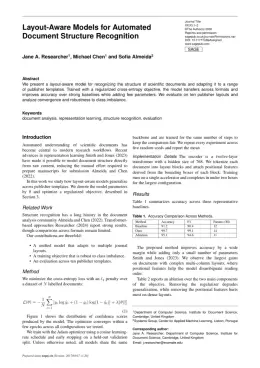
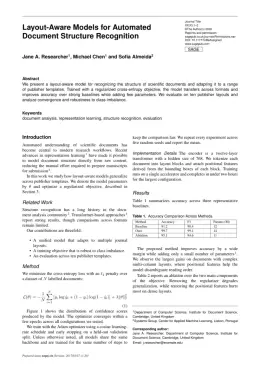
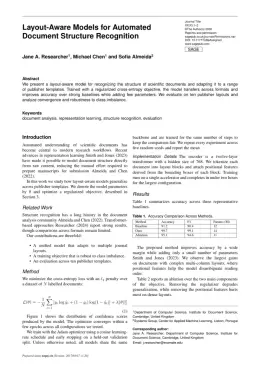
Write in a clean editor, then format for Lighting Research & Technology in one click — DocuGuru applies the official SAGE template with author–year references and exports a submission-ready PDF plus the editable LaTeX source. Free to start.

About the Lighting Research & Technology format

Lighting Research & Technology is a peer-reviewed journal published by SAGE, covering Impact of Light on Environment and Health, Building Energy and Comfort Optimization, Color Science and Applications.

PublisherSAGE
Reference styleAuthor–year (Harvard)
Author–year — (Smith, 2023) in the text
Smith, A., Jones, B. and Lee, C. (2023) 'A representative article title', Lighting Research & Technology, 12(3), pp. 45–58.

Formats any DOI in Lighting Research & Technology style. No sign-up.

Publishes research inImpact of Light on Environment and Health Building Energy and Comfort Optimization Color Science and Applications Color perception and design Visual perception and processing mechanisms
Papers published last year≈67
ISSN1365-7828
Citation impact (2-yr)1.41
h-index83
i10-index767
Total citations34,770
Top institutions publishing hereUniversity of Sheffield
Journal websitewww.sagepub.com
You getA submission-ready PDF and the editable LaTeX source — ready to submit.

Most-cited papers in Lighting Research & Technology

Useful daylight illuminance: a new paradigm for assessing daylight in buildings

Azza Nabil, John Mardaljevic · 17 Feb 2005

This paper introduces a new paradigm to assess daylight in buildings called ‘useful daylight illuminance’, or UDI. The UDI paradigm preserves much of the interpretive simplicity of the conventional daylight factor approach. In contrast to daylight factors however, UDI is founded on an annual time-series of absolute values for illuminance predicted under realistic skies generated…

Daylight metrics and energy savings

John Mardaljevic, Lisa Heschong, Eleanor S. Lee · 1 Sep 2009

The drive towards sustainable, low-energy buildings has increased the need for simple, yet accurate methods to evaluate whether a ‘daylit’ building meets minimum standards for energy and human comfort performance. Current metrics do not account for the temporal and spatial aspects of daylight, nor of occupants comfort or interventions. This paper reviews the historical basis…

Monitoring manual control of electric lighting and blinds

Christoph Reinhart, Karsten Voss · 1 Sep 2003

This paper reviews, validates and extends present knowledge of the degree and kind of manual control strategies of blinds and electric lighting systems that are used in private and two-person offices. A new monitoring setup was applied from March to December 2000 in 10 daylit offices in Germany that featured manually operated electric lighting and…

Lighting for work: a review of visual and biological effects

Wjm Van Bommel, GJ van den Beld · 1 Dec 2004

With the detection in 2002 of a novel photoreceptor cell in the eye, the biological effects that light has can be better understood. From the research on the biological effects of lighting, it is evident that the rules governing the design of good and healthy lighting installations are, to a certain degree, different from the…

Evaluation of high dynamic range photography as a luminance data acquisition system

Mehlika Inanici · 23 Apr 2006

In this paper, the potential, limitations and applicability of the High Dynamic Range (HDR) photography technique are evaluated as a luminance mapping tool. Multiple exposure photographs of static scenes were taken with a commercially available digital camera to capture the wide luminance variation within the scenes. The camera response function was computationally derived by using…

Lighting Research & Technology template — frequently asked questions

How do I write a paper in the Lighting Research & Technology format?
In DocuGuru you write your manuscript in a normal editor — no LaTeX setup required — and select the Lighting Research & Technology template. When you export, DocuGuru compiles the paper into the official SAGE format and hands you a submission-ready PDF along with the editable LaTeX source.
What reference style does Lighting Research & Technology use?
Lighting Research & Technology uses Author–year (Harvard) references, shown as author–year markers such as (Smith, 2023) in the text. DocuGuru formats every in-text citation and the reference list in this exact style automatically. A reference appears like this: Smith, A., Jones, B. and Lee, C. (2023) 'A representative article title', Lighting Research & Technology, 12(3), pp. 45–58.
Do I need to know LaTeX to submit to Lighting Research & Technology?
No. DocuGuru generates the sagej LaTeX class and compiles the PDF for you in the background, so you get a SAGE-ready Lighting Research & Technology document without writing any LaTeX. If you do want it, the LaTeX source is included in the export.
Can I import an existing draft into the Lighting Research & Technology template?
Yes. Paste or upload your current manuscript — Word, LaTeX, Markdown, or plain text — and DocuGuru reflows it into the Lighting Research & Technology format with correct headings, figures, tables, and author–year citations.
Who publishes Lighting Research & Technology?
Lighting Research & Technology is a multidisciplinary journal published by SAGE. DocuGuru's Lighting Research & Technology template matches SAGE's official submission format.
Can I export a submission-ready Lighting Research & Technology PDF?
Yes — DocuGuru produces a PDF built with the official Lighting Research & Technology template (the sagej class) that is ready to submit to SAGE, together with the matching LaTeX source files.
How much does the Lighting Research & Technology template cost?
You can start writing in the Lighting Research & Technology template for free. Exporting the final submission-ready Lighting Research & Technology PDF and LaTeX source is part of DocuGuru's paid plans — see the app for current pricing.

Use the Lighting Research & Technology template