SAGE

Journal of Thermoplastic Composite Materials Template

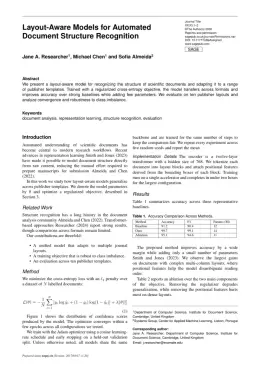
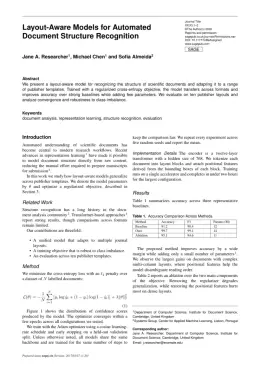
Write in a clean editor, then format for Journal of Thermoplastic Composite Materials in one click — DocuGuru applies the official SAGE template with author–year references and exports a submission-ready PDF plus the editable LaTeX source. Free to start.

About the Journal of Thermoplastic Composite Materials format

Journal of Thermoplastic Composite Materials is a peer-reviewed journal published by SAGE, covering Natural Fiber Reinforced Composites, Mechanical Behavior of Composites, Polymer Nanocomposites and Properties.

PublisherSAGE
Reference styleAuthor–year (Harvard)
Author–year — (Smith, 2023) in the text
Smith, A., Jones, B. and Lee, C. (2023) 'A representative article title', Journal of Thermoplastic Composite Materials, 12(3), pp. 45–58.

Formats any DOI in Journal of Thermoplastic Composite Materials style. No sign-up.

Publishes research inNatural Fiber Reinforced Composites Mechanical Behavior of Composites Polymer Nanocomposites and Properties Polymer crystallization and properties biodegradable polymer synthesis and properties
ISSN0892-7057
Citation impact (2-yr)3.52
h-index75
i10-index1,350
Total citations47,376
Top institutions publishing hereUniversity of Delaware
Journal websitejtc.sagepub.com
You getA submission-ready PDF and the editable LaTeX source — ready to submit.

Papers published in Journal of Thermoplastic Composite Materials per year

108
2014
96
2015
45
2016
109
2017
134
2018
170
2019
115
2020
74
2021
121
2022
175
2023
154
2024
226
2025

Citation impact of Journal of Thermoplastic Composite Materials by publication year

1.7K
2014
1.9K
2015
586
2016
2K
2017
2.9K
2018
4.7K
2019
2.3K
2020
1.5K
2021
1.6K
2022
1.9K
2023
1.2K
2024
523
2025

Citations each year’s papers have accumulated so far — the most recent years are still building up.

Most-cited papers in Journal of Thermoplastic Composite Materials

Mechanical properties of polypropylene composites

Quazi T.H. Shubhra, A.K.M. Moshiul Alam, M. A. Quaiyyum · 12 Dec 2011

There has been a growing interest in utilizing fibers as reinforcement to produce composite materials. Scientists prefer thermoplastic polymeric matrices than thermosets due to the low production cycle, lower cost of processing and high reparability of thermoplastics. Fiber-reinforced thermoplastic matrix composites have gained commercial success in the semistructural and structural applications. Various fibers are widely…

Natural fiber–reinforced composites: A review on material, manufacturing, and machinability

Amirhossein Lotfi, Huaizhong Li, Dzung Viet Dao et al. · 28 Apr 2019

Interest in natural fiber–reinforced composites (NFRCs) is increasing rapidly thanks to their numerous advantages such as low cost, biodegradability, eco-friendly nature, relatively good mechanical properties, and a growing emphasis on the environmental and sustainability aspects of engineering materials. However, large-scale use of NFRCs is still considered as challenging due to the difficulties in manufacturing, limited…

Fusion Bonding/Welding of Thermoplastic Composites

Ali Yousefpour, Mehdi Hojjati, J.-P. Immarigeon · 22 Jun 2004

Joining of thermoplastic composites is an important step in the manufacturing of aerospace thermoplastic composite structures. Therefore, several joining methods for thermoplastic composite components have been under investigation and development. In general, joining of thermoplastic composites can be categorized into mechanical fastening, adhesive bonding, solvent bonding, co-consolidation, and fusion bonding or welding. Fusion bonding or…

Comparison of injection moulded, natural fibre-reinforced composites with PP and PLA as matrices

Julia Puseletso Mofokeng, A. S. Luyt, Tamás Tábi et al. · 2 Nov 2011

Poly(lactic acid) (PLA) and polypropylene (PP) were comparatively investigated as matrices for injection-moulded composites containing small (1–3 wt%) amounts of short sisal fibre. The morphology, thermal and dynamic mechanical properties, as well as degradation characteristics were investigated. The scanning electron microscopy (SEM) micrographs of the composites show more intimate contact and better interaction between the…

Development and characterization of PLA-based green composites

Pramendra Kumar Bajpai, Inderdeep Singh, Jitender Madaan · 22 Mar 2012

With increasing environmental awareness and ecological risk, green composites have gained more and more research attention, as they have the potential to be attractive than the traditional petroleum-based composites which are toxic and nonbiodegradable. Because of their lightweight, friendly processing and acoustic insulation, green composites have been used widely ranging from aerospace sector to household…

Journal of Thermoplastic Composite Materials template — frequently asked questions

How do I write a paper in the Journal of Thermoplastic Composite Materials format?
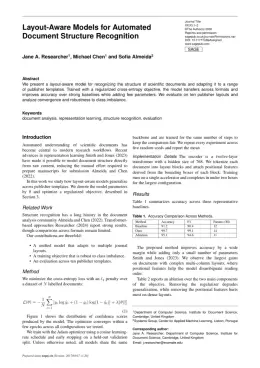
In DocuGuru you write your manuscript in a normal editor — no LaTeX setup required — and select the Journal of Thermoplastic Composite Materials template. When you export, DocuGuru compiles the paper into the official SAGE format and hands you a submission-ready PDF along with the editable LaTeX source.
What reference style does Journal of Thermoplastic Composite Materials use?
Journal of Thermoplastic Composite Materials uses Author–year (Harvard) references, shown as author–year markers such as (Smith, 2023) in the text. DocuGuru formats every in-text citation and the reference list in this exact style automatically. A reference appears like this: Smith, A., Jones, B. and Lee, C. (2023) 'A representative article title', Journal of Thermoplastic Composite Materials, 12(3), pp. 45–58.
Do I need to know LaTeX to submit to Journal of Thermoplastic Composite Materials?
No. DocuGuru generates the sagej LaTeX class and compiles the PDF for you in the background, so you get a SAGE-ready Journal of Thermoplastic Composite Materials document without writing any LaTeX. If you do want it, the LaTeX source is included in the export.
Can I import an existing draft into the Journal of Thermoplastic Composite Materials template?
Yes. Paste or upload your current manuscript — Word, LaTeX, Markdown, or plain text — and DocuGuru reflows it into the Journal of Thermoplastic Composite Materials format with correct headings, figures, tables, and author–year citations.
Who publishes Journal of Thermoplastic Composite Materials?
Journal of Thermoplastic Composite Materials is a multidisciplinary journal published by SAGE. DocuGuru's Journal of Thermoplastic Composite Materials template matches SAGE's official submission format.
Can I export a submission-ready Journal of Thermoplastic Composite Materials PDF?
Yes — DocuGuru produces a PDF built with the official Journal of Thermoplastic Composite Materials template (the sagej class) that is ready to submit to SAGE, together with the matching LaTeX source files.
How much does the Journal of Thermoplastic Composite Materials template cost?
You can start writing in the Journal of Thermoplastic Composite Materials template for free. Exporting the final submission-ready Journal of Thermoplastic Composite Materials PDF and LaTeX source is part of DocuGuru's paid plans — see the app for current pricing.
Use the Journal of Thermoplastic Composite Materials template