
31 citations
Cite
SaveGo to paper →
SAGE
Journal of Stroke Medicine Template
Write in a clean editor, then format for Journal of Stroke Medicine in one click — DocuGuru applies the official SAGE template with author–year references and exports a submission-ready PDF plus the editable LaTeX source. Free to start.
About the Journal of Stroke Medicine format
Journal of Stroke Medicine is a peer-reviewed journal published by SAGE, covering Acute Ischemic Stroke Management, Stroke Rehabilitation and Recovery, Cerebrovascular and Carotid Artery Diseases.
| Publisher | SAGE |
|---|---|
| Reference style | Author–year (Harvard) Author–year — (Smith, 2023) in the text Smith, A., Jones, B. and Lee, C. (2023) 'A representative article title', Journal of Stroke Medicine, 12(3), pp. 45–58.
Formats any DOI in Journal of Stroke Medicine style. No sign-up. |
| Publishes research in | Acute Ischemic Stroke Management Stroke Rehabilitation and Recovery Cerebrovascular and Carotid Artery Diseases Venous Thromboembolism Diagnosis and Management Cerebral Venous Sinus Thrombosis |
| ISSN | 2516-6085 |
| Citation impact (2-yr) | 0.43 |
| h-index | 12 |
| i10-index | 15 |
| Total citations | 424 |
| Top institutions publishing here | Christian Medical College, Vellore |
| Journal website | us.sagepub.com |
| You get | A submission-ready PDF and the editable LaTeX source — ready to submit. |
Papers published in Journal of Stroke Medicine per year
Citation impact of Journal of Stroke Medicine by publication year
Citations each year’s papers have accumulated so far — the most recent years are still building up.
Most-cited papers in Journal of Stroke Medicine
29 citations
Cite
SaveGo to paper →
Abstract Background: Upper extremity deficits are the most popular symptoms following stroke. Task-oriented training has the ability to increase motor area excitability in the brain, which can stimulate the recovery of motor control. Objective: This study was aimed to examine the efficiency of the task-oriented approach on paretic upper extremity following a stroke, and to…
19 citations
Cite
SaveGo to paper →
Background: An essential strategy to reduce mortality and disability after stroke is to ensure access to evidence-based care. In developed countries, it has been shown that if hospitals improve the quality of care, the impact of stroke is attenuated. However, in developing countries, data on the processes of care and associated patient outcomes are scarce.…
18 citations
Cite
SaveGo to paper →
The burden of stroke in Brazil, as in other developing countries, has considerably increased over the past years. With incidence rates ranging from 105 to 137 cases per 100 000 persons per year and mortality reaching 24%, stroke is a major public health issue in this continental country. Although most strokes in Brazil can be…
17 citations
Cite
SaveGo to paper →
Related journal templates
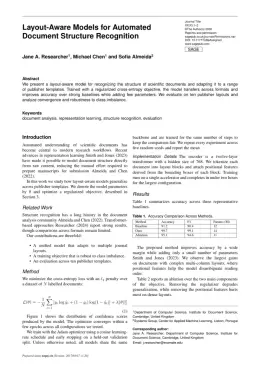
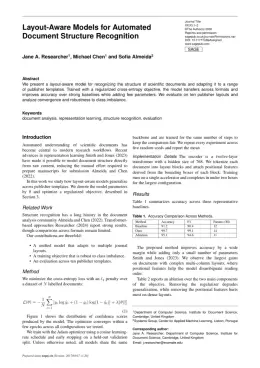
Journal of Stroke Medicine template — frequently asked questions
How do I write a paper in the Journal of Stroke Medicine format?
In DocuGuru you write your manuscript in a normal editor — no LaTeX setup required — and select the Journal of Stroke Medicine template. When you export, DocuGuru compiles the paper into the official SAGE format and hands you a submission-ready PDF along with the editable LaTeX source.
What reference style does Journal of Stroke Medicine use?
Journal of Stroke Medicine uses Author–year (Harvard) references, shown as author–year markers such as (Smith, 2023) in the text. DocuGuru formats every in-text citation and the reference list in this exact style automatically. A reference appears like this: Smith, A., Jones, B. and Lee, C. (2023) 'A representative article title', Journal of Stroke Medicine, 12(3), pp. 45–58.
Do I need to know LaTeX to submit to Journal of Stroke Medicine?
No. DocuGuru generates the sagej LaTeX class and compiles the PDF for you in the background, so you get a SAGE-ready Journal of Stroke Medicine document without writing any LaTeX. If you do want it, the LaTeX source is included in the export.
Can I import an existing draft into the Journal of Stroke Medicine template?
Yes. Paste or upload your current manuscript — Word, LaTeX, Markdown, or plain text — and DocuGuru reflows it into the Journal of Stroke Medicine format with correct headings, figures, tables, and author–year citations.
Who publishes Journal of Stroke Medicine?
Journal of Stroke Medicine is a multidisciplinary journal published by SAGE. DocuGuru's Journal of Stroke Medicine template matches SAGE's official submission format.
Can I export a submission-ready Journal of Stroke Medicine PDF?
Yes — DocuGuru produces a PDF built with the official Journal of Stroke Medicine template (the sagej class) that is ready to submit to SAGE, together with the matching LaTeX source files.
How much does the Journal of Stroke Medicine template cost?
You can start writing in the Journal of Stroke Medicine template for free. Exporting the final submission-ready Journal of Stroke Medicine PDF and LaTeX source is part of DocuGuru's paid plans — see the app for current pricing.