
1,250 citations
Cite
SaveGo to paper →
SAGE
Journal of English Linguistics Template
Write in a clean editor, then format for Journal of English Linguistics in one click — DocuGuru applies the official SAGE template with author–year references and exports a submission-ready PDF plus the editable LaTeX source. Free to start.
About the Journal of English Linguistics format
Journal of English Linguistics is a peer-reviewed journal published by SAGE, covering Linguistic Variation and Morphology, Lexicography and Language Studies, Multilingual Education and Policy.
| Publisher | SAGE |
|---|---|
| Reference style | Author–year (Harvard) Author–year — (Smith, 2023) in the text Smith, A., Jones, B. and Lee, C. (2023) 'A representative article title', Journal of English Linguistics, 12(3), pp. 45–58.
Formats any DOI in Journal of English Linguistics style. No sign-up. |
| Publishes research in | Linguistic Variation and Morphology Lexicography and Language Studies Multilingual Education and Policy Language, Discourse, Communication Strategies Syntax, Semantics, Linguistic Variation |
| ISSN | 0075-4242 |
| Citation impact (2-yr) | 0.71 |
| h-index | 66 |
| i10-index | 308 |
| Total citations | 18,618 |
| Top institutions publishing here | University of Michigan |
| Journal website | eng.sagepub.com |
| You get | A submission-ready PDF and the editable LaTeX source — ready to submit. |
Papers published in Journal of English Linguistics per year
Citation impact of Journal of English Linguistics by publication year
Citations each year’s papers have accumulated so far — the most recent years are still building up.
Most-cited papers in Journal of English Linguistics
This paper examines the discursive construction of refugees and asylum seekers (and to a lesser extent immigrants and migrants) in a 140-million-word corpus of UK press articles published between 1996 and 2005. Taking a corpus-based approach, the data were analyzed not only as a whole, but also with regard to synchronic variation, by carrying out…
711 citations
Cite
SaveGo to paper →
This article explores the sociolinguistic history of a U.S. city. On the basis of historical research, ethnography, discourse analysis, and sociolinguistic interviews, the authors describe how a set of linguistic features that were once not noticed at all, then used and heard primarily as markers of socioeconomic class, have come to be linked increasingly to…
669 citations
Cite
SaveGo to paper →
The corpus analysis program WordSmith Tools allows two corpora to be compared against each other in order to acquire a list of keywords: words that appear statistically more often in one text than the other. This article examines some potential problems of analyzing keywords and ways to overcome them. A keywords analysis may force the…
390 citations
Cite
SaveGo to paper →
390 citations
Cite
SaveGo to paper →
Related journal templates
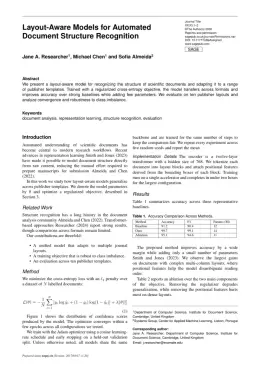
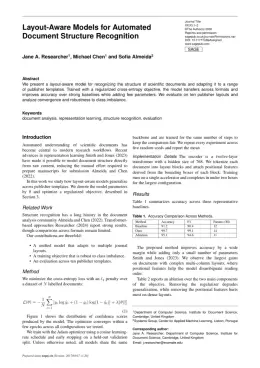
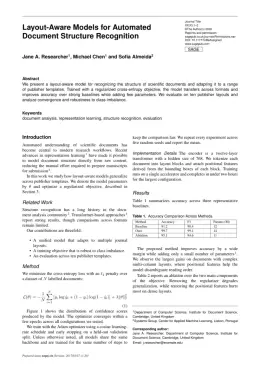
Journal of English Linguistics template — frequently asked questions
How do I write a paper in the Journal of English Linguistics format?
In DocuGuru you write your manuscript in a normal editor — no LaTeX setup required — and select the Journal of English Linguistics template. When you export, DocuGuru compiles the paper into the official SAGE format and hands you a submission-ready PDF along with the editable LaTeX source.
What reference style does Journal of English Linguistics use?
Journal of English Linguistics uses Author–year (Harvard) references, shown as author–year markers such as (Smith, 2023) in the text. DocuGuru formats every in-text citation and the reference list in this exact style automatically. A reference appears like this: Smith, A., Jones, B. and Lee, C. (2023) 'A representative article title', Journal of English Linguistics, 12(3), pp. 45–58.
Do I need to know LaTeX to submit to Journal of English Linguistics?
No. DocuGuru generates the sagej LaTeX class and compiles the PDF for you in the background, so you get a SAGE-ready Journal of English Linguistics document without writing any LaTeX. If you do want it, the LaTeX source is included in the export.
Can I import an existing draft into the Journal of English Linguistics template?
Yes. Paste or upload your current manuscript — Word, LaTeX, Markdown, or plain text — and DocuGuru reflows it into the Journal of English Linguistics format with correct headings, figures, tables, and author–year citations.
Who publishes Journal of English Linguistics?
Journal of English Linguistics is a multidisciplinary journal published by SAGE. DocuGuru's Journal of English Linguistics template matches SAGE's official submission format.
Can I export a submission-ready Journal of English Linguistics PDF?
Yes — DocuGuru produces a PDF built with the official Journal of English Linguistics template (the sagej class) that is ready to submit to SAGE, together with the matching LaTeX source files.
How much does the Journal of English Linguistics template cost?
You can start writing in the Journal of English Linguistics template for free. Exporting the final submission-ready Journal of English Linguistics PDF and LaTeX source is part of DocuGuru's paid plans — see the app for current pricing.