SAGE

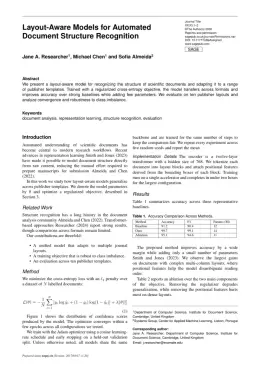
Journal of Chinese Writing Systems Template

Write in a clean editor, then format for Journal of Chinese Writing Systems in one click — DocuGuru applies the official SAGE template with author–year references and exports a submission-ready PDF plus the editable LaTeX source. Free to start.

About the Journal of Chinese Writing Systems format

Journal of Chinese Writing Systems is a peer-reviewed journal published by SAGE, covering Chinese history and philosophy, Vietnamese History and Culture Studies, Legal and Regulatory Analysis.

PublisherSAGE
Reference styleAuthor–year (Harvard)
Author–year — (Smith, 2023) in the text
Smith, A., Jones, B. and Lee, C. (2023) 'A representative article title', Journal of Chinese Writing Systems, 12(3), pp. 45–58.

Formats any DOI in Journal of Chinese Writing Systems style. No sign-up.

Publishes research inChinese history and philosophy Vietnamese History and Culture Studies Legal and Regulatory Analysis Linguistic, Cultural, and Literary Studies Military Technology and Strategies
ISSN2513-8502
Citation impact (2-yr)0.49
h-index7
i10-index2
Total citations288
Top institutions publishing hereEast China Normal University
Journal websiteus.sagepub.com
You getA submission-ready PDF and the editable LaTeX source — ready to submit.

Papers published in Journal of Chinese Writing Systems per year

15
2017
36
2018
29
2019
38
2020
30
2021
28
2022
28
2023
32
2024
22
2025

Citation impact of Journal of Chinese Writing Systems by publication year

7
2017
42
2018
26
2019
80
2020
26
2021
41
2022
27
2023
31
2024
3
2025

Citations each year’s papers have accumulated so far — the most recent years are still building up.

Most-cited papers in Journal of Chinese Writing Systems

What makes learning Chinese characters difficult? The voice of students from English secondary schools

Yang Juan · 1 Mar 2018

This study initially investigated the beliefs of beginner learners of Chinese as a foreign language (CFL) about the difficulties of learning Chinese and how they can overcome the difficulties they encounter. Pupils (179) from two state secondary schools in England responded to a Likert scale questionnaire and shared their views in interviews. Surprisingly, pupils think…

Sesquisyllabicity, Chữ Nôm, and the Early Modern embrace of vernacular writing in Vietnam

John D. Phan · 1 Sep 2020

In East Asia, the relationship between script and language is determined to a great extent by the typological character of the languages involved. This is particularly so because sinographic writing generally relies on the syllable as the smallest unit of sound expressible. However, many languages that have adapted Sinitic writing throughout history display complex syllable…

The Chinese script, Confucian script, and Nôm script: Some reflections on writing and politics in monarchical Vietnam

Tuấn-Cường Nguyễn, Anh-Chưởng Bùi · 1 Sep 2020

“Confucian script” 儒字 (chữ Nho) has become a unique name used to refer to the “Chinese script” 漢字 (chữ Hán) in Vietnamese. The integration between Chinese script and Confucianism had progressed through monarchical centuries, motivated by Vietnam’s political tradition. Supported by rulers of the country, Chinese script overwhelmed the difference of languages, became the official…

An examination of Chinese character writing errors: Developmental differences among Chinese as a foreign language learners

Siqi Deng, Wenhua Hu · 1 Mar 2022

With interlanguage corpora, this study investigates the handwriting errors by Chinese as a foreign language (CFL) learners from eight countries and three language families (Indo-European languages, Slavic languages, Romance languages), including wrongly written characters and misused characters. The results indicate that the most common mistake among elementary, intermediate and advanced learners is wrongly written characters…

Introduction: Graphemic classifiers in complex script systems

Orly Goldwasser, Zev Handel · 1 Mar 2024

This article explores the role of unpronounced semantic classifiers , also known as graphemic classifiers or determinatives , in three ancient complex scripts: Egyptian, Chinese and Sumerian. These classifiers are silent hieroglyphs, Chinese characters or cuneiform signs that are combined with other signs that carry phonetic information to form a complete written representation of a…

Journal of Chinese Writing Systems template — frequently asked questions

How do I write a paper in the Journal of Chinese Writing Systems format?
In DocuGuru you write your manuscript in a normal editor — no LaTeX setup required — and select the Journal of Chinese Writing Systems template. When you export, DocuGuru compiles the paper into the official SAGE format and hands you a submission-ready PDF along with the editable LaTeX source.
What reference style does Journal of Chinese Writing Systems use?
Journal of Chinese Writing Systems uses Author–year (Harvard) references, shown as author–year markers such as (Smith, 2023) in the text. DocuGuru formats every in-text citation and the reference list in this exact style automatically. A reference appears like this: Smith, A., Jones, B. and Lee, C. (2023) 'A representative article title', Journal of Chinese Writing Systems, 12(3), pp. 45–58.
Do I need to know LaTeX to submit to Journal of Chinese Writing Systems?
No. DocuGuru generates the sagej LaTeX class and compiles the PDF for you in the background, so you get a SAGE-ready Journal of Chinese Writing Systems document without writing any LaTeX. If you do want it, the LaTeX source is included in the export.
Can I import an existing draft into the Journal of Chinese Writing Systems template?
Yes. Paste or upload your current manuscript — Word, LaTeX, Markdown, or plain text — and DocuGuru reflows it into the Journal of Chinese Writing Systems format with correct headings, figures, tables, and author–year citations.
Who publishes Journal of Chinese Writing Systems?
Journal of Chinese Writing Systems is a multidisciplinary journal published by SAGE. DocuGuru's Journal of Chinese Writing Systems template matches SAGE's official submission format.
Can I export a submission-ready Journal of Chinese Writing Systems PDF?
Yes — DocuGuru produces a PDF built with the official Journal of Chinese Writing Systems template (the sagej class) that is ready to submit to SAGE, together with the matching LaTeX source files.
How much does the Journal of Chinese Writing Systems template cost?
You can start writing in the Journal of Chinese Writing Systems template for free. Exporting the final submission-ready Journal of Chinese Writing Systems PDF and LaTeX source is part of DocuGuru's paid plans — see the app for current pricing.

Use the Journal of Chinese Writing Systems template