SAGE

International Journal of Behavioral Development Template

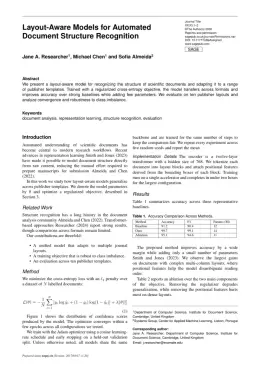
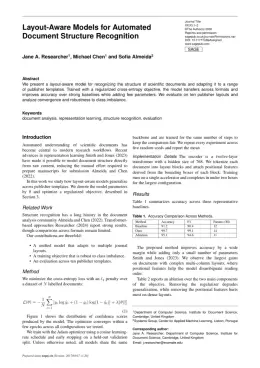
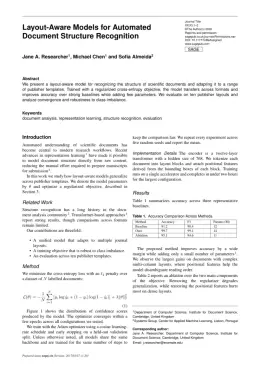
Write in a clean editor, then format for International Journal of Behavioral Development in one click — DocuGuru applies the official SAGE template with author–year references and exports a submission-ready PDF plus the editable LaTeX source. Free to start.

About the International Journal of Behavioral Development format

International Journal of Behavioral Development is a peer-reviewed journal published by SAGE, covering Child and Adolescent Psychosocial and Emotional Development, Early Childhood Education and Development, Child and Animal Learning Development.

PublisherSAGE
Reference styleAuthor–year (Harvard)
Author–year — (Smith, 2023) in the text
Smith, A., Jones, B. and Lee, C. (2023) 'A representative article title', International Journal of Behavioral Development, 12(3), pp. 45–58.

Formats any DOI in International Journal of Behavioral Development style. No sign-up.

Publishes research inChild and Adolescent Psychosocial and Emotional Development Early Childhood Education and Development Child and Animal Learning Development Attachment and Relationship Dynamics Bullying, Victimization, and Aggression
ISSN0165-0254
Citation impact (2-yr)1.67
h-index150
i10-index1,783
Total citations118,921
Top institutions publishing herePennsylvania State University
Journal websitejbd.sagepub.com
You getA submission-ready PDF and the editable LaTeX source — ready to submit.

Papers published in International Journal of Behavioral Development per year

86
2014
89
2015
77
2016
53
2017
38
2018
88
2019
50
2020
42
2021
52
2022
49
2023
75
2024
114
2025

Citation impact of International Journal of Behavioral Development by publication year

5.5K
2014
3.7K
2015
2.2K
2016
1.5K
2017
885
2018
3.1K
2019
1.4K
2020
933
2021
661
2022
469
2023
256
2024
122
2025

Citations each year’s papers have accumulated so far — the most recent years are still building up.

Most-cited papers in International Journal of Behavioral Development

The Actor–Partner Interdependence Model: A model of bidirectional effects in developmental studies

William L. Cook, David A. Kenny · 17 Feb 2005

The actor–partner interdependence model (APIM) is a model of dyadic relationships that integrates a conceptual view of interdependence with the appropriate statistical techniques for measuring and testing it. In this article we present the APIM as a general, longitudinal model for measuring bidirectional effects in interpersonal relationships. We also present three different approaches to testing…

1,882 citations Cite SaveGo to paper →
The Developmental Niche: A Conceptualization at the Interface of Child and Culture

Charles M. Super, Sara Harkness · 1 Dec 1986

Anthropological approaches to human development have been oriented primarily to the socialized adult, at the expense of understanding developmental processes. Developmental psychology, in contrast, has traditionally been concerned with a decontextualized, 'universal' child. After a brief historical review, the 'developmental niche' is introduced as a framework for examining the cultural structuring of child development. The…

1,501 citations Cite SaveGo to paper →
Methods and Measures: Growth mixture modeling: A method for identifying differences in longitudinal change among unobserved groups

Nilám Ram, Kevin J. Grimm · 26 Oct 2009

Growth mixture modeling (GMM) is a method for identifying multiple unobserved sub-populations, describing longitudinal change within each unobserved sub-population, and examining differences in change among unobserved sub-populations. We provide a practical primer that may be useful for researchers beginning to incorporate GMM analysis into their research. We briefly review basic elements of the standard latent…

1,127 citations Cite SaveGo to paper →
Beyond Ponce de Leon and Life Satisfaction: New Directions in Quest of Successful Ageing

Carol D. Ryff · 1 Mar 1989

Previous approaches to the study of successful ageing are reviewed. It is argued that there has been an absence of theory guiding this research; an implicit negativism in the proposed conceptions of well-being; a neglect of the possibility for continued growth and development in old age; and a failure to see conceptions of positive ageing…

Emotion regulation from early adolescence to emerging adulthood and middle adulthood

Peter Zimmermann, Alexandra Iwanski · 23 Jan 2014

Despite the growing research on emotion regulation, the empirical evidence for normative age-related emotion regulation patterns is rather divergent. From a life-span perspective, normative age changes in emotion regulation may be more salient applying the same methodological approach on a broad age range examining both growth and decline during development. In addition, emotion-specific developmental patterns…

International Journal of Behavioral Development template — frequently asked questions

How do I write a paper in the International Journal of Behavioral Development format?
In DocuGuru you write your manuscript in a normal editor — no LaTeX setup required — and select the International Journal of Behavioral Development template. When you export, DocuGuru compiles the paper into the official SAGE format and hands you a submission-ready PDF along with the editable LaTeX source.
What reference style does International Journal of Behavioral Development use?
International Journal of Behavioral Development uses Author–year (Harvard) references, shown as author–year markers such as (Smith, 2023) in the text. DocuGuru formats every in-text citation and the reference list in this exact style automatically. A reference appears like this: Smith, A., Jones, B. and Lee, C. (2023) 'A representative article title', International Journal of Behavioral Development, 12(3), pp. 45–58.
Do I need to know LaTeX to submit to International Journal of Behavioral Development?
No. DocuGuru generates the sagej LaTeX class and compiles the PDF for you in the background, so you get a SAGE-ready International Journal of Behavioral Development document without writing any LaTeX. If you do want it, the LaTeX source is included in the export.
Can I import an existing draft into the International Journal of Behavioral Development template?
Yes. Paste or upload your current manuscript — Word, LaTeX, Markdown, or plain text — and DocuGuru reflows it into the International Journal of Behavioral Development format with correct headings, figures, tables, and author–year citations.
Who publishes International Journal of Behavioral Development?
International Journal of Behavioral Development is a multidisciplinary journal published by SAGE. DocuGuru's International Journal of Behavioral Development template matches SAGE's official submission format.
Can I export a submission-ready International Journal of Behavioral Development PDF?
Yes — DocuGuru produces a PDF built with the official International Journal of Behavioral Development template (the sagej class) that is ready to submit to SAGE, together with the matching LaTeX source files.
How much does the International Journal of Behavioral Development template cost?
You can start writing in the International Journal of Behavioral Development template for free. Exporting the final submission-ready International Journal of Behavioral Development PDF and LaTeX source is part of DocuGuru's paid plans — see the app for current pricing.

Use the International Journal of Behavioral Development template