SAGE

Empirical Studies of the Arts Template

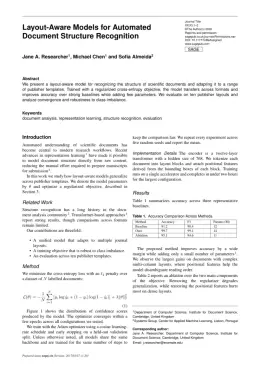
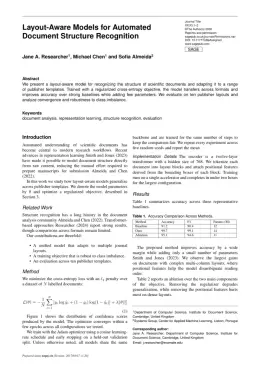
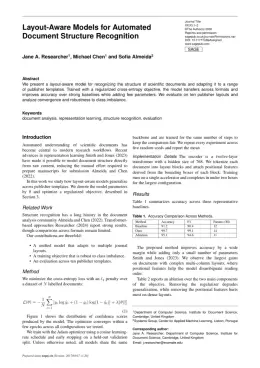
Write in a clean editor, then format for Empirical Studies of the Arts in one click — DocuGuru applies the official SAGE template with author–year references and exports a submission-ready PDF plus the editable LaTeX source. Free to start.

About the Empirical Studies of the Arts format

Empirical Studies of the Arts is a peer-reviewed journal published by SAGE, covering Aesthetic Perception and Analysis, Creativity in Education and Neuroscience, Color perception and design.

PublisherSAGE
Reference styleAuthor–year (Harvard)
Author–year — (Smith, 2023) in the text
Smith, A., Jones, B. and Lee, C. (2023) 'A representative article title', Empirical Studies of the Arts, 12(3), pp. 45–58.

Formats any DOI in Empirical Studies of the Arts style. No sign-up.

Publishes research inAesthetic Perception and Analysis Creativity in Education and Neuroscience Color perception and design Multisensory perception and integration Art History and Market Analysis
ISSN0276-2374
Citation impact (2-yr)1.79
h-index51
i10-index293
Total citations11,844
Top institutions publishing hereUniversity of Toronto
Journal websiteus.sagepub.com
You getA submission-ready PDF and the editable LaTeX source — ready to submit.

Papers published in Empirical Studies of the Arts per year

12
2014
15
2015
24
2016
15
2017
12
2018
24
2019
9
2020
14
2021
20
2022
36
2023
40
2024
41
2025

Citation impact of Empirical Studies of the Arts by publication year

216
2014
188
2015
297
2016
189
2017
331
2018
230
2019
166
2020
332
2021
149
2022
189
2023
134
2024
46
2025

Citations each year’s papers have accumulated so far — the most recent years are still building up.

Most-cited papers in Empirical Studies of the Arts

Sure, I'm Creative—But Not in Mathematics!: Self-Reported Creativity in Diverse Domains

James C. Kaufman, John Baer · 1 Jul 2004

The degree to which creativity is domain-specific or domain-general remains hotly contested, but there is at least one area of agreement: people have different creativity profiles. In this study, we asked 241 students to give self-ratings of their creativity in different domains. These ratings were then studied for inter-correlations. We also examined how such self-assessments…

Do People Prefer Curved Objects? Angularity, Expertise, and Aesthetic Preference

Paul J. Silvia, Christopher M. Barona · 19 Dec 2008

Do people prefer curved lines, shapes, and objects over angular lines, shapes, and objects? Angularity is one of the oldest variables in the psychology of aesthetics, but past research has not always controlled for potential confounds. Two experiments manipulated angularity while controlling for symmetry, prototypicality, and balance. Study 1 used arrays of circles and hexagons…

Cognitive Appraisals and Interest in Visual Art: Exploring an Appraisal Theory of Aesthetic Emotions

Paul J. Silvia · 1 Jul 2005

Since Berlyne's seminal research, the study of experimental aesthetics has examined interest as a response to art. The present research explores the implications of appraisal theories of emotion for the study of interest as an emotion relevant to aesthetics. Participants viewed pictures of modern experimental visual art and rated each picture for interest and for…

The Assessment of Art Attributes

Anjan Chatterjee, Page Widick, Rebecca Sternschein et al. · 1 Jul 2010

Neuropsychological investigations of art production and perception have the potential to offer critical insight into the biology of visual aesthetics. Thus far, however, investigations of art production in patients have been limited to anecdotal observations and investigations of art perception are non-existent. Progress in the field is hampered by the lack of an adequate instrument…

Visual Complexity and Beauty Appreciation: Explaining the Divergence of Results

Marcos Nadal, Enric Munar, Gisèle Marty et al. · 1 Jul 2010

Although a number of studies have verified Daniel Berlyne's (1971) predicted maximum preference for intermediately complex stimuli, others have found that preference increased or decreased in relation to complexity. The objective of the present work was to assess whether differences in the kinds of stimuli used in prior studies or in the way complexity was…

Empirical Studies of the Arts template — frequently asked questions

How do I write a paper in the Empirical Studies of the Arts format?
In DocuGuru you write your manuscript in a normal editor — no LaTeX setup required — and select the Empirical Studies of the Arts template. When you export, DocuGuru compiles the paper into the official SAGE format and hands you a submission-ready PDF along with the editable LaTeX source.
What reference style does Empirical Studies of the Arts use?
Empirical Studies of the Arts uses Author–year (Harvard) references, shown as author–year markers such as (Smith, 2023) in the text. DocuGuru formats every in-text citation and the reference list in this exact style automatically. A reference appears like this: Smith, A., Jones, B. and Lee, C. (2023) 'A representative article title', Empirical Studies of the Arts, 12(3), pp. 45–58.
Do I need to know LaTeX to submit to Empirical Studies of the Arts?
No. DocuGuru generates the sagej LaTeX class and compiles the PDF for you in the background, so you get a SAGE-ready Empirical Studies of the Arts document without writing any LaTeX. If you do want it, the LaTeX source is included in the export.
Can I import an existing draft into the Empirical Studies of the Arts template?
Yes. Paste or upload your current manuscript — Word, LaTeX, Markdown, or plain text — and DocuGuru reflows it into the Empirical Studies of the Arts format with correct headings, figures, tables, and author–year citations.
Who publishes Empirical Studies of the Arts?
Empirical Studies of the Arts is a multidisciplinary journal published by SAGE. DocuGuru's Empirical Studies of the Arts template matches SAGE's official submission format.
Can I export a submission-ready Empirical Studies of the Arts PDF?
Yes — DocuGuru produces a PDF built with the official Empirical Studies of the Arts template (the sagej class) that is ready to submit to SAGE, together with the matching LaTeX source files.
How much does the Empirical Studies of the Arts template cost?
You can start writing in the Empirical Studies of the Arts template for free. Exporting the final submission-ready Empirical Studies of the Arts PDF and LaTeX source is part of DocuGuru's paid plans — see the app for current pricing.

Use the Empirical Studies of the Arts template