
1,627 citations
Cite
SaveGo to paper →
SAGE
Emotion Review Template
Write in a clean editor, then format for Emotion Review in one click — DocuGuru applies the official SAGE template with author–year references and exports a submission-ready PDF plus the editable LaTeX source. Free to start.
About the Emotion Review format
Emotion Review is a peer-reviewed journal published by SAGE, covering Emotions and Moral Behavior, Psychology of Moral and Emotional Judgment, Cultural Differences and Values.
| Publisher | SAGE |
|---|---|
| Reference style | Author–year (Harvard) Author–year — (Smith, 2023) in the text Smith, A., Jones, B. and Lee, C. (2023) 'A representative article title', Emotion Review, 12(3), pp. 45–58.
Formats any DOI in Emotion Review style. No sign-up. |
| Publishes research in | Emotions and Moral Behavior Psychology of Moral and Emotional Judgment Cultural Differences and Values Mental Health Research Topics Face Recognition and Perception |
| ISSN | 1754-0739 |
| Citation impact (2-yr) | 3.47 |
| h-index | 126 |
| i10-index | 550 |
| Total citations | 59,503 |
| Top institutions publishing here | University of Geneva |
| Journal website | us.sagepub.com |
| You get | A submission-ready PDF and the editable LaTeX source — ready to submit. |
Papers published in Emotion Review per year
Citation impact of Emotion Review by publication year
Citations each year’s papers have accumulated so far — the most recent years are still building up.
Most-cited papers in Emotion Review
The inconsistent definition of empathy has had a negative impact on both research and practice. The aim of this article is to review and critically appraise a range of definitions of empathy and, through considered analysis, to develop a new conceptualisation. From the examination of 43 discrete definitions, 8 themes relating to the nature of…
1,586 citations
Cite
SaveGo to paper →
This review demonstrates that an individualist view of emotion and regulation is untenable. First, I question the plausibility of a developmental shift away from social interdependency in emotion regulation. Second, I show that there are multiple reasons for emotional experiences in adults to elicit a process of social sharing of emotion, and I review the…
1,515 citations
Cite
SaveGo to paper →
This article presents seven principles that have guided our thinking about emotional intelligence, some of them new. We have reformulated our original ability model here guided by these principles, clarified earlier statements of the model that were unclear, and revised portions of it in response to current research. In this revision, we also positioned emotional…
1,369 citations
Cite
SaveGo to paper →
Emotions are discrete, automatic responses to universally shared, culture-specific and individual-specific events. The emotion terms, such as anger, fear, etcetera, denote a family of related states sharing at least 12 characteristics, which distinguish one emotion family from another, as well as from other affective states. These affective responses are preprogrammed and involuntary, but are also…
1,335 citations
Cite
SaveGo to paper →
Related journal templates
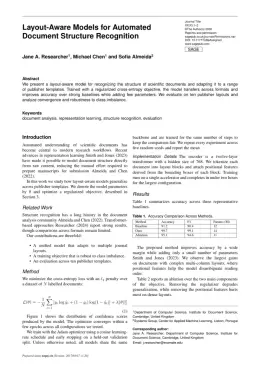
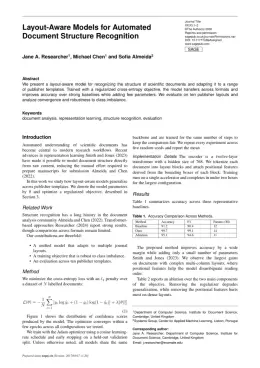
Emotion Review template — frequently asked questions
How do I write a paper in the Emotion Review format?
In DocuGuru you write your manuscript in a normal editor — no LaTeX setup required — and select the Emotion Review template. When you export, DocuGuru compiles the paper into the official SAGE format and hands you a submission-ready PDF along with the editable LaTeX source.
What reference style does Emotion Review use?
Emotion Review uses Author–year (Harvard) references, shown as author–year markers such as (Smith, 2023) in the text. DocuGuru formats every in-text citation and the reference list in this exact style automatically. A reference appears like this: Smith, A., Jones, B. and Lee, C. (2023) 'A representative article title', Emotion Review, 12(3), pp. 45–58.
Do I need to know LaTeX to submit to Emotion Review?
No. DocuGuru generates the sagej LaTeX class and compiles the PDF for you in the background, so you get a SAGE-ready Emotion Review document without writing any LaTeX. If you do want it, the LaTeX source is included in the export.
Can I import an existing draft into the Emotion Review template?
Yes. Paste or upload your current manuscript — Word, LaTeX, Markdown, or plain text — and DocuGuru reflows it into the Emotion Review format with correct headings, figures, tables, and author–year citations.
Who publishes Emotion Review?
Emotion Review is a multidisciplinary journal published by SAGE. DocuGuru's Emotion Review template matches SAGE's official submission format.
Can I export a submission-ready Emotion Review PDF?
Yes — DocuGuru produces a PDF built with the official Emotion Review template (the sagej class) that is ready to submit to SAGE, together with the matching LaTeX source files.
How much does the Emotion Review template cost?
You can start writing in the Emotion Review template for free. Exporting the final submission-ready Emotion Review PDF and LaTeX source is part of DocuGuru's paid plans — see the app for current pricing.