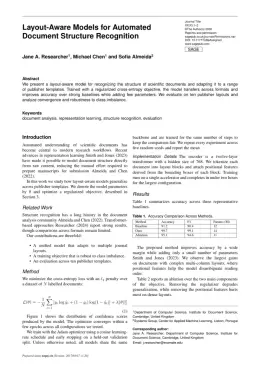
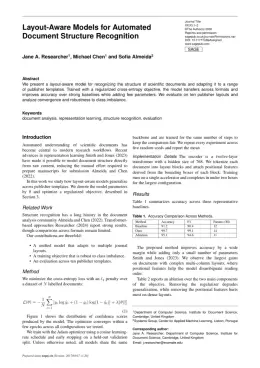
About the Educational Management & Administration format
Educational Management & Administration is a peer-reviewed journal published by SAGE, covering Teacher Education and Leadership Studies, Education Systems and Policy, Educational Assessment and Improvement.
| Publisher | SAGE |
|---|
| Reference style | Author–year (Harvard) Author–year — (Smith, 2023) in the text
Smith, A., Jones, B. and Lee, C. (2023) 'A representative article title', Educational Management & Administration, 12(3), pp. 45–58.
Formats any DOI in Educational Management & Administration style. No sign-up.
|
|---|
| Publishes research in | Teacher Education and Leadership Studies Education Systems and Policy Educational Assessment and Improvement Collaborative Teaching and Inclusion School Choice and Performance |
|---|
| ISSN | 0263-211X |
|---|
| h-index | 50 |
|---|
| i10-index | 232 |
|---|
| Total citations | 13,470 |
|---|
| Top institutions publishing here | University of Birmingham |
|---|
| You get | A submission-ready PDF and the editable LaTeX source — ready to submit. |
|---|
Papers published in Educational Management & Administration per year
Citation impact of Educational Management & Administration by publication year
Citations each year’s papers have accumulated so far — the most recent years are still building up.
Most-cited papers in Educational Management & Administration
Educational Leadership
Ann Weaver Hart · 1 Jul 1999
Changes in educational leadership and administration over the past decade and a half represent a shift from traditional, social science-based approaches to more cognitively based views of the field. In addition, a heightened interest in the connections between the way educational leaders think and their actions has led to expanded emphasis on practice-based knowledge and…
Distributed Properties
Peter Gronn · 1 Jul 2000
This article argues for a reconceptualization of leadership. Possible substitutes for leadership are reviewed along with a number of existing dualisms. These are rejected in favour of the claim that the leadership of organizations is most appropriately understood as a distributed, rather thanas a focused, phenomenon. Various attributes, dimensions and applications of distribution are then…
Teacher Leadership—Improvement through Empowerment?
Daniël Muijs, Alma Harris · 25 Sep 2003
As the limitations of the `charismatic head' theories of leadership in schools have become ever more apparent, there has been a move towards teacher leadership, characterized by a form of collective leadership in which teachers develop expertise by working collaboratively. In this article, the possible benefits of teacher leadership are explored, as well as the…
Micropolitics of Educational Organisations
Eric Hoyle · 1 Jul 1982
A Preparation for School Leadership
Tony Bush, David Jackson · 1 Oct 2002
The English National College for School Leadership organized a programme of study visits to several international leadership centres in 2001. This article reports the findings of these visits and relates them to recent research on school leadership preparation. This shows a widespread commitment to training and preparation for headship but considerable diversity in the nature…