SAGE

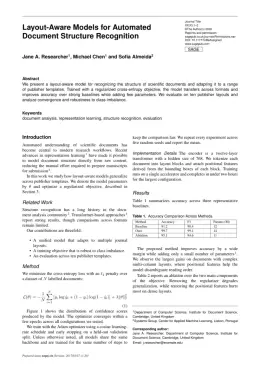
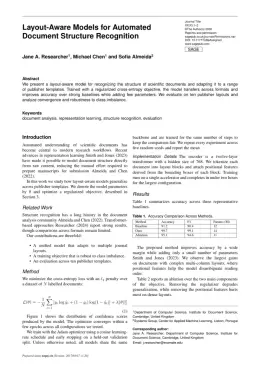
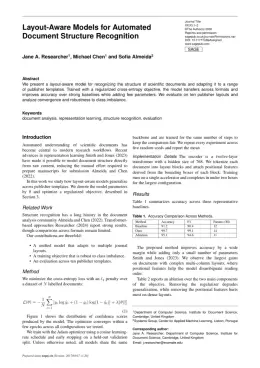
Composites and Advanced Materials Template

Write in a clean editor, then format for Composites and Advanced Materials in one click — DocuGuru applies the official SAGE template with author–year references and exports a submission-ready PDF plus the editable LaTeX source. Free to start.

About the Composites and Advanced Materials format

Composites and Advanced Materials is a peer-reviewed journal published by SAGE, covering Natural Fiber Reinforced Composites, Mechanical Behavior of Composites, Additive Manufacturing and 3D Printing Technologies.

PublisherSAGE
Reference styleAuthor–year (Harvard)
Author–year — (Smith, 2023) in the text
Smith, A., Jones, B. and Lee, C. (2023) 'A representative article title', Composites and Advanced Materials, 12(3), pp. 45–58.

Formats any DOI in Composites and Advanced Materials style. No sign-up.

Publishes research inNatural Fiber Reinforced Composites Mechanical Behavior of Composites Additive Manufacturing and 3D Printing Technologies Innovations in Concrete and Construction Materials Aluminum Alloys Composites Properties
ISSN2634-9833
Citation impact (2-yr)3
h-index13
i10-index22
Total citations969
Article processing charge$1,500
Open accessYes
Top institutions publishing hereTechnische Universität Berlin
Journal websiteus.sagepub.com
You getA submission-ready PDF and the editable LaTeX source — ready to submit.

Papers published in Composites and Advanced Materials per year

38
2021
17
2022
26
2023
33
2024
27
2025

Citation impact of Composites and Advanced Materials by publication year

408
2021
121
2022
221
2023
172
2024
29
2025

Citations each year’s papers have accumulated so far — the most recent years are still building up.

Most-cited papers in Composites and Advanced Materials

A review of recent developments in structural applications of natural fiber-Reinforced composites (NFRCs)

Hossein Abdollahiparsa, Ali Shahmirzaloo, Patrick Teuffel et al. · 1 Jan 2023

Natural fiber-reinforced composites (NFRCs) are expected to find growing applications in near future, especially in Europe where stringent environmental codes are being legislated and public pressure for their enforcement is increasing. Study has shown that NFRCs are also gaining recognition among civil engineers as a viable alternative to traditional materials for use as concrete reinforcement…

Sustainable building materials: A comprehensive study on eco-friendly alternatives for construction

Yonatan Ayele Abera · 1 Feb 2024

An in-depth review of a varied range of eco-friendly options for construction is done in this thorough research on sustainable building materials. With increased worries about environmental deterioration, the building sector is increasingly focusing on long-term solutions. This research looks into a variety of materials, including bamboo, engineered wood products, recycled composites, and optimal concrete…

Mechanical properties of particulate organic natural filler-reinforced polymer composite: A review

Hoo Tien Nicholas Kuan, Ming Yee Tan, Yiou Shen et al. · 1 Jan 2021

Considering the cost in utilization of organic natural filler as an alternative to manmade fiber and mineral inorganic filler-reinforced polymer composite is of great interest. The main reasons for using natural fillers are to reduce the dependence on petroleum-based, nonrenewable resources and are also a smarter use of environment and financial resources. Only limited research…

Sustainability in additive manufacturing: Exploring the mechanical potential of recycled PET filaments

Helge Schneevogt, Kevin Stelzner, Buket Yılmaz et al. · 1 Jan 2021

Herein, the effects of recycled polymers on the mechanical properties of additively manufactured specimens, specifically those derived by fused deposition modelling, are determined. The intention is to investigate how 3D-printing can be more sustainable and how recycled polymers compare against conventional ones. Initially, sustainability is discussed in general and more sustainable materials such as recycled…

3D printing of a continuous fiber-reinforced composite based on a coaxial Kevlar/PLA filament

Trenton Cersoli, Bharat Yelamanchi, Eric MacDonald et al. · 1 Jan 2021

Additive manufacturing has allowed for the production of complex and mass customized geometries, but often at the expense of mechanical performance, a penalty which can be in part mitigated with the fabrication of composite parts. Thermoplastic structures fabricated with material extrusion additive manufacturing stand to be improved in terms of fracture toughness with the integration…

Composites and Advanced Materials template — frequently asked questions

How do I write a paper in the Composites and Advanced Materials format?
In DocuGuru you write your manuscript in a normal editor — no LaTeX setup required — and select the Composites and Advanced Materials template. When you export, DocuGuru compiles the paper into the official SAGE format and hands you a submission-ready PDF along with the editable LaTeX source.
What reference style does Composites and Advanced Materials use?
Composites and Advanced Materials uses Author–year (Harvard) references, shown as author–year markers such as (Smith, 2023) in the text. DocuGuru formats every in-text citation and the reference list in this exact style automatically. A reference appears like this: Smith, A., Jones, B. and Lee, C. (2023) 'A representative article title', Composites and Advanced Materials, 12(3), pp. 45–58.
Do I need to know LaTeX to submit to Composites and Advanced Materials?
No. DocuGuru generates the sagej LaTeX class and compiles the PDF for you in the background, so you get a SAGE-ready Composites and Advanced Materials document without writing any LaTeX. If you do want it, the LaTeX source is included in the export.
Can I import an existing draft into the Composites and Advanced Materials template?
Yes. Paste or upload your current manuscript — Word, LaTeX, Markdown, or plain text — and DocuGuru reflows it into the Composites and Advanced Materials format with correct headings, figures, tables, and author–year citations.
Who publishes Composites and Advanced Materials?
Composites and Advanced Materials is a multidisciplinary journal published by SAGE. DocuGuru's Composites and Advanced Materials template matches SAGE's official submission format.
Can I export a submission-ready Composites and Advanced Materials PDF?
Yes — DocuGuru produces a PDF built with the official Composites and Advanced Materials template (the sagej class) that is ready to submit to SAGE, together with the matching LaTeX source files.
How much does the Composites and Advanced Materials template cost?
You can start writing in the Composites and Advanced Materials template for free. Exporting the final submission-ready Composites and Advanced Materials PDF and LaTeX source is part of DocuGuru's paid plans — see the app for current pricing.

Use the Composites and Advanced Materials template