SAGE

Clinical Medicine Insights Cardiology Template

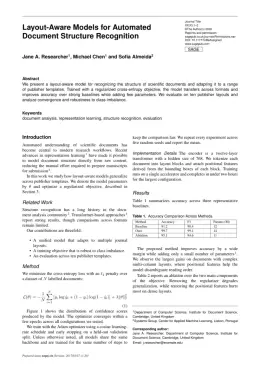
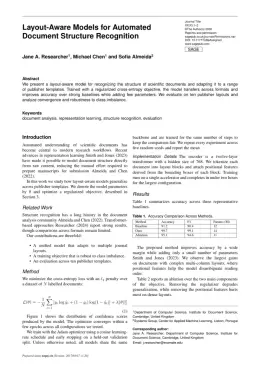
Write in a clean editor, then format for Clinical Medicine Insights Cardiology in one click — DocuGuru applies the official SAGE template with author–year references and exports a submission-ready PDF plus the editable LaTeX source. Free to start.

About the Clinical Medicine Insights Cardiology format

Clinical Medicine Insights Cardiology is a peer-reviewed journal published by SAGE, covering Cardiovascular Function and Risk Factors, Cardiac Imaging and Diagnostics, Cardiac Arrhythmias and Treatments.

PublisherSAGE
Reference styleAuthor–year (Harvard)
Author–year — (Smith, 2023) in the text
Smith, A., Jones, B. and Lee, C. (2023) 'A representative article title', Clinical Medicine Insights Cardiology, 12(3), pp. 45–58.

Formats any DOI in Clinical Medicine Insights Cardiology style. No sign-up.

Publishes research inCardiovascular Function and Risk Factors Cardiac Imaging and Diagnostics Cardiac Arrhythmias and Treatments Heart Failure Treatment and Management Atrial Fibrillation Management and Outcomes
ISSN1179-5468
Citation impact (2-yr)1.52
h-index44
i10-index171
Total citations7,455
Article processing charge$1,200
Open accessYes
Top institutions publishing hereHofstra University
Journal websitejournals.sagepub.com
You getA submission-ready PDF and the editable LaTeX source — ready to submit.

Papers published in Clinical Medicine Insights Cardiology per year

56
2014
39
2015
39
2016
22
2017
17
2018
21
2019
22
2020
13
2021
19
2022
8
2023
15
2024
23
2025

Citation impact of Clinical Medicine Insights Cardiology by publication year

2K
2014
803
2015
843
2016
440
2017
397
2018
656
2019
535
2020
127
2021
394
2022
60
2023
58
2024
15
2025

Citations each year’s papers have accumulated so far — the most recent years are still building up.

Most-cited papers in Clinical Medicine Insights Cardiology

Fatty Acid-Binding Protein 4 (FABP4): Pathophysiological Insights and Potent Clinical Biomarker of Metabolic and Cardiovascular Diseases

Masato Furuhashi, Shigeyuki Saitoh, Kazuaki Shimamoto et al. · 1 Jan 2014

INTRODUCTION: This study will examine the effects of combined aerobic and resistance training on left ventricular remodeling in diabetic patients with diastolic dysfunction. This is the first randomized controlled trial to look for effects of combined strength training and aerobic exercise on myocardial function as well as other clinical, functional, or psychological parameters in diabetic…

Artificial Intelligence, Machine Learning, and Cardiovascular Disease

Pankaj Mathur, Shweta Srivastava, Xiaowei Xu et al. · 1 Jan 2020

Artificial intelligence (AI)-based applications have found widespread applications in many fields of science, technology, and medicine. The use of enhanced computing power of machines in clinical medicine and diagnostics has been under exploration since the 1960s. More recently, with the advent of advances in computing, algorithms enabling machine learning, especially deep learning networks that mimic…

Cancer Therapy-Related Cardiac Dysfunction: An Overview for the Clinician

Irving E. Perez, Sara Taveras Alam, Gabriel A. Hernandez et al. · 1 Jan 2019

Cancer therapy-related cardiac dysfunction (CTRCD) is one of the most feared and undesirable side effects of chemotherapy, occurring in approximately 10% of the patients. It can be classified as direct (dose-dependent vs dose-independent) or indirect, either case being potentially permanent or reversible. Risk assessment, recognition, and prevention of CTRCD are crucial.

Inflammation and Inflammatory Cells in Myocardial Infarction and Reperfusion Injury: A Double-Edged Sword

Jiaqi Liu, Haijuan Wang, Jun Li · 1 Jan 2016

Myocardial infarction (MI) is the most common cause of cardiac injury, and subsequent reperfusion further enhances the activation of innate and adaptive immune responses and cell death programs. Therefore, inflammation and inflammatory cell infiltration are the hallmarks of MI and reperfusion injury. Ischemic cardiac injury activates the innate immune response via toll-like receptors and upregulates…

Sex Differences in Inflammation during Atherosclerosis

DeLisa Fairweather · 1 Jan 2014

Atherosclerosis is the leading cause of death in the United States and worldwide, yet more men die from atherosclerosis than women, and at a younger age. Women, on the other hand, mainly develop atherosclerosis following menopause, and particularly if they have one or more autoimmune diseases, suggesting that the immune mechanisms that increase disease in…

Clinical Medicine Insights Cardiology template — frequently asked questions

How do I write a paper in the Clinical Medicine Insights Cardiology format?
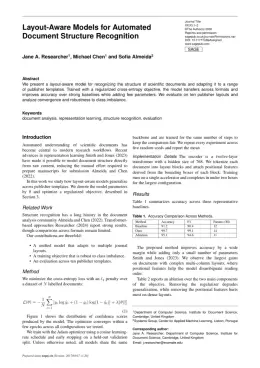
In DocuGuru you write your manuscript in a normal editor — no LaTeX setup required — and select the Clinical Medicine Insights Cardiology template. When you export, DocuGuru compiles the paper into the official SAGE format and hands you a submission-ready PDF along with the editable LaTeX source.
What reference style does Clinical Medicine Insights Cardiology use?
Clinical Medicine Insights Cardiology uses Author–year (Harvard) references, shown as author–year markers such as (Smith, 2023) in the text. DocuGuru formats every in-text citation and the reference list in this exact style automatically. A reference appears like this: Smith, A., Jones, B. and Lee, C. (2023) 'A representative article title', Clinical Medicine Insights Cardiology, 12(3), pp. 45–58.
Do I need to know LaTeX to submit to Clinical Medicine Insights Cardiology?
No. DocuGuru generates the sagej LaTeX class and compiles the PDF for you in the background, so you get a SAGE-ready Clinical Medicine Insights Cardiology document without writing any LaTeX. If you do want it, the LaTeX source is included in the export.
Can I import an existing draft into the Clinical Medicine Insights Cardiology template?
Yes. Paste or upload your current manuscript — Word, LaTeX, Markdown, or plain text — and DocuGuru reflows it into the Clinical Medicine Insights Cardiology format with correct headings, figures, tables, and author–year citations.
Who publishes Clinical Medicine Insights Cardiology?
Clinical Medicine Insights Cardiology is a multidisciplinary journal published by SAGE. DocuGuru's Clinical Medicine Insights Cardiology template matches SAGE's official submission format.
Can I export a submission-ready Clinical Medicine Insights Cardiology PDF?
Yes — DocuGuru produces a PDF built with the official Clinical Medicine Insights Cardiology template (the sagej class) that is ready to submit to SAGE, together with the matching LaTeX source files.
How much does the Clinical Medicine Insights Cardiology template cost?
You can start writing in the Clinical Medicine Insights Cardiology template for free. Exporting the final submission-ready Clinical Medicine Insights Cardiology PDF and LaTeX source is part of DocuGuru's paid plans — see the app for current pricing.
Use the Clinical Medicine Insights Cardiology template