SAGE

Clinical and Applied Thrombosis/Hemostasis Template

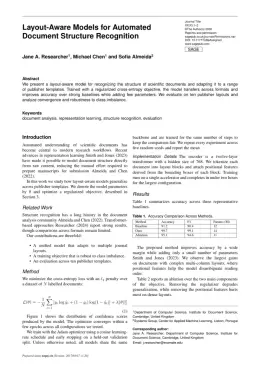
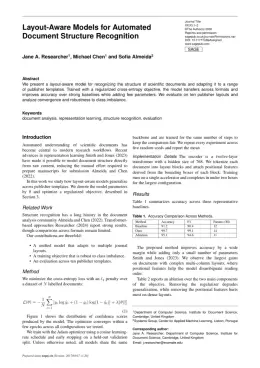
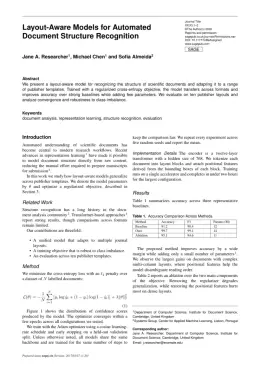
Write in a clean editor, then format for Clinical and Applied Thrombosis/Hemostasis in one click — DocuGuru applies the official SAGE template with author–year references and exports a submission-ready PDF plus the editable LaTeX source. Free to start.

About the Clinical and Applied Thrombosis/Hemostasis format

Clinical and Applied Thrombosis/Hemostasis is a peer-reviewed journal published by SAGE, covering Venous Thromboembolism Diagnosis and Management, Blood Coagulation and Thrombosis Mechanisms, Atrial Fibrillation Management and Outcomes.

PublisherSAGE
Reference styleAuthor–year (Harvard)
Author–year — (Smith, 2023) in the text
Smith, A., Jones, B. and Lee, C. (2023) 'A representative article title', Clinical and Applied Thrombosis/Hemostasis, 12(3), pp. 45–58.

Formats any DOI in Clinical and Applied Thrombosis/Hemostasis style. No sign-up.

Publishes research inVenous Thromboembolism Diagnosis and Management Blood Coagulation and Thrombosis Mechanisms Atrial Fibrillation Management and Outcomes Platelet Disorders and Treatments Heparin-Induced Thrombocytopenia and Thrombosis
ISSN1076-0296
Citation impact (2-yr)1.59
h-index76
i10-index1,559
Total citations52,629
Article processing charge$2,200
Open accessYes
Top institutions publishing hereLoyola University Medical Center
Journal websitecat.sagepub.com
You getA submission-ready PDF and the editable LaTeX source — ready to submit.

Papers published in Clinical and Applied Thrombosis/Hemostasis per year

100
2014
109
2015
129
2016
110
2017
117
2018
116
2019
168
2020
187
2021
182
2022
167
2023
139
2024
155
2025

Citation impact of Clinical and Applied Thrombosis/Hemostasis by publication year

1.9K
2014
2.4K
2015
2.8K
2016
2.1K
2017
2.1K
2018
3K
2019
3.2K
2020
2.8K
2021
1.8K
2022
1.1K
2023
461
2024
149
2025

Citations each year’s papers have accumulated so far — the most recent years are still building up.

Most-cited papers in Clinical and Applied Thrombosis/Hemostasis

COVID-19: Coagulopathy, Risk of Thrombosis, and the Rationale for Anticoagulation

Wolfgang Miesbach, Michael Makris · 1 Jan 2020

The novel coronavirus infection (COVID-19) is caused by the new coronavirus SARS-CoV-2 and is characterized by an exaggerated inflammatory response that can lead to severe manifestations such as adult respiratory syndrome, sepsis, coagulopathy, and death in a proportion of patients. Among other factors and direct viral effects, the increase in the vasoconstrictor angiotensin II, the…

The Relation Between Atherosclerosis and the Neutrophil–Lymphocyte Ratio

Şevket Balta, Turgay Celık, Dimitri P. Mikhailidis et al. · 9 Feb 2015

Inflammation plays an important role in the pathophysiology of vascular disease. In this review, we consider the associations between the neutrophil-lymphocyte ratio (NLR; an indicator of inflammation) and vascular disease and its associated risk factors. The NLR has received attention due to its role as an independent prognostic factor for coronary artery disease. The NLR…

Secondary Prevention of Venous Thromboembolic Events in Patients With Active Cancer: Enoxaparin Alone Versus Initial Enoxaparin Followed by Warfarin for a 180-Day Period

Steven R. Deitcher, Craig M. Kessler, Geno J. Merli et al. · 1 Oct 2006

This study evaluated enoxaparin alone versus initial enoxaparin followed by warfarin in secondary prevention of venous thromboembolic events in adults with active malignancy. Cancer patients (n = 122) with acute symptomatic venous thromboembolic events were randomly allocated to receive subcutaneous enoxaparin 1.0 mg/kg every 12 hours for 5 days, followed by 1.0 mg/kg daily (group…

Diagnosis, Treatment and Follow Up of Acute Pulmonary Embolism: Consensus Practice from the PERT Consortium

Belinda Rivera‐Lebron, Michael McDaniel, Kamran Ahrar et al. · 1 Jan 2019

Pulmonary embolism (PE) is a life-threatening condition and a leading cause of morbidity and mortality. There have been many advances in the field of PE in the last few years, requiring a careful assessment of their impact on patient care. However, variations in recommendations by different clinical guidelines, as well as lack of robust clinical…

Pharmacology, Pharmacokinetics, and Pharmacodynamics of Dabigatran Etexilate, an Oral Direct Thrombin Inhibitor

Joachim Stangier, Andreas Clemens · 1 Feb 2009

Dabigatran etexilate is a novel, oral reversible direct thrombin inhibitor that is rapidly absorbed and converted to its active form, dabigatran. Dabigatran has been shown to be a potent, competitive, and reversible inhibitor of thrombin, inhibiting both thrombin activity and generation. Studies in healthy volunteers and in patients undergoing orthopedic surgery indicate that dabigatran has…

Clinical and Applied Thrombosis/Hemostasis template — frequently asked questions

How do I write a paper in the Clinical and Applied Thrombosis/Hemostasis format?
In DocuGuru you write your manuscript in a normal editor — no LaTeX setup required — and select the Clinical and Applied Thrombosis/Hemostasis template. When you export, DocuGuru compiles the paper into the official SAGE format and hands you a submission-ready PDF along with the editable LaTeX source.
What reference style does Clinical and Applied Thrombosis/Hemostasis use?
Clinical and Applied Thrombosis/Hemostasis uses Author–year (Harvard) references, shown as author–year markers such as (Smith, 2023) in the text. DocuGuru formats every in-text citation and the reference list in this exact style automatically. A reference appears like this: Smith, A., Jones, B. and Lee, C. (2023) 'A representative article title', Clinical and Applied Thrombosis/Hemostasis, 12(3), pp. 45–58.
Do I need to know LaTeX to submit to Clinical and Applied Thrombosis/Hemostasis?
No. DocuGuru generates the sagej LaTeX class and compiles the PDF for you in the background, so you get a SAGE-ready Clinical and Applied Thrombosis/Hemostasis document without writing any LaTeX. If you do want it, the LaTeX source is included in the export.
Can I import an existing draft into the Clinical and Applied Thrombosis/Hemostasis template?
Yes. Paste or upload your current manuscript — Word, LaTeX, Markdown, or plain text — and DocuGuru reflows it into the Clinical and Applied Thrombosis/Hemostasis format with correct headings, figures, tables, and author–year citations.
Who publishes Clinical and Applied Thrombosis/Hemostasis?
Clinical and Applied Thrombosis/Hemostasis is a multidisciplinary journal published by SAGE. DocuGuru's Clinical and Applied Thrombosis/Hemostasis template matches SAGE's official submission format.
Can I export a submission-ready Clinical and Applied Thrombosis/Hemostasis PDF?
Yes — DocuGuru produces a PDF built with the official Clinical and Applied Thrombosis/Hemostasis template (the sagej class) that is ready to submit to SAGE, together with the matching LaTeX source files.
How much does the Clinical and Applied Thrombosis/Hemostasis template cost?
You can start writing in the Clinical and Applied Thrombosis/Hemostasis template for free. Exporting the final submission-ready Clinical and Applied Thrombosis/Hemostasis PDF and LaTeX source is part of DocuGuru's paid plans — see the app for current pricing.

Use the Clinical and Applied Thrombosis/Hemostasis template