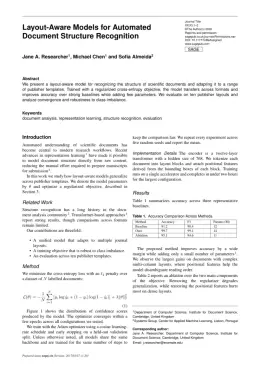
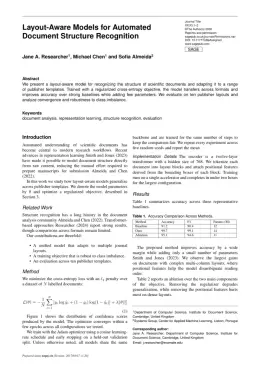
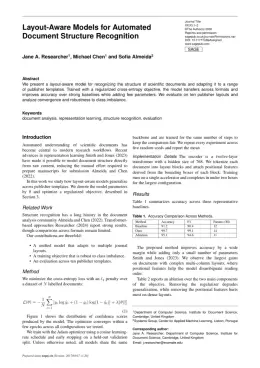
About the Childhood format
Childhood is a peer-reviewed journal published by SAGE, covering Children's Rights and Participation, Early Childhood Education and Development, Poverty, Education, and Child Welfare.
| Publisher | SAGE |
|---|
| Reference style | Author–year (Harvard) Author–year — (Smith, 2023) in the text
Smith, A., Jones, B. and Lee, C. (2023) 'A representative article title', Childhood, 12(3), pp. 45–58.
Formats any DOI in Childhood style. No sign-up.
|
|---|
| Publishes research in | Children's Rights and Participation Early Childhood Education and Development Poverty, Education, and Child Welfare Youth Education and Societal Dynamics Child Welfare and Adoption |
|---|
| ISSN | 0907-5682 |
|---|
| Citation impact (2-yr) | 1.38 |
|---|
| h-index | 97 |
|---|
| i10-index | 700 |
|---|
| Total citations | 41,929 |
|---|
| Top institutions publishing here | Linköping University |
|---|
| Journal website | chd.sagepub.com |
|---|
| You get | A submission-ready PDF and the editable LaTeX source — ready to submit. |
|---|
Papers published in Childhood per year
Citation impact of Childhood by publication year
Citations each year’s papers have accumulated so far — the most recent years are still building up.
Most-cited papers in Childhood
Research with Children
Samantha Punch · 1 Aug 2002
This article explores seven methodological issues in some detail to illustrate the ways in which aspects of the research process usually considered to be the same for both adults and children can pose particular dilemmas for adult researchers working with children. It argues that research with children is potentially different from research with adults mainly…
Working with Ethical Symmetry in Social Research with Children
Pia Christensen, Alan Prout · 1 Nov 2002
The perspective of `children as social actors' has created a field with new ethical dilemmas and responsibilities for researchers within the social study of childhood. These concern, for example, the greater potential for conflicts of interest, often hitherto unrecognized, between children and other actors. It is suggested to work from a perspective of `ethical symmetry'…
Methodological Immaturity in Childhood Research?
Lesley Gallacher, Michael Gallagher · 1 Nov 2008
Much of the recent literature on social research with children advocates the use of participatory techniques. This article attempts to rethink such techniques in several ways. The authors argue that participatory approaches, in their insistence that children should take part in research, may in fact involve children in processes that aim to regulate them. Using…
The limits of children’s voices: From authenticity to critical, reflexive representation
Spyros Spyrou · 11 Apr 2011
This article provides a critique of the preoccupation with children’s voices in child-centred research by exploring their limits and problematizing their use in research. The article argues that critical, reflexive researchers need to reflect on the processes which produce children’s voices in research, the power imbalances that shape them and the ideological contexts which inform…
Places for Children – Children’s Places
Kim Rasmussen · 1 May 2004
In their everyday lives, children largely stay within and relate to three settings – their homes, schools and recreational institutions. These environments have been created by adults and designated by them as ‘places for children’. A more differentiated picture of children’s spatial culture emerges when children discuss and take photographs of settings that are meaningful…