SAGE

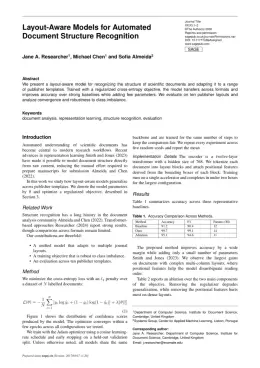
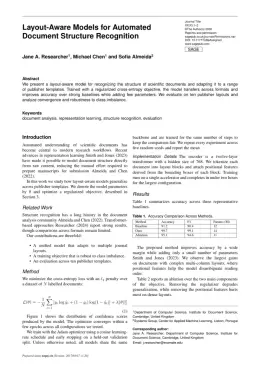
Brain and Neuroscience Advances Template

Write in a clean editor, then format for Brain and Neuroscience Advances in one click — DocuGuru applies the official SAGE template with author–year references and exports a submission-ready PDF plus the editable LaTeX source. Free to start.

About the Brain and Neuroscience Advances format

Brain and Neuroscience Advances is a peer-reviewed journal published by SAGE, covering Neuroscience and Neuropharmacology Research, Memory and Neural Mechanisms, Neural dynamics and brain function.

PublisherSAGE
Reference styleAuthor–year (Harvard)
Author–year — (Smith, 2023) in the text
Smith, A., Jones, B. and Lee, C. (2023) 'A representative article title', Brain and Neuroscience Advances, 12(3), pp. 45–58.

Formats any DOI in Brain and Neuroscience Advances style. No sign-up.

Publishes research inNeuroscience and Neuropharmacology Research Memory and Neural Mechanisms Neural dynamics and brain function Functional Brain Connectivity Studies Stress Responses and Cortisol
ISSN2398-2128
Citation impact (2-yr)1.6
h-index41
i10-index95
Total citations5,418
Article processing charge$1,471
Open accessYes
Top institutions publishing hereUniversity College London
Journal websiteus.sagepub.com
You getA submission-ready PDF and the editable LaTeX source — ready to submit.

Papers published in Brain and Neuroscience Advances per year

15
2017
49
2018
16
2019
24
2020
15
2021
14
2022
10
2023
13
2024
28
2025

Citation impact of Brain and Neuroscience Advances by publication year

638
2017
2.4K
2018
426
2019
1.1K
2020
570
2021
159
2022
30
2023
37
2024
31
2025

Citations each year’s papers have accumulated so far — the most recent years are still building up.

Most-cited papers in Brain and Neuroscience Advances

Purine and purinergic receptors

Geoffrey Burnstock · 1 Jan 2018

Adenosine 5′-triphosphate acts as an extracellular signalling molecule (purinergic signalling), as well as an intracellular energy source. Adenosine 5′-triphosphate receptors have been cloned and characterised. P1 receptors are selective for adenosine, a breakdown product of adenosine 5′-triphosphate after degradation by ectonucleotidases. Four subtypes are recognised, A 1 , A 2A , A 2B and A…

Hot and cold executive functions in the brain: A prefrontal-cingular network

Mohammad Ali Salehinejad, Elham Ghanavati, Md Harun Ar Rashid et al. · 1 Jan 2021

Executive functions, or cognitive control, are higher-order cognitive functions needed for adaptive goal-directed behaviours and are significantly impaired in majority of neuropsychiatric disorders. Different models and approaches are proposed for describing how executive functions are functionally organised in the brain. One popular and recently proposed organising principle of executive functions is the distinction between hot…

Retrosplenial cortex and its role in spatial cognition

Anna S. Mitchell, Rafał Czajkowski, Ningyu Zhang et al. · 1 Jan 2018

Retrosplenial cortex is a region within the posterior neocortical system, heavily interconnected with an array of brain networks, both cortical and subcortical, that is, engaged by a myriad of cognitive tasks. Although there is no consensus as to its precise function, evidence from both human and animal studies clearly points to a role in spatial…

The role of cytokines in modulating learning and memory and brain plasticity

Julie-Myrtille Bourgognon, Jonathan Cavanagh · 1 Jan 2020

Cytokines are proteins secreted in the central nervous system by neurons, microglia, astrocytes and infiltrating peripheral immune cells under physiological and pathological conditions. Over the last 20 years, a growing number of reports have investigated the effects of these molecules on brain plasticity. In this review, we describe how the key cytokines interleukin 1β, interleukin…

Hippocampal–diencephalic–cingulate networks for memory and emotion: An anatomical guide

Emma J. Bubb, Lisa Kinnavane, John P. Aggleton · 1 Jan 2017

This review brings together current knowledge from tract tracing studies to update and reconsider those limbic connections initially highlighted by Papez (1937) for their presumed role in emotion. These connections link hippocampal and parahippocampal regions with the mammillary bodies, the anterior thalamic nuclei, and the cingulate gyrus, all structures now strongly implicated in memory functions.…

Brain and Neuroscience Advances template — frequently asked questions

How do I write a paper in the Brain and Neuroscience Advances format?
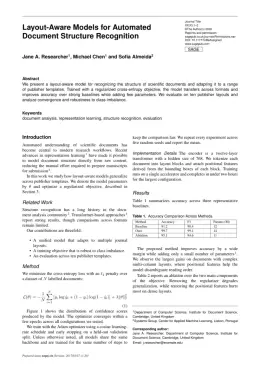
In DocuGuru you write your manuscript in a normal editor — no LaTeX setup required — and select the Brain and Neuroscience Advances template. When you export, DocuGuru compiles the paper into the official SAGE format and hands you a submission-ready PDF along with the editable LaTeX source.
What reference style does Brain and Neuroscience Advances use?
Brain and Neuroscience Advances uses Author–year (Harvard) references, shown as author–year markers such as (Smith, 2023) in the text. DocuGuru formats every in-text citation and the reference list in this exact style automatically. A reference appears like this: Smith, A., Jones, B. and Lee, C. (2023) 'A representative article title', Brain and Neuroscience Advances, 12(3), pp. 45–58.
Do I need to know LaTeX to submit to Brain and Neuroscience Advances?
No. DocuGuru generates the sagej LaTeX class and compiles the PDF for you in the background, so you get a SAGE-ready Brain and Neuroscience Advances document without writing any LaTeX. If you do want it, the LaTeX source is included in the export.
Can I import an existing draft into the Brain and Neuroscience Advances template?
Yes. Paste or upload your current manuscript — Word, LaTeX, Markdown, or plain text — and DocuGuru reflows it into the Brain and Neuroscience Advances format with correct headings, figures, tables, and author–year citations.
Who publishes Brain and Neuroscience Advances?
Brain and Neuroscience Advances is a multidisciplinary journal published by SAGE. DocuGuru's Brain and Neuroscience Advances template matches SAGE's official submission format.
Can I export a submission-ready Brain and Neuroscience Advances PDF?
Yes — DocuGuru produces a PDF built with the official Brain and Neuroscience Advances template (the sagej class) that is ready to submit to SAGE, together with the matching LaTeX source files.
How much does the Brain and Neuroscience Advances template cost?
You can start writing in the Brain and Neuroscience Advances template for free. Exporting the final submission-ready Brain and Neuroscience Advances PDF and LaTeX source is part of DocuGuru's paid plans — see the app for current pricing.
Use the Brain and Neuroscience Advances template