SAGE

Biochemistry Insights Template

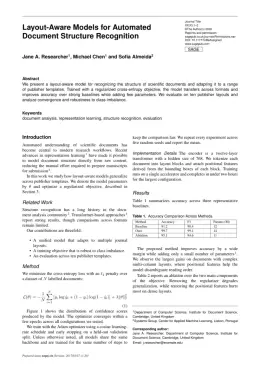
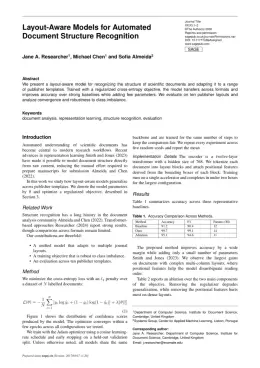
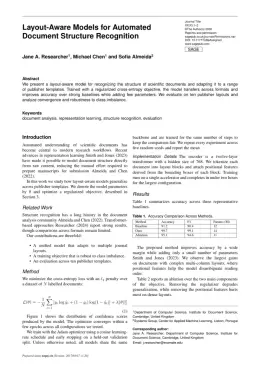
Write in a clean editor, then format for Biochemistry Insights in one click — DocuGuru applies the official SAGE template with author–year references and exports a submission-ready PDF plus the editable LaTeX source. Free to start.

About the Biochemistry Insights format

Biochemistry Insights is a peer-reviewed journal published by SAGE, covering Virus-based gene therapy research, Mitochondrial Function and Pathology, Enzyme Catalysis and Immobilization.

PublisherSAGE
Reference styleAuthor–year (Harvard)
Author–year — (Smith, 2023) in the text
Smith, A., Jones, B. and Lee, C. (2023) 'A representative article title', Biochemistry Insights, 12(3), pp. 45–58.

Formats any DOI in Biochemistry Insights style. No sign-up.

Publishes research inVirus-based gene therapy research Mitochondrial Function and Pathology Enzyme Catalysis and Immobilization Iron Metabolism and Disorders Growth Hormone and Insulin-like Growth Factors
ISSN1178-6264
h-index21
i10-index28
Total citations1,215
Open accessYes
Top institutions publishing hereOkayama University of Science
Journal websiteinsights.sagepub.com
You getA submission-ready PDF and the editable LaTeX source — ready to submit.

Papers published in Biochemistry Insights per year

4
2008
11
2009
7
2010
4
2011
4
2012
1
2013
1
2014
11
2015
4
2016
5
2017
1
2018
8
2019

Citation impact of Biochemistry Insights by publication year

63
2008
104
2009
59
2010
38
2011
27
2012
65
2013
43
2014
224
2015
119
2016
154
2017
88
2018
229
2019

Citations each year’s papers have accumulated so far — the most recent years are still building up.

Most-cited papers in Biochemistry Insights

The Role of Insulin-Like Growth Factors and Insulin-Like Growth Factor–Binding Proteins in the Nervous System

Moira Lewitt, Gary W. Boyd · 1 Jan 2019

The insulin-like growth factors (IGF-I and IGF-II) and their receptors are widely expressed in nervous tissue from early embryonic life. They also cross the blood brain barriers by active transport, and their regulation as endocrine factors therefore differs from other tissues. In brain, IGFs have paracrine and autocrine actions that are modulated by IGF-binding proteins…

Aerobic Respiration: Criticism of the Proton-centric Explanation Involving Rotary Adenosine Triphosphate Synthesis, Chemiosmosis Principle, Proton Pumps and Electron Transport Chain

Kelath Murali Manoj · 1 Jan 2018

The acclaimed explanation for mitochondrial oxidative phosphorylation (mOxPhos, or cellular respiration) is a deterministic proton-centric scheme involving four components: Rotary adenosine triphosphate (ATP)-synthesis, Chemiosmosis principle, Proton pumps, and Electron transport chain (abbreviated as RCPE hypothesis). Within this write-up, the RCPE scheme is critically analyzed with respect to mitochondrial architecture, proteins' distribution, structure-function correlations and their…

Protein Modifications as Manifestations of Hyperglycemic Glucotoxicity in Diabetes and Its Complications

Hong Zheng, Jinzi Wu, Zhen Jin et al. · 1 Jan 2016

Diabetes and its complications are hyperglycemic toxicity diseases. Many metabolic pathways in this array of diseases become aberrant, which is accompanied with a variety of posttranslational protein modifications that in turn reflect diabetic glucotoxicity. In this review, we summarize some of the most widely studied protein modifications in diabetes and its complications. These modifications include…

Molecular Differences and Similarities between Alzheimer's Disease and the 5XFAD Transgenic Mouse Model of Amyloidosis

Chera L. Maarouf, Tyler A. Kokjohn, Charisse M. Whiteside et al. · 1 Jan 2013

Transgenic (Tg) mouse models of Alzheimer's disease (AD) have been extensively used to study the pathophysiology of this dementia and to test the efficacy of drugs to treat AD. The 5XFAD Tg mouse, which contains two presenilin-1 and three amyloid precursor protein (APP) mutations, was designed to rapidly recapitulate a portion of the pathologic alterations…

Extracellular Matrix and Integrins in Embryonic Stem Cell Differentiation

Han Wang, Xie Luo, Jake Leighton · 1 Jan 2015

Embryonic stem cells (ESCs) are pluripotent cells with great therapeutic potentials. The in vitro differentiation of ESC was designed by recapitulating embryogenesis. Significant progress has been made to improve the in vitro differentiation protocols by toning soluble maintenance factors. However, more robust methods for lineage-specific differentiation and maturation are still under development. Considering the complexity…

Biochemistry Insights template — frequently asked questions

How do I write a paper in the Biochemistry Insights format?
In DocuGuru you write your manuscript in a normal editor — no LaTeX setup required — and select the Biochemistry Insights template. When you export, DocuGuru compiles the paper into the official SAGE format and hands you a submission-ready PDF along with the editable LaTeX source.
What reference style does Biochemistry Insights use?
Biochemistry Insights uses Author–year (Harvard) references, shown as author–year markers such as (Smith, 2023) in the text. DocuGuru formats every in-text citation and the reference list in this exact style automatically. A reference appears like this: Smith, A., Jones, B. and Lee, C. (2023) 'A representative article title', Biochemistry Insights, 12(3), pp. 45–58.
Do I need to know LaTeX to submit to Biochemistry Insights?
No. DocuGuru generates the sagej LaTeX class and compiles the PDF for you in the background, so you get a SAGE-ready Biochemistry Insights document without writing any LaTeX. If you do want it, the LaTeX source is included in the export.
Can I import an existing draft into the Biochemistry Insights template?
Yes. Paste or upload your current manuscript — Word, LaTeX, Markdown, or plain text — and DocuGuru reflows it into the Biochemistry Insights format with correct headings, figures, tables, and author–year citations.
Who publishes Biochemistry Insights?
Biochemistry Insights is a multidisciplinary journal published by SAGE. DocuGuru's Biochemistry Insights template matches SAGE's official submission format.
Can I export a submission-ready Biochemistry Insights PDF?
Yes — DocuGuru produces a PDF built with the official Biochemistry Insights template (the sagej class) that is ready to submit to SAGE, together with the matching LaTeX source files.
How much does the Biochemistry Insights template cost?
You can start writing in the Biochemistry Insights template for free. Exporting the final submission-ready Biochemistry Insights PDF and LaTeX source is part of DocuGuru's paid plans — see the app for current pricing.

Use the Biochemistry Insights template