SAGE

Behavioral and Cognitive Neuroscience Reviews Template

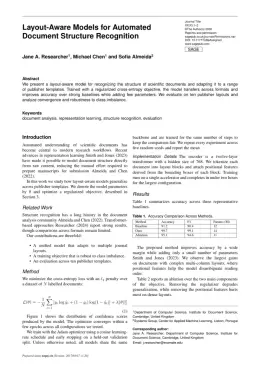
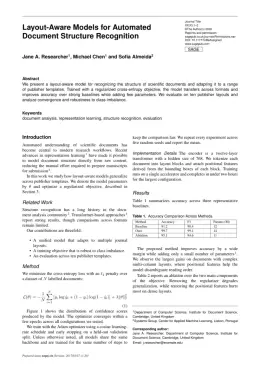
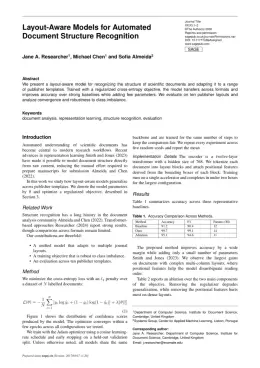
Write in a clean editor, then format for Behavioral and Cognitive Neuroscience Reviews in one click — DocuGuru applies the official SAGE template with author–year references and exports a submission-ready PDF plus the editable LaTeX source. Free to start.

About the Behavioral and Cognitive Neuroscience Reviews format

Behavioral and Cognitive Neuroscience Reviews is a peer-reviewed journal published by SAGE, covering Memory and Neural Mechanisms, Neural and Behavioral Psychology Studies, Neuroscience and Neuropharmacology Research.

PublisherSAGE
Reference styleAuthor–year (Harvard)
Author–year — (Smith, 2023) in the text
Smith, A., Jones, B. and Lee, C. (2023) 'A representative article title', Behavioral and Cognitive Neuroscience Reviews, 12(3), pp. 45–58.

Formats any DOI in Behavioral and Cognitive Neuroscience Reviews style. No sign-up.

Publishes research inMemory and Neural Mechanisms Neural and Behavioral Psychology Studies Neuroscience and Neuropharmacology Research Visual perception and processing mechanisms Neural dynamics and brain function
ISSN1534-5823
h-index49
i10-index67
Total citations12,536
Top institutions publishing hereBoston University
Journal websitebcn.sagepub.com
You getA submission-ready PDF and the editable LaTeX source — ready to submit.

Papers published in Behavioral and Cognitive Neuroscience Reviews per year

22
2002
17
2003
17
2004
16
2005
12
2006

Citation impact of Behavioral and Cognitive Neuroscience Reviews by publication year

2.9K
2002
1.8K
2003
5K
2004
1.9K
2005
973
2006

Citations each year’s papers have accumulated so far — the most recent years are still building up.

Most-cited papers in Behavioral and Cognitive Neuroscience Reviews

The Functional Architecture of Human Empathy

Jean Decety, Philip L. Jackson · 1 Jun 2004

Empathy accounts for the naturally occurring subjective experience of similarity between the feelings expressed by self and others without loosing sight of whose feelings belong to whom. Empathy involves not only the affective experience of the other person's actual or inferred emotional state but also some minimal recognition and understanding of another's emotional state. In…

3,306 citations Cite SaveGo to paper →
Recognizing Emotion from Facial Expressions: Psychological and Neurological Mechanisms

Ralph Adolphs · 1 Mar 2002

Recognizing emotion from facial expressions draws on diverse psychological processes implemented in a large array of neural structures. Studies using evoked potentials, lesions, and functional imaging have begun to elucidate some of the mechanisms. Early perceptual processing of faces draws on cortices in occipital and temporal lobes that construct detailed representations from the configuration of…

1,426 citations Cite SaveGo to paper →
Brain Lateralization of Emotional Processing: Historical Roots and a Future Incorporating “Dominance”

Heath A. Demaree, D. Erik Everhart, Eric A. Youngstrom et al. · 1 Mar 2005

This article provides a review of research on the hemispheric specialization in emotional processing during the past 40 years and the theoretical models derived from the conceptual analysis of these results. The publications reviewed here were collected to better appreciate the cortical lateralization of emotional perception (visual and auditory), expression (facial and prosodic), and experience.…

How Does the Brain Process Upright and Inverted Faces?

Bruno Rossion, L. Gauthier · 1 Mar 2002

The face inversion effect (FIE) is defined as the larger decrease in recognition performance for faces than for other mono-oriented objects when they are presented upside down. Behavioral studies suggest the FIE takes place at the perceptual encoding stage and is mainly due to the decrease in ability to extract relational information when discriminating individual…

The Interface Between Emotion and Attention: A Review of Evidence From Psychology and Neuroscience

Rebecca J. Compton · 1 Jun 2003

This review addresses the interconnections between emotional and attentional processing, with an emphasis on both behavioral and neuroscientific findings. Are emotional stimuli encoded automatically, and what does that mean? How are emotional stimuli selected for enhanced processing within a limited capacity system? Evidence suggests a two-stage process: First, emotional significance is evaluated preattentively by a…

Behavioral and Cognitive Neuroscience Reviews template — frequently asked questions

How do I write a paper in the Behavioral and Cognitive Neuroscience Reviews format?
In DocuGuru you write your manuscript in a normal editor — no LaTeX setup required — and select the Behavioral and Cognitive Neuroscience Reviews template. When you export, DocuGuru compiles the paper into the official SAGE format and hands you a submission-ready PDF along with the editable LaTeX source.
What reference style does Behavioral and Cognitive Neuroscience Reviews use?
Behavioral and Cognitive Neuroscience Reviews uses Author–year (Harvard) references, shown as author–year markers such as (Smith, 2023) in the text. DocuGuru formats every in-text citation and the reference list in this exact style automatically. A reference appears like this: Smith, A., Jones, B. and Lee, C. (2023) 'A representative article title', Behavioral and Cognitive Neuroscience Reviews, 12(3), pp. 45–58.
Do I need to know LaTeX to submit to Behavioral and Cognitive Neuroscience Reviews?
No. DocuGuru generates the sagej LaTeX class and compiles the PDF for you in the background, so you get a SAGE-ready Behavioral and Cognitive Neuroscience Reviews document without writing any LaTeX. If you do want it, the LaTeX source is included in the export.
Can I import an existing draft into the Behavioral and Cognitive Neuroscience Reviews template?
Yes. Paste or upload your current manuscript — Word, LaTeX, Markdown, or plain text — and DocuGuru reflows it into the Behavioral and Cognitive Neuroscience Reviews format with correct headings, figures, tables, and author–year citations.
Who publishes Behavioral and Cognitive Neuroscience Reviews?
Behavioral and Cognitive Neuroscience Reviews is a multidisciplinary journal published by SAGE. DocuGuru's Behavioral and Cognitive Neuroscience Reviews template matches SAGE's official submission format.
Can I export a submission-ready Behavioral and Cognitive Neuroscience Reviews PDF?
Yes — DocuGuru produces a PDF built with the official Behavioral and Cognitive Neuroscience Reviews template (the sagej class) that is ready to submit to SAGE, together with the matching LaTeX source files.
How much does the Behavioral and Cognitive Neuroscience Reviews template cost?
You can start writing in the Behavioral and Cognitive Neuroscience Reviews template for free. Exporting the final submission-ready Behavioral and Cognitive Neuroscience Reviews PDF and LaTeX source is part of DocuGuru's paid plans — see the app for current pricing.

Use the Behavioral and Cognitive Neuroscience Reviews template