PLOS

PLOS Water Template

Write in a clean editor, then format for PLOS Water in one click — DocuGuru applies the official PLOS template with numbered references and exports a submission-ready PDF plus the editable LaTeX source. Free to start.

About the PLOS Water format

PLOS Water is a peer-reviewed journal published by PLOS, covering Child Nutrition and Water Access, Water resources management and optimization, Fecal contamination and water quality. Over its lifetime it has published 440 papers, which have received 2,378 citations.

PublisherPLOS
Reference styleNumbered (Vancouver)
Numbered — [1], [2] in the text
1. Smith A, Jones B, Lee C. A representative article title. PLOS Water. 2023;12(3):45–58.

Formats any DOI in PLOS Water style. No sign-up.

Publishes research inChild Nutrition and Water Access Water resources management and optimization Fecal contamination and water quality Water Governance and Infrastructure Hydrology and Watershed Management Studies
ISSN2767-3219
Citation impact (2-yr)2.52
h-index23
i10-index75
Article processing charge$2,100
Open accessYes — indexed in DOAJ
Top institutions publishing hereUniversity of North Carolina at Chapel Hill
You getA submission-ready PDF and the editable LaTeX source — ready to submit.

Papers published in PLOS Water per year

49
2022
98
2023
91
2024
119
2025

Citation impact of PLOS Water by publication year

691
2022
891
2023
478
2024
207
2025

Citations each year’s papers have accumulated so far — the most recent years are still building up.

Most-cited papers in PLOS Water

Downscaling approaches of climate change projections for watershed modeling: Review of theoretical and practical considerations

Arturo A. Keller, Kendra L. Garner, N.H. Rao et al. · 14 Sep 2022

Water resources managers must increasingly consider climate change implications of, whether the concern is floods, droughts, reservoir management, or reliably supplying consumers. Hydrologic and water quality modeling of future climate scenarios requires understanding global climate models (GCMs), emission scenarios and downscaling GCM output, since GCMs generate climate predictions at a resolution too coarse for watershed…

The potential for nature-based solutions to combat the freshwater biodiversity crisis

Charles B. van Rees, Suman Jumani, Liya E. Abera et al. · 8 Jun 2023

Enthusiasm for and investments in nature-based solutions (NBS) as sustainable strategies for climate adaptation and infrastructure development is building among governments, the scientific community, and engineering practitioners. This is particularly true for water security and water-related risks. In a freshwater context, NBS may provide much-needed “win-wins” for society and the environment that could benefit imperiled…

Saltwater intrusion and climate change impact on coastal agriculture

Paolo Tarolli, Jian Luo, Eugenio Straffelini et al. · 27 Apr 2023

Coastal agriculture represents a significant food production and socio-economic reality in the world, as millions of people are living in coastal areas. In some regions, the optimal combination between traditions and cultivated coastal land is recognized and protected by UN initiatives such as the Food and Agriculture Organization (FAO), Globally Important Agricultural Heritage Systems (e.g.,…

Water remains a blind spot in climate change policies

Hervé Douville, Richard P. Allan, Paola A. Arias et al. · 15 Dec 2022

For the first time in the latest Assessment Report of the Intergovernmental Panel on Climate Change (IPCC), water has been the focus of dedicated chapters in both Working Group 1 (Chapter 8) and 2 (Chapter 4). Nevertheless, we argue here that water has not yet received the full attention it deserves from both scientists and…

Deep reinforcement learning for irrigation scheduling using high-dimensional sensor feedback

Yuji Saikai, Allan Peake, Karine Chenu · 6 Sep 2023

Deep reinforcement learning has considerable potential to improve irrigation scheduling in many cropping systems by applying adaptive amounts of water based on various measurements over time. The goal is to discover an intelligent decision rule that processes information available to growers and prescribes sensible irrigation amounts for the time steps considered. Due to the technical…

PLOS Water template — frequently asked questions

How do I write a paper in the PLOS Water format?
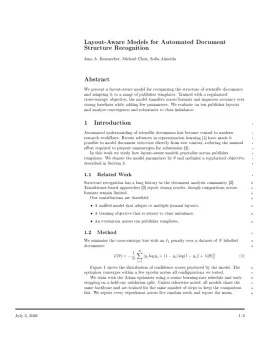
In DocuGuru you write your manuscript in a normal editor — no LaTeX setup required — and select the PLOS Water template. When you export, DocuGuru compiles the paper into the official PLOS format and hands you a submission-ready PDF along with the editable LaTeX source.
What reference style does PLOS Water use?
PLOS Water uses Numbered (Vancouver) references, shown as numbered [1], [2] markers in the text. DocuGuru formats every in-text citation and the reference list in this exact style automatically. A reference appears like this: 1. Smith A, Jones B, Lee C. A representative article title. PLOS Water. 2023;12(3):45–58.
Do I need to know LaTeX to submit to PLOS Water?
No. DocuGuru generates the article LaTeX class and compiles the PDF for you in the background, so you get a PLOS-ready PLOS Water document without writing any LaTeX. If you do want it, the LaTeX source is included in the export.
Can I import an existing draft into the PLOS Water template?
Yes. Paste or upload your current manuscript — Word, LaTeX, Markdown, or plain text — and DocuGuru reflows it into the PLOS Water format with correct headings, figures, tables, and numbered citations.
What is PLOS Water?
PLOS Water brings together research of the highest methodological and ethical standards for water as a vital resource for societies in every region of the world. It is a life sciences and medicine journal, published by PLOS.
Can I export a submission-ready PLOS Water PDF?
Yes — DocuGuru produces a PDF built with the official PLOS Water template (the article class) that is ready to submit to PLOS, together with the matching LaTeX source files.
How much does the PLOS Water template cost?
You can start writing in the PLOS Water template for free. Exporting the final submission-ready PLOS Water PDF and LaTeX source is part of DocuGuru's paid plans — see the app for current pricing.
Use the PLOS Water template