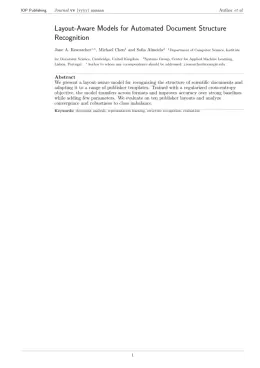
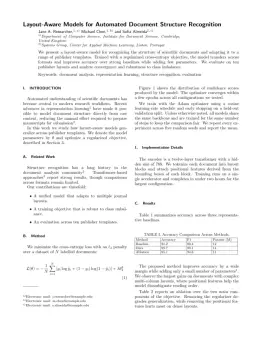
About the Physiological Measurement format
Physiological Measurement is a peer-reviewed journal published by IOP Publishing, covering Non-Invasive Vital Sign Monitoring, Electrical and Bioimpedance Tomography, Heart Rate Variability and Autonomic Control. Over its lifetime it has published 4,321 papers, which have received 140,200 citations.
| Publisher | IOP Publishing |
|---|
| Reference style | Numbered (IOP) Numbered — [1], [2] in the text
[1] Smith A, Jones B and Lee C 2023 A representative article title Physiological Measurement 12 45–58
Formats any DOI in Physiological Measurement style. No sign-up.
|
|---|
| Publishes research in | Non-Invasive Vital Sign Monitoring Electrical and Bioimpedance Tomography Heart Rate Variability and Autonomic Control Hemodynamic Monitoring and Therapy ECG Monitoring and Analysis |
|---|
| ISSN | 0967-3334 |
|---|
| Citation impact (2-yr) | 2.51 |
|---|
| h-index | 142 |
|---|
| i10-index | 2,706 |
|---|
| Top institutions publishing here | University College London |
|---|
| Journal website | www.iop.org |
|---|
| You get | A submission-ready PDF and the editable LaTeX source — ready to submit. |
|---|
Papers published in Physiological Measurement per year
Citation impact of Physiological Measurement by publication year
Citations each year’s papers have accumulated so far — the most recent years are still building up.
Most-cited papers in Physiological Measurement
Photoplethysmography and its application in clinical physiological measurement
John Allen · 20 Feb 2007
Photoplethysmography (PPG) is a simple and low-cost optical technique that can be used to detect blood volume changes in the microvascular bed of tissue. It is often used non-invasively to make measurements at the skin surface. The PPG waveform comprises a pulsatile ('AC') physiological waveform attributed to cardiac synchronous changes in the blood volume with…
Nonlinear model predictive control of glucose concentration in subjects with type 1 diabetes
Roman Hovorka, Valentina Canonico, Ludovic J. Chassin et al. · 23 Jul 2004
A nonlinear model predictive controller has been developed to maintain normoglycemia in subjects with type 1 diabetes during fasting conditions such as during overnight fast. The controller employs a compartment model, which represents the glucoregulatory system and includes submodels representing absorption of subcutaneously administered short-acting insulin Lispro and gut absorption. The controller uses Bayesian parameter…
Infrared thermal imaging in medicine
E. F. J. Ring, K. Ammer · 28 Feb 2012
This review describes the features of modern infrared imaging technology and the standardization protocols for thermal imaging in medicine. The technique essentially uses naturally emitted infrared radiation from the skin surface. Recent studies have investigated the influence of equipment and the methods of image recording. The credibility and acceptance of thermal imaging in medicine is…
Wavelet transforms and the ECG: a review
Paul S. Addison · 8 Aug 2005
The wavelet transform has emerged over recent years as a powerful time-frequency analysis and signal coding tool favoured for the interrogation of complex nonstationary signals. Its application to biosignal processing has been at the forefront of these developments where it has been found particularly useful in the study of these, often problematic, signals: none more…
Uses and abuses of EIDORS: an extensible software base for EIT
Andy Adler, William Lionheart · 18 Apr 2006
EIDORS is an open source software suite for image reconstruction in electrical impedance tomography and diffuse optical tomography, designed to facilitate collaboration, testing and new research in these fields. This paper describes recent work to redesign the software structure in order to simplify its use and provide a uniform interface, permitting easier modification and customization.…