AIP Publishing

Chemical Physics Reviews Template

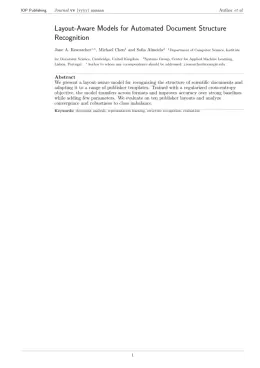
Write in a clean editor, then format for Chemical Physics Reviews in one click — DocuGuru applies the official AIP Publishing template with numbered references and exports a submission-ready PDF plus the editable LaTeX source. Free to start.

About the Chemical Physics Reviews format

Chemical Physics Reviews is a peer-reviewed journal published by AIP Publishing, covering Machine Learning in Materials Science, Advanced Photocatalysis Techniques, Spectroscopy and Quantum Chemical Studies. Over its lifetime it has published 242 papers, which have received 3,825 citations.

PublisherAIP Publishing
Reference styleNumbered (AIP)
Numbered — [1], [2] in the text
[1] A. Smith, B. Jones, and C. Lee, Chemical Physics Reviews 12, 45 (2023).

Formats any DOI in Chemical Physics Reviews style. No sign-up.

Publishes research inMachine Learning in Materials Science Advanced Photocatalysis Techniques Spectroscopy and Quantum Chemical Studies Perovskite Materials and Applications Quantum Dots Synthesis And Properties
ISSN2688-4070
Citation impact (2-yr)5.92
h-index32
i10-index111
Open accessYes
Top institutions publishing hereKorea Advanced Institute of Science and Technology
Journal websitepubs.aip.org
You getA submission-ready PDF and the editable LaTeX source — ready to submit.

Papers published in Chemical Physics Reviews per year

6
2020
27
2021
37
2022
49
2023
50
2024
42
2025

Citation impact of Chemical Physics Reviews by publication year

168
2020
865
2021
1.1K
2022
978
2023
424
2024
288
2025

Citations each year’s papers have accumulated so far — the most recent years are still building up.

Most-cited papers in Chemical Physics Reviews

Recent progress in the theory of bulk photovoltaic effect

Zhenbang Dai, Andrew M. Rappe · 18 Jan 2023

The bulk photovoltaic effect (BPVE) occurs in solids with broken inversion symmetry and refers to DC generation due to uniform illumination, without the need of heterostructures or interfaces, a feature that is distinct from the traditional photovoltaic effect. Its existence has been demonstrated almost 50 years ago, but predictive theories only appeared in the last…

Terahertz (THz) biophotonics technology: Instrumentation, techniques, and biomedical applications

Xuequan Chen, Hannah Lindley-Hatcher, Rayko I. Stantchev et al. · 1 Mar 2022

Terahertz (THz) technology has experienced rapid development in the past two decades. Growing numbers of interdisciplinary applications are emerging, including materials science, physics, communications, and security as well as biomedicine. THz biophotonics involves studies applying THz photonic technology in biomedicine, which has attracted attention due to the unique features of THz waves, such as the…

Machine learning on neutron and x-ray scattering and spectroscopies

Zhantao Chen, Nina Andrejevic, Nathan C. Drucker et al. · 8 Jul 2021

Neutron and x-ray scattering represent two classes of state-of-the-art materials characterization techniques that measure materials structural and dynamical properties with high precision. These techniques play critical roles in understanding a wide variety of materials systems from catalysts to polymers, nanomaterials to macromolecules, and energy materials to quantum materials. In recent years, neutron and x-ray scattering…

Charge transport through molecular ensembles: Recent progress in molecular electronics

Yuru Liu, Xinkai Qiu, Saurabh Soni et al. · 1 Jun 2021

This review focuses on molecular ensemble junctions in which the individual molecules of a monolayer each span two electrodes. This geometry favors quantum mechanical tunneling as the dominant mechanism of charge transport, which translates perturbances on the scale of bond lengths into nonlinear electrical responses. The ability to affect these responses at low voltages and…

Singlet fission photovoltaics: Progress and promising pathways

Alexander Baldacchino, Miles I. Collins, Michael P. Nielsen et al. · 11 May 2022

Singlet fission is a form of multiple exciton generation, which occurs in organic chromophores when a high-energy singlet exciton separates into two lower energy triplet excitons, each with approximately half the singlet energy. Since this process is spin-allowed, it can proceed on an ultrafast timescale of less than several picoseconds, outcompeting most other loss mechanisms…

Chemical Physics Reviews template — frequently asked questions

How do I write a paper in the Chemical Physics Reviews format?
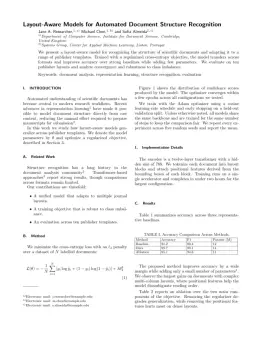
In DocuGuru you write your manuscript in a normal editor — no LaTeX setup required — and select the Chemical Physics Reviews template. When you export, DocuGuru compiles the paper into the official AIP Publishing format and hands you a submission-ready PDF along with the editable LaTeX source.
What reference style does Chemical Physics Reviews use?
Chemical Physics Reviews uses Numbered (AIP) references, shown as numbered [1], [2] markers in the text. DocuGuru formats every in-text citation and the reference list in this exact style automatically. A reference appears like this: [1] A. Smith, B. Jones, and C. Lee, Chemical Physics Reviews 12, 45 (2023).
Do I need to know LaTeX to submit to Chemical Physics Reviews?
No. DocuGuru generates the revtex4-2 LaTeX class and compiles the PDF for you in the background, so you get a AIP Publishing-ready Chemical Physics Reviews document without writing any LaTeX. If you do want it, the LaTeX source is included in the export.
Can I import an existing draft into the Chemical Physics Reviews template?
Yes. Paste or upload your current manuscript — Word, LaTeX, Markdown, or plain text — and DocuGuru reflows it into the Chemical Physics Reviews format with correct headings, figures, tables, and numbered citations.
What is Chemical Physics Reviews?
AIP Publishing journal (REVTeX 4.2). It is a physics journal, published by AIP Publishing.
Can I export a submission-ready Chemical Physics Reviews PDF?
Yes — DocuGuru produces a PDF built with the official Chemical Physics Reviews template (the revtex4-2 class) that is ready to submit to AIP Publishing, together with the matching LaTeX source files.
How much does the Chemical Physics Reviews template cost?
You can start writing in the Chemical Physics Reviews template for free. Exporting the final submission-ready Chemical Physics Reviews PDF and LaTeX source is part of DocuGuru's paid plans — see the app for current pricing.
Use the Chemical Physics Reviews template