IOP Publishing

Nano Futures Template

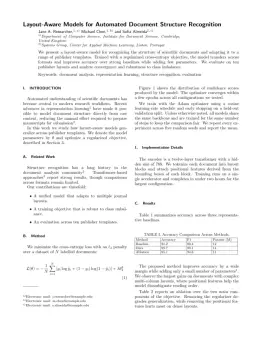
Write in a clean editor, then format for Nano Futures in one click — DocuGuru applies the official IOP Publishing template with numbered references and exports a submission-ready PDF plus the editable LaTeX source. Free to start.

About the Nano Futures format

Nano Futures is a peer-reviewed journal published by IOP Publishing, covering Graphene research and applications, Nanowire Synthesis and Applications, 2D Materials and Applications. Over its lifetime it has published 250 papers, which have received 3,478 citations.

PublisherIOP Publishing
Reference styleNumbered (IOP)
Numbered — [1], [2] in the text
[1] Smith A, Jones B and Lee C 2023 A representative article title Nano Futures 12 45–58

Formats any DOI in Nano Futures style. No sign-up.

Publishes research inGraphene research and applications Nanowire Synthesis and Applications 2D Materials and Applications Advanced Sensor and Energy Harvesting Materials Machine Learning in Materials Science
ISSN2399-1984
Citation impact (2-yr)4.86
h-index29
i10-index106
Top institutions publishing hereCentre National de la Recherche Scientifique
Journal websiteiopscience.iop.org
You getA submission-ready PDF and the editable LaTeX source — ready to submit.

Papers published in Nano Futures per year

24
2017
35
2018
16
2019
32
2020
30
2021
34
2022
23
2023
16
2024
26
2025

Citation impact of Nano Futures by publication year

750
2017
644
2018
506
2019
415
2020
245
2021
413
2022
209
2023
193
2024
64
2025

Citations each year’s papers have accumulated so far — the most recent years are still building up.

Most-cited papers in Nano Futures

Roadmap on solar water splitting: current status and future prospects

Sheng Chu, Wei Li, Yanfa Yan et al. · 25 Aug 2017

Abstract Artificial photosynthesis via solar water splitting provides a promising approach to storing solar energy in the form of hydrogen on a global scale. However, an efficient and cost-effective solar hydrogen production system that can compete with traditional methods using fossil fuels is yet to be developed. A photoelectrochemical (PEC) tandem cell consisting of a…

Multimodal hard x-ray imaging with resolution approaching 10 nm for studies in material science

Hanfei Yan, Nathalie Bouet, Juan Zhou et al. · 26 Feb 2018

Abstract We report multimodal scanning hard x-ray imaging with spatial resolution approaching 10 nm and its application to contemporary studies in the field of material science. The high spatial resolution is achieved by focusing hard x-rays with two crossed multilayer Laue lenses and raster-scanning a sample with respect to the nanofocusing optics. Various techniques are…

Synergistic antimicrobial therapy using nanoparticles and antibiotics for the treatment of multidrug-resistant bacterial infection

Akash Gupta, N. Saleh, Riddha Das et al. · 2 May 2017

Synergistic antimicrobial therapy using nanoparticles and antibiotics for the treatment of multidrug-resistant bacterial infection, Gupta, Akash, Saleh, Neveen M, Das, Riddha, Landis, Ryan F, Bigdeli, Arafeh, Motamedchaboki, Khatereh, Rosa Campos, Alexandre, Pomeroy, Kenneth, Mahmoudi, Morteza, Rotello, Vincent M

Artificial intelligence design algorithm for nanocomposites optimized for shear crack resistance

Chi-Hua Yu, Zhao Qin, Markus J. Buehler · 30 Jul 2019

Abstract Here we report a design approach for optimizing the toughness of nanocomposite materials using artificial intelligence (AI), implemented in a novel ‘AutoComp Designer’ algorithm. The algorithm consists of a machine learning predictor combined with an AI improved genetic algorithm, which is capable of discovering de novo materials designs in a vast space of possible…

Roadmap on finding chiral valleys: screening 2D materials for valleytronics

Fabio Bussolotti, Hiroyo Kawai, Zi‐En Ooi et al. · 4 Jun 2018

Abstract In this review, we present an update on the methods for screening 2D materials suitable for valleytronic applications. We begin with an introduction to the field highlighting some of the latest findings and seminal works. Then we provide a brief background on the physics of valley- and layer- pseudospins in layered 2D materials such…

Nano Futures template — frequently asked questions

How do I write a paper in the Nano Futures format?
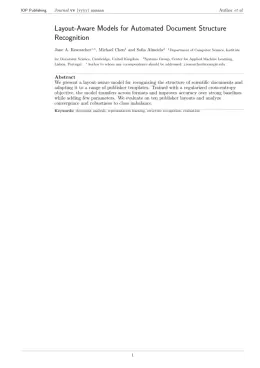
In DocuGuru you write your manuscript in a normal editor — no LaTeX setup required — and select the Nano Futures template. When you export, DocuGuru compiles the paper into the official IOP Publishing format and hands you a submission-ready PDF along with the editable LaTeX source.
What reference style does Nano Futures use?
Nano Futures uses Numbered (IOP) references, shown as numbered [1], [2] markers in the text. DocuGuru formats every in-text citation and the reference list in this exact style automatically. A reference appears like this: [1] Smith A, Jones B and Lee C 2023 A representative article title Nano Futures 12 45–58
Do I need to know LaTeX to submit to Nano Futures?
No. DocuGuru generates the iopjournal LaTeX class and compiles the PDF for you in the background, so you get a IOP Publishing-ready Nano Futures document without writing any LaTeX. If you do want it, the LaTeX source is included in the export.
Can I import an existing draft into the Nano Futures template?
Yes. Paste or upload your current manuscript — Word, LaTeX, Markdown, or plain text — and DocuGuru reflows it into the Nano Futures format with correct headings, figures, tables, and numbered citations.
What is Nano Futures?
IOP Publishing journal. It is a physics journal, published by IOP Publishing.
Can I export a submission-ready Nano Futures PDF?
Yes — DocuGuru produces a PDF built with the official Nano Futures template (the iopjournal class) that is ready to submit to IOP Publishing, together with the matching LaTeX source files.
How much does the Nano Futures template cost?
You can start writing in the Nano Futures template for free. Exporting the final submission-ready Nano Futures PDF and LaTeX source is part of DocuGuru's paid plans — see the app for current pricing.
Use the Nano Futures template