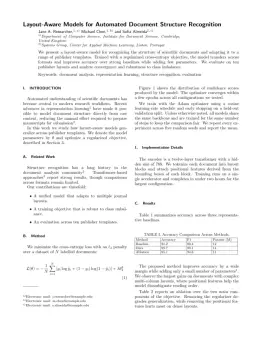
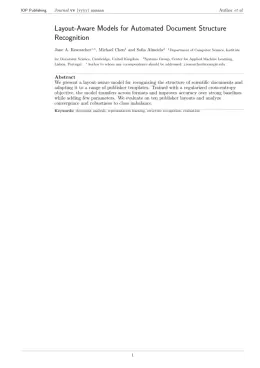
About the Biomicrofluidics format
Biomicrofluidics is a peer-reviewed journal published by AIP Publishing, covering Microfluidic and Bio-sensing Technologies, Microfluidic and Capillary Electrophoresis Applications, 3D Printing in Biomedical Research. Over its lifetime it has published 2,067 papers, which have received 61,300 citations.
| Publisher | AIP Publishing |
|---|
| Reference style | Numbered (AIP) Numbered — [1], [2] in the text
[1] A. Smith, B. Jones, and C. Lee, Biomicrofluidics 12, 45 (2023).
Formats any DOI in Biomicrofluidics style. No sign-up.
|
|---|
| Publishes research in | Microfluidic and Bio-sensing Technologies Microfluidic and Capillary Electrophoresis Applications 3D Printing in Biomedical Research Innovative Microfluidic and Catalytic Techniques Innovation Electrowetting and Microfluidic Technologies |
|---|
| ISSN | 1932-1058 |
|---|
| Citation impact (2-yr) | 3.68 |
|---|
| h-index | 94 |
|---|
| i10-index | 1,403 |
|---|
| Top institutions publishing here | Chinese Academy of Sciences |
|---|
| Journal website | pubs.aip.org |
|---|
| You get | A submission-ready PDF and the editable LaTeX source — ready to submit. |
|---|
Papers published in Biomicrofluidics per year
Citation impact of Biomicrofluidics by publication year
Citations each year’s papers have accumulated so far — the most recent years are still building up.
Most-cited papers in Biomicrofluidics
Review Article—Dielectrophoresis: Status of the theory, technology, and applications
Ronald Pethig · 1 Jun 2010
A review is presented of the present status of the theory, the developed technology and the current applications of dielectrophoresis (DEP). Over the past 10 years around 2000 publications have addressed these three aspects, and current trends suggest that the theory and technology have matured sufficiently for most effort to now be directed towards applying…
A perspective on paper-based microfluidics: Current status and future trends
Xu Li, David R. Ballerini, Wei Shen · 1 Mar 2012
"Paper-based microfluidics" or "lab on paper," as a burgeoning research field with its beginning in 2007, provides a novel system for fluid handling and fluid analysis for a variety of applications including health diagnostics, environmental monitoring as well as food quality testing. The reasons why paper becomes an attractive substrate for making microfluidic systems include:…
The microfluidics of the eccrine sweat gland, including biomarker partitioning, transport, and biosensing implications
Z. Sonner, E. Wilder, Jason Heikenfeld et al. · 1 May 2015
Non-invasive and accurate access of biomarkers remains a holy grail of the biomedical community. Human eccrine sweat is a surprisingly biomarker-rich fluid which is gaining increasing attention. This is especially true in applications of continuous bio-monitoring where other biofluids prove more challenging, if not impossible. However, much confusion on the topic exists as the microfluidics…
Electrospinning jets and nanofibrous structures
Koyal Garg, Gary L. Bowlin · 1 Mar 2011
Electrospinning is a process that creates nanofibers through an electrically charged jet of polymer solution or melt. This technique is applicable to virtually every soluble or fusible polymer and is capable of spinning fibers in a variety of shapes and sizes with a wide range of properties to be used in a broad range of…
Oxygen plasma treatment for reducing hydrophobicity of a sealed polydimethylsiloxane microchannel
Say Hwa Tan, Nam‐Trung Nguyen, Yong Chin. Chua et al. · 1 Sep 2010
Rapid prototyping of polydimethylsiloxane (PDMS) is often used to build microfluidic devices. However, the inherent hydrophobic nature of the material limits the use of PDMS in many applications. While different methods have been developed to transform the hydrophobic PDMS surface to a hydrophilic surface, the actual implementation proved to be time consuming due to differences…