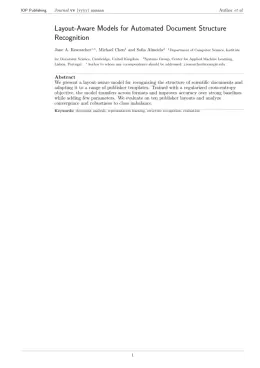
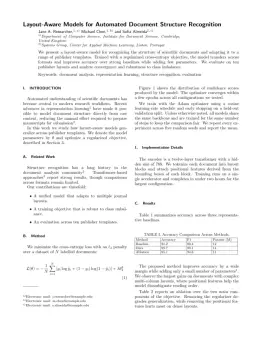
About the Journal of Physics: Materials format
Journal of Physics: Materials is a peer-reviewed journal published by IOP Publishing, covering Graphene research and applications, 2D Materials and Applications, Machine Learning in Materials Science. Over its lifetime it has published 579 papers, which have received 10,043 citations.
| Publisher | IOP Publishing |
|---|
| Reference style | Numbered (IOP) Numbered — [1], [2] in the text
[1] Smith A, Jones B and Lee C 2023 A representative article title Journal of Physics: Materials 12 45–58
Formats any DOI in Journal of Physics: Materials style. No sign-up.
|
|---|
| Publishes research in | Graphene research and applications 2D Materials and Applications Machine Learning in Materials Science Topological Materials and Phenomena Perovskite Materials and Applications |
|---|
| ISSN | 2515-7639 |
|---|
| Citation impact (2-yr) | 3.29 |
|---|
| h-index | 46 |
|---|
| i10-index | 234 |
|---|
| Article processing charge | $1,962 |
|---|
| Open access | Yes — indexed in DOAJ |
|---|
| Top institutions publishing here | Centre National de la Recherche Scientifique |
|---|
| Journal website | iopscience.iop.org |
|---|
| You get | A submission-ready PDF and the editable LaTeX source — ready to submit. |
|---|
Papers published in Journal of Physics: Materials per year
Citation impact of Journal of Physics: Materials by publication year
Citations each year’s papers have accumulated so far — the most recent years are still building up.
Most-cited papers in Journal of Physics: Materials
From DFT to machine learning: recent approaches to materials science–a review
Gabriel R. Schleder, A. C. M. Padilha, Carlos Mera Acosta et al. · 19 Feb 2019
Abstract Recent advances in experimental and computational methods are increasing the quantity and complexity of generated data. This massive amount of raw data needs to be stored and interpreted in order to advance the materials science field. Identifying correlations and patterns from large amounts of complex data is being performed by machine learning algorithms for…
The NOMAD laboratory: from data sharing to artificial intelligence
Claudia Draxl, Matthias Scheffler · 27 Mar 2019
Abstract The Novel Materials Discovery (NOMAD) Laboratory is a user-driven platform for sharing and exploiting computational materials science data. It accounts for the various aspects of data being a crucial raw material and most relevant to accelerate materials research and engineering. NOMAD, with the NOMAD Repository, and its code-independent and normalized form, the NOMAD Archive,…
Green nanotechnology-based zinc oxide (ZnO) nanomaterials for biomedical applications: a review
David Medina-Cruz, Ebrahim Mostafavi, Ada Vernet-Crua et al. · 19 Mar 2020
Abstract The rise of nanotechnology has brought to the world a new potential and broader perspective of what humanity can achieve through material manipulation at the nanoscale. As a consequence, the use of different nanomaterials has revolutionized both the industrial and biomedical worlds. Metallic and metal-oxide nanostructures have shown great potential due to their high…
Simultaneous learning of several materials properties from incomplete databases with multi-task SISSO
Runhai Ouyang, Emre Ahmetcik, Christian Carbogno et al. · 15 Feb 2019
The identification of descriptors of materials properties and functions that capture the underlying physical mechanisms is a critical goal in data-driven materials science. Only such descriptors will enable a trustful and efficient scanning of materials spaces and possibly the discovery of new materials. Recently, the sure-independence screening and sparsifying operator (SISSO) has been introduced and…
Review on Ruddlesden–Popper perovskites as cathode for solid oxide fuel cells
Peipei Ding, Wenlu Li, Hanwen Zhao et al. · 5 Feb 2021
Abstract Solid oxide fuel cells (SOFC) are highly efficient energy conversion device, but its high operating temperature (800∼1000 °C) restricts industrial commercialization. Reducing the operating temperature to <800 °C could broaden the selection of materials, improve the reliability of the system, and lower the operating cost. However, traditional perovskite cathode could not both attain the…