IEEE

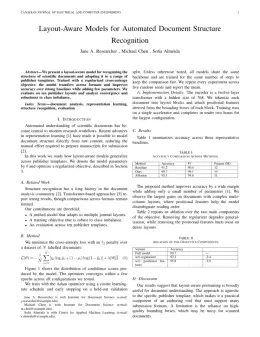
IEEE Transactions on Cybernetics Template

Write in a clean editor, then format for IEEE Transactions on Cybernetics in one click — DocuGuru applies the official IEEE template with numbered references and exports a submission-ready PDF plus the editable LaTeX source. Free to start.

About the IEEE Transactions on Cybernetics format

IEEE Transactions on Cybernetics is a peer-reviewed journal published by IEEE, covering Distributed Control Multi-Agent Systems, Neural Networks Stability and Synchronization, Adaptive Control of Nonlinear Systems. Over its lifetime it has published 7,224 papers, which have received 386,671 citations.

PublisherIEEE
Reference styleNumbered (IEEE)
Numbered — [1], [2] in the text
[1] A. Smith, B. Jones, and C. Lee, "A representative article title," IEEE Transactions on Cybernetics, vol. 12, no. 3, pp. 45–58, 2023.

Formats any DOI in IEEE Transactions on Cybernetics style. No sign-up.

Abbreviation (ISO-4)TCYB
Publishes research inDistributed Control Multi-Agent Systems Neural Networks Stability and Synchronization Adaptive Control of Nonlinear Systems Stability and Control of Uncertain Systems Adaptive Dynamic Programming Control
ISSN2168-2267
Citation impact (2-yr)7.13
h-index244
i10-index5,025
Top institutions publishing hereChinese Academy of Sciences
Journal websiteieeexplore.ieee.org
You getA submission-ready PDF and the editable LaTeX source — ready to submit.

Papers published in IEEE Transactions on Cybernetics per year

395
2014
367
2015
412
2016
406
2017
559
2018
606
2019
839
2020
841
2021
670
2022
350
2023
437
2024
654
2025

Citation impact of IEEE Transactions on Cybernetics by publication year

30.6K
2014
31.5K
2015
34K
2016
33K
2017
45.9K
2018
44.3K
2019
53K
2020
40.8K
2021
22.8K
2022
9.3K
2023
6.6K
2024
2.8K
2025

Citations each year’s papers have accumulated so far — the most recent years are still building up.

Most-cited papers in IEEE Transactions on Cybernetics

Enhancing Geometric Factors in Model Learning and Inference for Object Detection and Instance Segmentation

Zhaohui Zheng, Ping Wang, Dongwei Ren et al. · 26 Aug 2021

Deep learning-based object detection and instance segmentation have achieved unprecedented progress. In this article, we propose complete-IoU (CIoU) loss and Cluster-NMS for enhancing geometric factors in both bounding-box regression and nonmaximum suppression (NMS), leading to notable gains of average precision (AP) and average recall (AR), without the sacrifice of inference efficiency. In particular, we consider…

1,429 citations Cite SaveGo to paper →
Enhanced Computer Vision With Microsoft Kinect Sensor: A Review

Jungong Han, Ling Shao, Dong Xu et al. · 25 Jun 2013

With the invention of the low-cost Microsoft Kinect sensor, high-resolution depth and visual (RGB) sensing has become available for widespread use. The complementary nature of the depth and visual information provided by the Kinect sensor opens up new opportunities to solve fundamental problems in computer vision. This paper presents a comprehensive review of recent Kinect-based…

1,377 citations Cite SaveGo to paper →
Particle Swarm Optimization for Feature Selection in Classification: A Multi-Objective Approach

Bing Xue, Mengjie Zhang, Will N. Browne · 13 Dec 2012

Classification problems often have a large number of features in the data sets, but not all of them are useful for classification. Irrelevant and redundant features may even reduce the performance. Feature selection aims to choose a small number of relevant features to achieve similar or even better classification performance than using all features. It…

1,267 citations Cite SaveGo to paper →
Adaptive Neural Network Control of an Uncertain Robot With Full-State Constraints

Wei He, Yuhao Chen, Zhao Yin · 3 Apr 2015

This paper studies the tracking control problem for an uncertain n -link robot with full-state constraints. The rigid robotic manipulator is described as a multiinput and multioutput system. Adaptive neural network (NN) control for the robotic system with full-state constraints is designed. In the control design, the adaptive NNs are adopted to handle system uncertainties…

1,262 citations Cite SaveGo to paper →
Deep Reinforcement Learning for Multiagent Systems: A Review of Challenges, Solutions, and Applications

Thanh Thi Nguyen, Ngoc Duy Nguyen, Saeid Nahavandi · 20 Mar 2020

Reinforcement learning (RL) algorithms have been around for decades and employed to solve various sequential decision-making problems. These algorithms, however, have faced great challenges when dealing with high-dimensional environments. The recent development of deep learning has enabled RL methods to drive optimal policies for sophisticated and capable agents, which can perform efficiently in these challenging…

1,239 citations Cite SaveGo to paper →

IEEE Transactions on Cybernetics template — frequently asked questions

How do I write a paper in the IEEE Transactions on Cybernetics format?
In DocuGuru you write your manuscript in a normal editor — no LaTeX setup required — and select the IEEE Transactions on Cybernetics template. When you export, DocuGuru compiles the paper into the official IEEE format and hands you a submission-ready PDF along with the editable LaTeX source.
What reference style does IEEE Transactions on Cybernetics use?
IEEE Transactions on Cybernetics uses Numbered (IEEE) references, shown as numbered [1], [2] markers in the text. DocuGuru formats every in-text citation and the reference list in this exact style automatically. A reference appears like this: [1] A. Smith, B. Jones, and C. Lee, "A representative article title," IEEE Transactions on Cybernetics, vol. 12, no. 3, pp. 45–58, 2023.
Do I need to know LaTeX to submit to IEEE Transactions on Cybernetics?
No. DocuGuru generates the IEEEtran LaTeX class and compiles the PDF for you in the background, so you get a IEEE-ready IEEE Transactions on Cybernetics document without writing any LaTeX. If you do want it, the LaTeX source is included in the export.
Can I import an existing draft into the IEEE Transactions on Cybernetics template?
Yes. Paste or upload your current manuscript — Word, LaTeX, Markdown, or plain text — and DocuGuru reflows it into the IEEE Transactions on Cybernetics format with correct headings, figures, tables, and numbered citations.
Who publishes IEEE Transactions on Cybernetics?
IEEE Transactions on Cybernetics is a engineering and computer science journal published by IEEE. DocuGuru's IEEE Transactions on Cybernetics template matches IEEE's official submission format.
Can I export a submission-ready IEEE Transactions on Cybernetics PDF?
Yes — DocuGuru produces a PDF built with the official IEEE Transactions on Cybernetics template (the IEEEtran class) that is ready to submit to IEEE, together with the matching LaTeX source files.
How much does the IEEE Transactions on Cybernetics template cost?
You can start writing in the IEEE Transactions on Cybernetics template for free. Exporting the final submission-ready IEEE Transactions on Cybernetics PDF and LaTeX source is part of DocuGuru's paid plans — see the app for current pricing.
Use the IEEE Transactions on Cybernetics template