IEEE

IEEE Transactions on Medical Robotics and Bionics Template

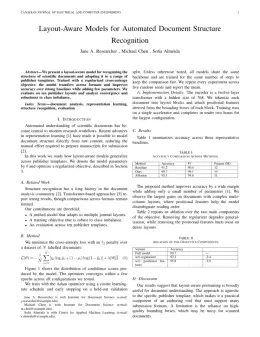
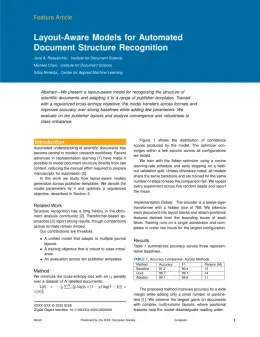
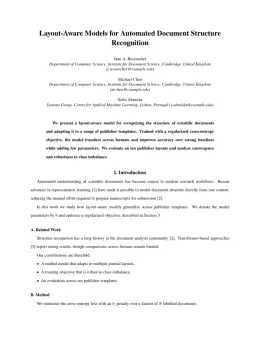
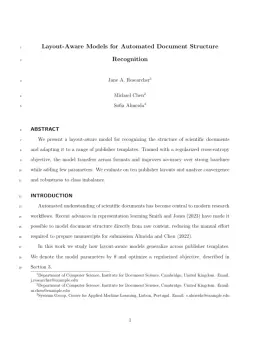
Write in a clean editor, then format for IEEE Transactions on Medical Robotics and Bionics in one click — DocuGuru applies the official IEEE template with numbered references and exports a submission-ready PDF plus the editable LaTeX source. Free to start.

About the IEEE Transactions on Medical Robotics and Bionics format

IEEE Transactions on Medical Robotics and Bionics is a peer-reviewed journal published by IEEE, covering Soft Robotics and Applications, Muscle activation and electromyography studies, Prosthetics and Rehabilitation Robotics. Over its lifetime it has published 985 papers, which have received 10,427 citations.

PublisherIEEE
Reference styleNumbered (IEEE)
Numbered — [1], [2] in the text
[1] A. Smith, B. Jones, and C. Lee, "A representative article title," IEEE Transactions on Medical Robotics and Bionics, vol. 12, no. 3, pp. 45–58, 2023.

Formats any DOI in IEEE Transactions on Medical Robotics and Bionics style. No sign-up.

Abbreviation (ISO-4)TMRB
Publishes research inSoft Robotics and Applications Muscle activation and electromyography studies Prosthetics and Rehabilitation Robotics Surgical Simulation and Training Stroke Rehabilitation and Recovery
ISSN2576-3202
Citation impact (2-yr)2.61
h-index43
i10-index317
Top institutions publishing hereScuola Superiore Sant'Anna
Journal websiteieeexplore.ieee.org
You getA submission-ready PDF and the editable LaTeX source — ready to submit.

Papers published in IEEE Transactions on Medical Robotics and Bionics per year

56
2019
117
2020
108
2021
106
2022
135
2023
182
2024
192
2025

Citation impact of IEEE Transactions on Medical Robotics and Bionics by publication year

1.5K
2019
2.4K
2020
2.1K
2021
1.5K
2022
1.7K
2023
936
2024
223
2025

Citations each year’s papers have accumulated so far — the most recent years are still building up.

Most-cited papers in IEEE Transactions on Medical Robotics and Bionics

Autonomy for Surgical Robots: Concepts and Paradigms

Tamás Haidegger · 25 Apr 2019

Robot-assisted and computer-integrated surgery provides innovative, minimally invasive solutions to heal complex injuries and diseases. The dominant portion of these surgical interventions has been performed with master-slave teleoperation systems, which are not capable of autonomous task execution or cognitive decision making. Much of the most advanced technologies foundered on the drawing boards or at the…

Real-Time Neural Network-Based Gait Phase Estimation Using a Robotic Hip Exoskeleton

Inseung Kang, Pratik Kunapuli, Aaron J. Young · 24 Dec 2019

Lower limb exoskeletons provide assistance during the gait cycle using a state variable, one in particular is gait phase. This is crucial for the exoskeleton controller to provide the user accurate assistance. Conventional methods often utilize an event marker to estimate gait phase by computing the average stride time. However, this strategy has limitations in…

A Review of Augmented Reality in Robotic-Assisted Surgery

Long Qian, Jie Ying Wu, Simon DiMaio et al. · 2 Dec 2019

Augmented reality (AR) and robotic-assisted surgery (RAS) are both rapidly evolving technologies in recent years. RAS systems, such as the da Vinci Surgical System, aim to improve surgical precision and dexterity, as well as access to minimally-invasive procedures, while AR provides an advanced interface to enhance user perception. Combining the features of both, AR-integrated RAS…

Hybrid Brain/Muscle Signals Powered Wearable Walking Exoskeleton Enhancing Motor Ability in Climbing Stairs Activity

Zhijun Li, Yuxia Yuan, Ling Luo et al. · 28 Oct 2019

The powered exoskeleton promises substantial improvements on daily activities of the people who need robots provide assistance. In order to achieve flexible and stable control of a powered lower limb exoskeleton, in this paper, a hybrid control that combines a brain-computer interface (BCI) based on motor imagery (MI) with surface electromyogram (EMG) signals has been…

An Overview of Systems and Techniques for Autonomous Robotic Ultrasound Acquisitions

Keyu Li, Yangxin Xu, Max Q.‐H. Meng · 9 Apr 2021

Ultrasound (US) acquisition in standard clinical procedures requires manual operation of the probe based on the interpretation of the image. A robotic system for autonomous US acquisitions holds great promise to relieve the workload of sonographers, improve access to care, yield more standardized imaging results, and circumvent the need for direct patient contact. In this…

IEEE Transactions on Medical Robotics and Bionics template — frequently asked questions

How do I write a paper in the IEEE Transactions on Medical Robotics and Bionics format?
In DocuGuru you write your manuscript in a normal editor — no LaTeX setup required — and select the IEEE Transactions on Medical Robotics and Bionics template. When you export, DocuGuru compiles the paper into the official IEEE format and hands you a submission-ready PDF along with the editable LaTeX source.
What reference style does IEEE Transactions on Medical Robotics and Bionics use?
IEEE Transactions on Medical Robotics and Bionics uses Numbered (IEEE) references, shown as numbered [1], [2] markers in the text. DocuGuru formats every in-text citation and the reference list in this exact style automatically. A reference appears like this: [1] A. Smith, B. Jones, and C. Lee, "A representative article title," IEEE Transactions on Medical Robotics and Bionics, vol. 12, no. 3, pp. 45–58, 2023.
Do I need to know LaTeX to submit to IEEE Transactions on Medical Robotics and Bionics?
No. DocuGuru generates the IEEEtran LaTeX class and compiles the PDF for you in the background, so you get a IEEE-ready IEEE Transactions on Medical Robotics and Bionics document without writing any LaTeX. If you do want it, the LaTeX source is included in the export.
Can I import an existing draft into the IEEE Transactions on Medical Robotics and Bionics template?
Yes. Paste or upload your current manuscript — Word, LaTeX, Markdown, or plain text — and DocuGuru reflows it into the IEEE Transactions on Medical Robotics and Bionics format with correct headings, figures, tables, and numbered citations.
Who publishes IEEE Transactions on Medical Robotics and Bionics?
IEEE Transactions on Medical Robotics and Bionics is a engineering and computer science journal published by IEEE. DocuGuru's IEEE Transactions on Medical Robotics and Bionics template matches IEEE's official submission format.
Can I export a submission-ready IEEE Transactions on Medical Robotics and Bionics PDF?
Yes — DocuGuru produces a PDF built with the official IEEE Transactions on Medical Robotics and Bionics template (the IEEEtran class) that is ready to submit to IEEE, together with the matching LaTeX source files.
How much does the IEEE Transactions on Medical Robotics and Bionics template cost?
You can start writing in the IEEE Transactions on Medical Robotics and Bionics template for free. Exporting the final submission-ready IEEE Transactions on Medical Robotics and Bionics PDF and LaTeX source is part of DocuGuru's paid plans — see the app for current pricing.
Use the IEEE Transactions on Medical Robotics and Bionics template