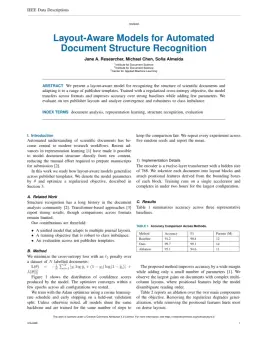
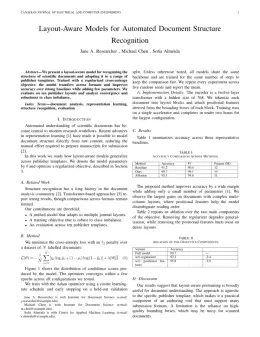
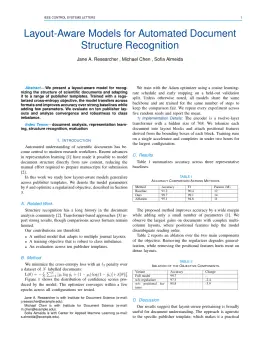
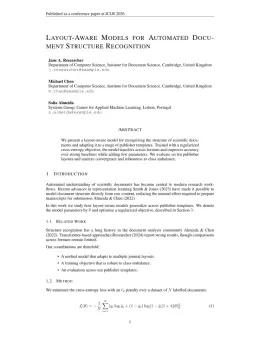
About the IEEE Electromagnetic Compatibility Magazine format
IEEE Electromagnetic Compatibility Magazine is a peer-reviewed journal published by IEEE, covering Electromagnetic Compatibility and Noise Suppression, Electromagnetic Compatibility and Measurements, Electrical Fault Detection and Protection. Over its lifetime it has published 2,020 papers, which have received 3,348 citations.
| Publisher | IEEE |
|---|
| Reference style | Numbered (IEEE) Numbered — [1], [2] in the text
[1] A. Smith, B. Jones, and C. Lee, "A representative article title," IEEE Electromagnetic Compatibility Magazine, vol. 12, no. 3, pp. 45–58, 2023.
Formats any DOI in IEEE Electromagnetic Compatibility Magazine style. No sign-up.
|
|---|
| Abbreviation (ISO-4) | ECM |
|---|
| Publishes research in | Electromagnetic Compatibility and Noise Suppression Electromagnetic Compatibility and Measurements Electrical Fault Detection and Protection RFID technology advancements Railway Systems and Energy Efficiency |
|---|
| ISSN | 2162-2264 |
|---|
| Citation impact (2-yr) | 0.14 |
|---|
| h-index | 28 |
|---|
| i10-index | 90 |
|---|
| Top institutions publishing here | IEEE Computer Society |
|---|
| Journal website | ieeexplore.ieee.org |
|---|
| You get | A submission-ready PDF and the editable LaTeX source — ready to submit. |
|---|
Papers published in IEEE Electromagnetic Compatibility Magazine per year
Citation impact of IEEE Electromagnetic Compatibility Magazine by publication year
Citations each year’s papers have accumulated so far — the most recent years are still building up.
Most-cited papers in IEEE Electromagnetic Compatibility Magazine
Standards for supraharmonics (2 to 150 kHz)
Math Bollen, Magnus Olofsson, Anders Larsson et al. · 1 Jan 2014
There is a serious interest from the international standard-setting community in knowledge about voltage and current distortion in the frequency range 2 to 150 kHz, referred to as supraharmonics. At the same time, research is ongoing at a number of locations, but the knowledge about supraharmonics remains limited. This paper compares some of the properties…
Static energy meter errors caused by conducted electromagnetic interference
Frank Leferink, Cees Keyer, Anton Melentjev · 1 Jan 2016
Static, or electronic, energy meters are replacing the conventional electromechanical meters. Consumers are sometimes complaining about higher energy readings and billing after the change to a static meter, but there is not a clear common or root cause at present. Electromagnetic interference has been observed between active infeed converters as used in photo-voltaic systems and…
Reverberation chambers a la carte: An overview of the different mode-stirring techniques
Ramiro Serra, A.C. Marvin, Franco Moglie et al. · 1 Jan 2017
Reverberation chambers (RC), a name inspired in room acoustics, are also known in literature as reverberating, reverb, mode-stirred or mode-tuned chambers. In their basic form, they consist of a shielded metallic enclosure, forming a cavity resonator, together with some mode-stirring mechanism. The main goal of such stirring mechanism is to generate an amplitude-varying electromagnetic field…
Theory, design and perspectives of electromagnetic wave absorbers
Filippo Costa, Agostino Monorchio, Giuliano Manara · 1 Jan 2016
Electromagnetic absorbers for free space and cavity absorption are discussed. Classical configurations are described as well as more recent designs. The presented layouts are able to provide absorbing behaviors spanning from ultra-narrow band to ultra-wideband. A comparison among various solutions is presented both in terms of achievable bandwidth and in terms of minimum theoretical thickness.…
Stochastic transmission line analysis via polynomial chaos methods: an overview
Paolo Manfredi, Dries Vande Ginste, Igor Simone Stievano et al. · 1 Jan 2017
The aim of this article is to provide an overview of polynomial chaos (PC) based methods for the statistical analysis of transmission lines. The underlying idea of PC is to represent stochastic line voltages and currents as expansions of predefined orthogonal polynomials. The determination of the expansion coefficients allows obtaining pertinent statistical information and is…