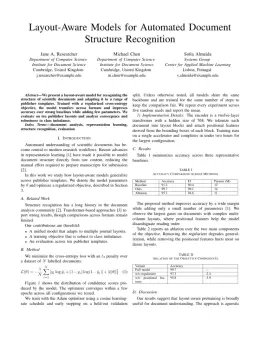
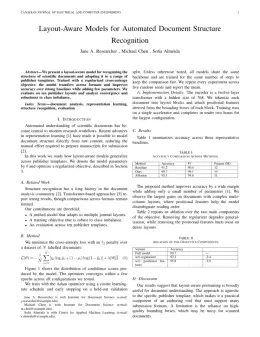
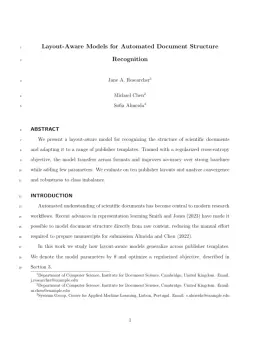
About the China Communications format
China Communications is a peer-reviewed journal published by IEEE, covering Advanced MIMO Systems Optimization, Cooperative Communication and Network Coding, Advanced Wireless Communication Technologies. Over its lifetime it has published 3,942 papers, which have received 44,728 citations.
| Publisher | IEEE |
|---|
| Reference style | Numbered (IEEE) Numbered — [1], [2] in the text
[1] A. Smith, B. Jones, and C. Lee, "A representative article title," China Communications, vol. 12, no. 3, pp. 45–58, 2023.
Formats any DOI in China Communications style. No sign-up.
|
|---|
| Publishes research in | Advanced MIMO Systems Optimization Cooperative Communication and Network Coding Advanced Wireless Communication Technologies Satellite Communication Systems IoT and Edge/Fog Computing |
|---|
| ISSN | 1673-5447 |
|---|
| Citation impact (2-yr) | 2.17 |
|---|
| h-index | 78 |
|---|
| i10-index | 1,105 |
|---|
| Top institutions publishing here | Beijing University of Posts and Telecommunications |
|---|
| Journal website | www.cic-chinacommunications.cn |
|---|
| You get | A submission-ready PDF and the editable LaTeX source — ready to submit. |
|---|
Papers published in China Communications per year
Citation impact of China Communications by publication year
Citations each year’s papers have accumulated so far — the most recent years are still building up.
Most-cited papers in China Communications
An overview of Internet of Vehicles
Fangchun Yang, Shangguang Wang, Jinglin Li et al. · 1 Oct 2014
The new era of the Internet of Things is driving the evolution of conventional Vehicle Ad-hoc Networks into the Internet of Vehicles (IoV). With the rapid development of computation and communication technologies, IoV promises huge commercial interest and research value, thereby attracting a large number of companies and researchers. This paper proposes an abstract network…
Deep learning for wireless physical layer: Opportunities and challenges
Tianqi Wang, Chao-Kai Wen, Hanqing Wang et al. · 1 Nov 2017
Machine learning (ML) has been widely applied to the upper layers of wireless communication systems for various purposes, such as deployment of cognitive radio and communication network. However, its application to the physical layer is hampered by sophisticated channel environments and limited learning ability of conventional ML algorithms. Deep learning (DL) has been recently applied…
A survey on terahertz communications
Zhi Chen, Xinying Ma, Bo Zhang et al. · 8 Mar 2019
With the exponential growth of the data traffic in wireless communication systems, terahertz (THz) frequency band is envisioned as a promising candidate to support ultra-broadband for future beyond fifth generation (5G), bridging the gap between millimeter wave (mmWave) and optical frequency ranges. The purpose of this paper is to provide a comprehensive literature review on…
Federated learning for 6G communications: Challenges, methods, and future directions
Yi Liu, Xingliang Yuan, Zehui Xiong et al. · 1 Sep 2020
As the 5G communication networks are being widely deployed worldwide, both industry and academia have started to move beyond 5G and explore 6G communications. It is generally believed that 6G will be established on ubiquitous Artificial Intelligence (AI) to achieve data-driven Machine Learning (ML) solutions in heterogeneous and massive-scale networks. However, traditional ML techniques require…
6G Visions: Mobile ultra-broadband, super internet-of-things, and artificial intelligence
Lin Zhang, Ying‐Chang Liang, Dusit Niyato · 1 Aug 2019
With a ten-year horizon from concept to reality, it is time now to start thinking about what will the sixth-generation (6G) mobile communications be on the eve of the fifth-generation (5G) deployment. To pave the way for the development of 6G and beyond, we provide 6G visions in this paper. We first introduce the state-of-the-art…