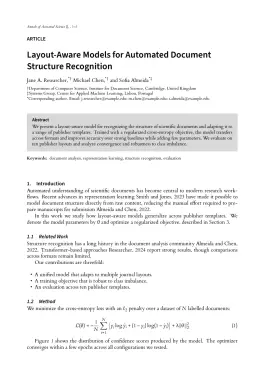
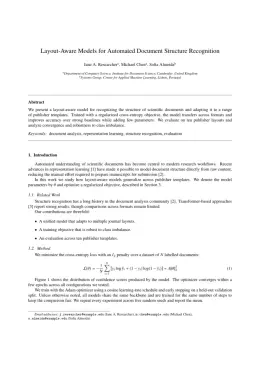
About the Cambridge Prisms: Precision Medicine format
Cambridge Prisms: Precision Medicine is a peer-reviewed journal published by Cambridge University Press, covering Genetic Associations and Epidemiology, Health Systems, Economic Evaluations, Quality of Life, Cancer Genomics and Diagnostics. Over its lifetime it has published 50 papers, which have received 647 citations.
| Publisher | Cambridge University Press |
|---|
| Reference style | Numbered Numbered — [1], [2] in the text
[1] A. Smith, B. Jones, and C. Lee, A representative article title, Cambridge Prisms: Precision Medicine 12 (2023) 45–58.
Formats any DOI in the closest standard style — Cambridge Prisms: Precision Medicine has no published style definition, so this is an approximation. No sign-up.
|
|---|
| Publishes research in | Genetic Associations and Epidemiology Health Systems, Economic Evaluations, Quality of Life Cancer Genomics and Diagnostics Genomics and Rare Diseases Epigenetics and DNA Methylation |
|---|
| ISSN | 2752-6143 |
|---|
| Citation impact (2-yr) | 5.85 |
|---|
| h-index | 16 |
|---|
| i10-index | 29 |
|---|
| Top institutions publishing here | University of Oxford |
|---|
| You get | A submission-ready PDF and the editable LaTeX source — ready to submit. |
|---|
Papers published in Cambridge Prisms: Precision Medicine per year
Citation impact of Cambridge Prisms: Precision Medicine by publication year
Citations each year’s papers have accumulated so far — the most recent years are still building up.
Most-cited papers in Cambridge Prisms: Precision Medicine
Mendelian randomization as a tool to inform drug development using human genetics
Iyas Daghlas, Dipender Gill · 1 Jan 2023
Drug development is essential to the advancement of human health, however, the process is slow, costly, and at high risk of failure at all stages. A promising strategy for expediting and improving the probability of success in the drug development process is the use of naturally randomized human genetic variation for drug target identification and…
Ayurgenomics-based frameworks in precision and integrative medicine: Translational opportunities
Mitali Mukerji · 1 Jan 2023
In today's globalized and flat world, a patient can access and seek multiple health and disease management options. A digitally enabled participatory framework that allows an evidence-based informed choice is likely to assume an immense importance in the future. In India, traditional knowledge systems, like Ayurveda, coexist with modern medicine. However, due to limited crosstalk…
Promises and challenges in pharmacoepigenetics
Delaney A. Smith, Marie C. Sadler, Russ B. Altman · 1 Jan 2023
Pharmacogenetics, the study of how interindividual genetic differences affect drug response, does not explain all observed heritable variance in drug response. Epigenetic mechanisms, such as DNA methylation, and histone acetylation may account for some of the unexplained variances. Epigenetic mechanisms modulate gene expression and can be suitable drug targets and can impact the action of…
AI approaches for the discovery and validation of drug targets
Aaron Wenteler, Claudia Cabrera, Wei Wei et al. · 1 Jan 2024
Artificial intelligence (AI) holds immense promise for accelerating and improving all aspects of drug discovery, not least target discovery and validation. By integrating a diverse range of biological data modalities, AI enables the accurate prediction of drug target properties, ultimately illuminating biological mechanisms of disease and guiding drug discovery strategies. Despite the indisputable potential of…
Applications of artificial intelligence in dementia research
Kelvin Tsoi, Pingping Jia, N. Maritza Dowling et al. · 6 Dec 2022
More than 50 million older people worldwide are suffering from dementia, and this number is estimated to increase to 150 million by 2050. Greater caregiver burdens and financial impacts on the healthcare system are expected as we wait for an effective treatment for dementia. Researchers are constantly exploring new therapies and screening approaches for the…