Cambridge University Press

Cambridge Prisms: Extinction Template

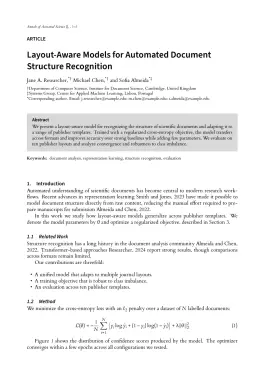
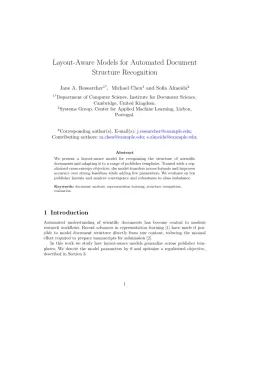
Write in a clean editor, then format for Cambridge Prisms: Extinction in one click — DocuGuru applies the official Cambridge University Press template with numbered references and exports a submission-ready PDF plus the editable LaTeX source. Free to start.

About the Cambridge Prisms: Extinction format

Cambridge Prisms: Extinction is a peer-reviewed journal published by Cambridge University Press, covering Environmental Philosophy and Ethics, Species Distribution and Climate Change, Wildlife Ecology and Conservation. Over its lifetime it has published 72 papers, which have received 755 citations.

PublisherCambridge University Press
Reference styleNumbered
Numbered — [1], [2] in the text
[1] A. Smith, B. Jones, and C. Lee, A representative article title, Cambridge Prisms: Extinction 12 (2023) 45–58.

Formats any DOI in the closest standard style — Cambridge Prisms: Extinction has no published style definition, so this is an approximation. No sign-up.

Publishes research inEnvironmental Philosophy and Ethics Species Distribution and Climate Change Wildlife Ecology and Conservation Geographies of human-animal interactions Animal and Plant Science Education
ISSN2755-0958
Citation impact (2-yr)4.81
h-index16
i10-index25
Open accessYes — indexed in DOAJ
Top institutions publishing hereUniversity of Leeds
You getA submission-ready PDF and the editable LaTeX source — ready to submit.

Papers published in Cambridge Prisms: Extinction per year

25
2023
24
2024
16
2025

Citation impact of Cambridge Prisms: Extinction by publication year

516
2023
195
2024
21
2025

Citations each year’s papers have accumulated so far — the most recent years are still building up.

Most-cited papers in Cambridge Prisms: Extinction

The late-Quaternary megafauna extinctions: Patterns, causes, ecological consequences and implications for ecosystem management in the Anthropocene

Jens‐Christian Svenning, Rhys T. Lemoine, Juraj Bergman et al. · 1 Jan 2024

Abstract Across the last ~50,000 years (the late Quaternary) terrestrial vertebrate faunas have experienced severe losses of large species (megafauna), with most extinctions occurring in the Late Pleistocene and Early to Middle Holocene. Debate on the causes has been ongoing for over 200 years, intensifying from the 1960s onward. Here, we outline criteria that any…

Forty years later: The status of the “Big Five” mass extinctions

Charles R. Marshall · 1 Jan 2023

Over 40 years ago, Raup and Sepkoski identified five episodes of elevated extinction in the marine fossil record that were thought to be statistically distinct, thus warranting the term the "Big Five" mass extinctions. Since then, the term has become part of standard vocabulary, especially with the naming of the current biodiversity crisis as the…

Trading species to extinction: evidence of extinction linked to the wildlife trade

Amy Hinsley, Jasmin Willis, Abigail R. Dent et al. · 1 Jan 2023

The link between unsustainable harvest of species for the wildlife trade and extinction is clear in some cases, but little is known about the number of species across taxonomic groups that have gone extinct because of trade-related factors, or future risks for traded species. We conducted a rapid review of published articles and species assessments…

Predicting extinctions with species distribution models

Damaris Zurell, Susanne A. Fritz, Anna Rönnfeldt et al. · 1 Jan 2023

Predictions of species-level extinction risk from climate change are mostly based on species distribution models (SDMs). Reviewing the literature, we summarise why the translation of SDM results to extinction risk is conceptually and methodologically challenged and why critical SDM assumptions are unlikely to be met under climate change. Published SDM-derived extinction estimates are based on…

Causes and consequences of end-Ediacaran extinction – an update

Simon A.F. Darroch, Emily F. Smith, Lyle L. Nelson et al. · 15 May 2023

Since the 1980s, the existence of one or more extinction events in the late Ediacaran has been the subject of debate. Discussion surrounding these events has intensified in the last decade, in concert with efforts to understand drivers of global change over the Ediacaran-Cambrian transition and the appearance of the more modern-looking Phanerozoic biosphere. In…

Cambridge Prisms: Extinction template — frequently asked questions

How do I write a paper in the Cambridge Prisms: Extinction format?
In DocuGuru you write your manuscript in a normal editor — no LaTeX setup required — and select the Cambridge Prisms: Extinction template. When you export, DocuGuru compiles the paper into the official Cambridge University Press format and hands you a submission-ready PDF along with the editable LaTeX source.
What reference style does Cambridge Prisms: Extinction use?
Cambridge Prisms: Extinction uses Numbered references, shown as numbered [1], [2] markers in the text. DocuGuru formats every in-text citation and the reference list in this exact style automatically. A reference appears like this: [1] A. Smith, B. Jones, and C. Lee, A representative article title, Cambridge Prisms: Extinction 12 (2023) 45–58.
Do I need to know LaTeX to submit to Cambridge Prisms: Extinction?
No. DocuGuru generates the null LaTeX class and compiles the PDF for you in the background, so you get a Cambridge University Press-ready Cambridge Prisms: Extinction document without writing any LaTeX. If you do want it, the LaTeX source is included in the export.
Can I import an existing draft into the Cambridge Prisms: Extinction template?
Yes. Paste or upload your current manuscript — Word, LaTeX, Markdown, or plain text — and DocuGuru reflows it into the Cambridge Prisms: Extinction format with correct headings, figures, tables, and numbered citations.
What is Cambridge Prisms: Extinction?
Cambridge Prisms: Extinction, a Cambridge University Press journal (cup-journal.cls, biber). It is a multidisciplinary journal, published by Cambridge University Press.
Can I export a submission-ready Cambridge Prisms: Extinction PDF?
Yes — DocuGuru produces a PDF built with the official Cambridge Prisms: Extinction template (the null class) that is ready to submit to Cambridge University Press, together with the matching LaTeX source files.
How much does the Cambridge Prisms: Extinction template cost?
You can start writing in the Cambridge Prisms: Extinction template for free. Exporting the final submission-ready Cambridge Prisms: Extinction PDF and LaTeX source is part of DocuGuru's paid plans — see the app for current pricing.

Use the Cambridge Prisms: Extinction template