
380 citations
Cite
SaveGo to paper →
ASCE
Journal of Professional Issues in Engineering Education and Practice Template
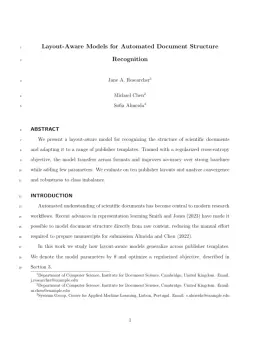
Write in a clean editor, then format for Journal of Professional Issues in Engineering Education and Practice in one click — DocuGuru applies the official ASCE template with author–year references and exports a submission-ready PDF plus the editable LaTeX source. Free to start.
About the Journal of Professional Issues in Engineering Education and Practice format
Journal of Professional Issues in Engineering Education and Practice is a peer-reviewed journal published by ASCE, covering Engineering Education and Curriculum Development, Engineering Education and Pedagogy, Construction Project Management and Performance.
| Publisher | ASCE |
|---|---|
| Reference style | Author–year (ASCE) Author–year — (Smith, 2023) in the text Smith, A., B. Jones, and C. Lee. (2023). "A representative article title." Journal of Professional Issues in Engineering Education and Practice, 12(3), 45–58.
Formats any DOI in Journal of Professional Issues in Engineering Education and Practice style. No sign-up. |
| Publishes research in | Engineering Education and Curriculum Development Engineering Education and Pedagogy Construction Project Management and Performance Construction Engineering and Safety Experimental Learning in Engineering |
| ISSN | 1052-3928 |
| h-index | 59 |
| i10-index | 508 |
| Total citations | 19,201 |
| Top institutions publishing here | United States Military Academy |
| Journal website | ascelibrary.org |
| You get | A submission-ready PDF and the editable LaTeX source — ready to submit. |
Papers published in Journal of Professional Issues in Engineering Education and Practice per year
Citation impact of Journal of Professional Issues in Engineering Education and Practice by publication year
Citations each year’s papers have accumulated so far — the most recent years are still building up.
Most-cited papers in Journal of Professional Issues in Engineering Education and Practice
The United States relies on technology. To continue the development of new and the expansion of existing technologies requires a strong background in science, math, and engineering. Because students are falling behind in these areas, many universities are attempting to reverse this trend and attract more students to their engineering programs through outreach programs. These…
226 citations
Cite
SaveGo to paper →
Lack of personnel with Building Information Modeling (BIM) skills is a significant constraint retarding use of the technology in the architecture, engineering, and construction industry. Unless BIM is introduced into undergraduate civil engineering curricula in a fundamental way, graduate civil engineers will lack the skills needed to serve a construction industry in which three-dimensional models…
207 citations
Cite
SaveGo to paper →
Currently, the architecture, engineering, and construction industry is facing enormous technological and institutional changes and challenges including the proliferation of information technology and appropriate application of sustainable practices. The 21st century engineer and architect must be able to deal with a rapid pace of technological change, a highly interconnected world, and complex problems that require…
203 citations
Cite
SaveGo to paper →
This paper presents an approach for implementing sustainability within a university environment, and for helping students become more effective problem solvers and professionals. In a “Sustainable Urban Development” course, taught by the writer, students develop projects to make their campus and community more sustainable. In the process, students learn how to analyze sustainability, work with…
198 citations
Cite
SaveGo to paper →
Related journal templates
 ASCE-ASME Journal of Risk and Uncertainty in Engineering Systems, Part A: Civil Engineering
Journal of Aerospace Engineering
Journal of Bridge Engineering
Journal of Cold Regions Engineering
Journal of Computing in Civil Engineering
Journal of Energy Engineering
Journal of Environmental Engineering
Journal of Hazardous, Toxic, and Radioactive Waste
Journal of Professional Issues in Engineering Education and Practice template — frequently asked questions
How do I write a paper in the Journal of Professional Issues in Engineering Education and Practice format?
In DocuGuru you write your manuscript in a normal editor — no LaTeX setup required — and select the Journal of Professional Issues in Engineering Education and Practice template. When you export, DocuGuru compiles the paper into the official ASCE format and hands you a submission-ready PDF along with the editable LaTeX source.
What reference style does Journal of Professional Issues in Engineering Education and Practice use?
Journal of Professional Issues in Engineering Education and Practice uses Author–year (ASCE) references, shown as author–year markers such as (Smith, 2023) in the text. DocuGuru formats every in-text citation and the reference list in this exact style automatically. A reference appears like this: Smith, A., B. Jones, and C. Lee. (2023). "A representative article title." Journal of Professional Issues in Engineering Education and Practice, 12(3), 45–58.
Do I need to know LaTeX to submit to Journal of Professional Issues in Engineering Education and Practice?
No. DocuGuru generates the ascelike-new LaTeX class and compiles the PDF for you in the background, so you get a ASCE-ready Journal of Professional Issues in Engineering Education and Practice document without writing any LaTeX. If you do want it, the LaTeX source is included in the export.
Can I import an existing draft into the Journal of Professional Issues in Engineering Education and Practice template?
Yes. Paste or upload your current manuscript — Word, LaTeX, Markdown, or plain text — and DocuGuru reflows it into the Journal of Professional Issues in Engineering Education and Practice format with correct headings, figures, tables, and author–year citations.
Who publishes Journal of Professional Issues in Engineering Education and Practice?
Journal of Professional Issues in Engineering Education and Practice is a engineering and computer science journal published by ASCE. DocuGuru's Journal of Professional Issues in Engineering Education and Practice template matches ASCE's official submission format.
Can I export a submission-ready Journal of Professional Issues in Engineering Education and Practice PDF?
Yes — DocuGuru produces a PDF built with the official Journal of Professional Issues in Engineering Education and Practice template (the ascelike-new class) that is ready to submit to ASCE, together with the matching LaTeX source files.
How much does the Journal of Professional Issues in Engineering Education and Practice template cost?
You can start writing in the Journal of Professional Issues in Engineering Education and Practice template for free. Exporting the final submission-ready Journal of Professional Issues in Engineering Education and Practice PDF and LaTeX source is part of DocuGuru's paid plans — see the app for current pricing.