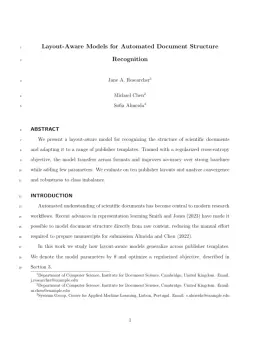
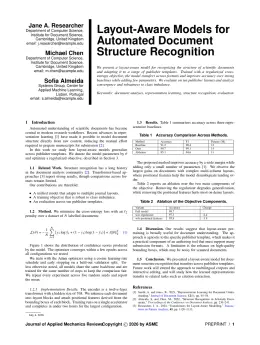
About the Journal of Computing in Civil Engineering format
Journal of Computing in Civil Engineering is a peer-reviewed journal published by ASCE, covering BIM and Construction Integration, Infrastructure Maintenance and Monitoring, 3D Surveying and Cultural Heritage. Over its lifetime it has published 2,403 papers, which have received 80,371 citations.
| Publisher | ASCE |
|---|
| Reference style | Author–year (ASCE) Author–year — (Smith, 2023) in the text
Smith, A., B. Jones, and C. Lee. (2023). "A representative article title." Journal of Computing in Civil Engineering, 12(3), 45–58.
Formats any DOI in Journal of Computing in Civil Engineering style. No sign-up.
|
|---|
| Publishes research in | BIM and Construction Integration Infrastructure Maintenance and Monitoring 3D Surveying and Cultural Heritage Structural Health Monitoring Techniques Construction Project Management and Performance |
|---|
| ISSN | 0887-3801 |
|---|
| Citation impact (2-yr) | 3.68 |
|---|
| h-index | 125 |
|---|
| i10-index | 1,452 |
|---|
| Top institutions publishing here | ORCID |
|---|
| You get | A submission-ready PDF and the editable LaTeX source — ready to submit. |
|---|
Papers published in Journal of Computing in Civil Engineering per year
Citation impact of Journal of Computing in Civil Engineering by publication year
Citations each year’s papers have accumulated so far — the most recent years are still building up.
Most-cited papers in Journal of Computing in Civil Engineering
Nonlinear Finite-Element Analysis Software Architecture Using Object Composition
Frank McKenna, Michael H. Scott, Gregory L. Fenves · 22 Dec 2009
Object composition offers significant advantages over class inheritance to develop a flexible software architecture for finite-element analysis. Using this approach, separate classes encapsulate fundamental finite-element algorithms and interoperate to form and solve the governing nonlinear equations. Communication between objects in the analysis composition is established using software design patterns. Root-finding algorithms, time integration methods, constraint…
Analysis of Edge-Detection Techniques for Crack Identification in Bridges
Ikhlas Abdel‐Qader, Osama Abudayyeh, Michael Kelly · 19 Sep 2003
Bridge monitoring and maintenance is an expensive yet essential task in maintaining a safe national transportation infrastructure. Traditional monitoring methods use visual inspection of bridges on a regular basis and often require inspectors to travel to the bridge of concern and determine the deterioration level of the bridge. Automation of this process may result in…
Neural Networks for River Flow Prediction
N. Karunanithi, William J. Grenney, Darrell Whitley et al. · 1 Apr 1994
The surface‐water hydrographs of rivers exhibit large variations due to many natural phenomena. One of the most commonly used approaches for interpolating and extending streamflow records is to fit observed data with an analytic power model. However, such analytic models may not adequately represent the flow process, because they are based on many simplifying assumptions…
Model Induction with Support Vector Machines: Introduction and Applications
Yonas Dibike, Slavco Velickov, Dimitri Solomatine et al. · 1 Jul 2001
The rapid advance in information processing systems in recent decades had directed engineering research towards the development of intelligent systems that can evolve models of natural phenomena automatically—“by themselves,” so to speak. In this respect, a wide range of machine learning techniques like decision trees, artificial neural networks (ANNs), Bayesian methods, fuzzy-rule based systems, and…
Neural Networks in Civil Engineering. I: Principles and Understanding
Ian Flood, Nabil Kartam · 1 Apr 1994
This is the first of two papers providing a discourse on the understanding, usage, and potential for application of artificial neural networks within civil engineering. The present paper develops an understanding of how these devices operate and explains the main issues concerning their use. A simple structural‐analysis problem is solved using the most popular form…