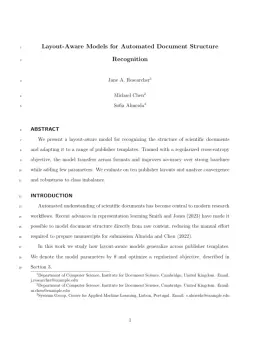
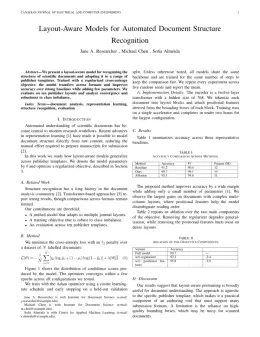
About the Journal of Aerospace Engineering format
Journal of Aerospace Engineering is a peer-reviewed journal published by ASCE, covering Computational Fluid Dynamics and Aerodynamics, Fluid Dynamics and Turbulent Flows, Planetary Science and Exploration. Over its lifetime it has published 2,568 papers, which have received 36,685 citations.
| Publisher | ASCE |
|---|
| Reference style | Author–year (ASCE) Author–year — (Smith, 2023) in the text
Smith, A., B. Jones, and C. Lee. (2023). "A representative article title." Journal of Aerospace Engineering, 12(3), 45–58.
Formats any DOI in Journal of Aerospace Engineering style. No sign-up.
|
|---|
| Publishes research in | Computational Fluid Dynamics and Aerodynamics Fluid Dynamics and Turbulent Flows Planetary Science and Exploration Composite Structure Analysis and Optimization Structural Analysis and Optimization |
|---|
| ISSN | 0893-1321 |
|---|
| Citation impact (2-yr) | 1.93 |
|---|
| h-index | 72 |
|---|
| i10-index | 1,017 |
|---|
| Top institutions publishing here | Nanjing University of Aeronautics and Astronautics |
|---|
| Journal website | catalog.hathitrust.org |
|---|
| You get | A submission-ready PDF and the editable LaTeX source — ready to submit. |
|---|
Papers published in Journal of Aerospace Engineering per year
Citation impact of Journal of Aerospace Engineering by publication year
Citations each year’s papers have accumulated so far — the most recent years are still building up.
Most-cited papers in Journal of Aerospace Engineering
Structural Health Monitoring by Piezo-Impedance Transducers. I: Modeling
Suresh Bhalla, Chee Kiong Soh · 1 Oct 2004
The electromechanical impedance (EMI) technique, which employs piezoelectric–ceramic lead–zirconate–titarate (PZT) patches as impedance transducers, has emerged as a powerful nondestructive evaluation technique during the last few years. This series of two papers present a new simplified methodology to diagnose structural damages by means of surface bonded piezo-impedance transducers. The first part introduces a new PZT–structure…
Calibration of Strapdown Magnetometers in Magnetic Field Domain
Demoz Gebre‐Egziabher, Gabriel Elkaim, J. David Powell et al. · 16 Mar 2006
This paper presents an algorithm for calibrating strapdown magnetometers in the magnetic field domain. In contrast to the traditional method of compass swinging, which computes a series of heading correction parameters and thus is limited to use with two-axis systems, this algorithm estimates magnetometer output errors directly. Therefore, this new algorithm can be used to…
Microwave Sintering of Lunar Soil: Properties, Theory, and Practice
L. A. Taylor, T. T. Meek · 16 Jun 2005
The unique properties of lunar regolith make for the extreme coupling of the soil to microwave radiation. Space weathering of lunar regolith has produced myriads of nanophase-sized Fe0 grains set within silicate glass, especially on the surfaces of grains, but also within the abundant agglutinitic glass of the soil. It is possible to melt lunar…
Augmented Lagrangian Genetic Algorithm for Structural Optimization
Hojjat Adeli, Nai‐Tsang Cheng · 1 Jan 1994
This paper presents a robust hybrid genetic algorithm for optimization of space structures using the augmented Lagrangian method. An attractive characteristic of genetic algorithm is that there is no line search and the problem of computation of derivatives of the objective function and constraints is avoided. This feature of genetic algorithms is maintained in the…
Measurement of Epoxy Resin Tension, Compression, and Shear Stress–Strain Curves over a Wide Range of Strain Rates Using Small Test Specimens
Justin D. Littell, Charles R. Ruggeri, Robert K. Goldberg et al. · 1 Jul 2008
The next generation aircraft engines are designed to be lighter and stronger than engines currently in use by using carbon fiber composites. In order to certify these engines, ballistic impact tests and computational analyses must be completed, which will simulate a “blade out” event in a catastrophic engine failure In order to computationally simulate the…