American Physical Society

Physiological Genomics Template

Write in a clean editor, then format for Physiological Genomics in one click — DocuGuru applies the official American Physical Society template with numbered references and exports a submission-ready PDF plus the editable LaTeX source. Free to start.

About the Physiological Genomics format

Physiological Genomics is a peer-reviewed journal published by American Physical Society, covering Adipose Tissue and Metabolism, Genetic Mapping and Diversity in Plants and Animals, MicroRNA in disease regulation.

PublisherAmerican Physical Society
Reference styleNumbered (APS)
Numbered — [1], [2] in the text
[1] A. Smith, B. Jones, and C. Lee, Physiological Genomics 12, 45 (2023).

Formats any DOI in Physiological Genomics style. No sign-up.

Publishes research inAdipose Tissue and Metabolism Genetic Mapping and Diversity in Plants and Animals MicroRNA in disease regulation Muscle Physiology and Disorders Cancer-related molecular mechanisms research
ISSN1094-8341
Citation impact (2-yr)2.13
h-index145
i10-index2,028
Total citations120,516
Top institutions publishing hereMedical College of Wisconsin
Journal websitephysiolgenomics.physiology.org
You getA submission-ready PDF and the editable LaTeX source — ready to submit.

Papers published in Physiological Genomics per year

72
2014
74
2015
94
2016
65
2017
98
2018
71
2019
51
2020
45
2021
46
2022
67
2023
56
2024
70
2025

Citation impact of Physiological Genomics by publication year

3.4K
2014
2.4K
2015
3.7K
2016
2.3K
2017
2.8K
2018
2K
2019
2.4K
2020
573
2021
431
2022
503
2023
209
2024
123
2025

Citations each year’s papers have accumulated so far — the most recent years are still building up.

Most-cited papers in Physiological Genomics

GAPDH as a housekeeping gene: analysis of GAPDH mRNA expression in a panel of 72 human tissues

Robert D. Barber, Dan W. Harmer, Robert A. Coleman et al. · 15 Mar 2005

Quantitative gene expression data are often normalized to the expression levels of control or so-called "housekeeping" genes. An inherent assumption in the use of housekeeping genes is that expression of the genes remains constant in the cells or tissues under investigation. Although exceptions to this assumption are well documented, housekeeping genes are of value in…

Life-long reduction in MnSOD activity results in increased DNA damage and higher incidence of cancer but does not accelerate aging

Holly Van Remmen, Yuji Ikeno, Michelle M. Hamilton et al. · 16 Dec 2003

Mice heterozygous for the Sod2 gene (Sod2+/- mice) have been used to study the phenotype of life-long reduced Mn-superoxide dismutase (MnSOD) activity. The Sod2+/- mice have reduced MnSOD activity (50%) in all tissues throughout life. The Sod2+/- mice have increased oxidative damage as demonstrated by significantly elevated levels of 8-oxo-2-deoxyguanosine (8oxodG) in nuclear DNA in…

Altered microRNA expression in human heart disease

Sadakatsu Ikeda, Sek Won Kong, Jun Lü et al. · 22 Aug 2007

MicroRNAs are recently discovered regulators of gene expression and are becoming increasingly recognized as important regulators of heart function. Genome-wide profiling of microRNAs in human heart failure has not been reported previously. We measured expression of 428 microRNAs in 67 human left ventricular samples belonging to control (n = 10), ischemic cardiomyopathy (ICM, n =…

Comparison of human adult and fetal expression and identification of 535 housekeeping/maintenance genes

Janet A. Warrington, Archana Nair, Mamatha Mahadevappa et al. · 27 Apr 2000

Warrington, Janet A., Archana Nair, Mamatha Mahadevappa, and Maya Tsyganskaya. Comparison of human adult and fetal expression and identification of 535 housekeeping/maintenance genes. Physiol Genomics 2: 143–147, 2000.—Gene expression levels of about 7,000 genes were measured in 11 different human adult and fetal tissues using high-density oligonucleotide arrays to identify genes involved in cellular maintenance.…

The COVID-19 pandemic: a global health crisis

Casey Pollard, Michael P. Morran, Andrea L. Nestor‐Kalinoski · 29 Sep 2020

The novel coronavirus SARS-CoV-2 was identified as the causative agent for a series of atypical respiratory diseases in the Hubei Province of Wuhan, China in December of 2019. The disease SARS-CoV-2, termed COVID-19, was officially declared a pandemic by the World Health Organization on March 11, 2020. SARS-CoV-2 contains a single-stranded, positive-sense RNA genome surrounded…

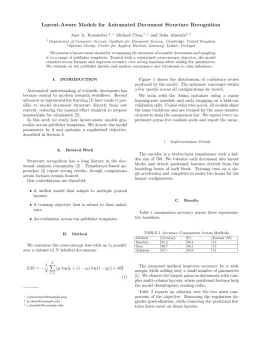
Physiological Genomics template — frequently asked questions

How do I write a paper in the Physiological Genomics format?
In DocuGuru you write your manuscript in a normal editor — no LaTeX setup required — and select the Physiological Genomics template. When you export, DocuGuru compiles the paper into the official American Physical Society format and hands you a submission-ready PDF along with the editable LaTeX source.
What reference style does Physiological Genomics use?
Physiological Genomics uses Numbered (APS) references, shown as numbered [1], [2] markers in the text. DocuGuru formats every in-text citation and the reference list in this exact style automatically. A reference appears like this: [1] A. Smith, B. Jones, and C. Lee, Physiological Genomics 12, 45 (2023).
Do I need to know LaTeX to submit to Physiological Genomics?
No. DocuGuru generates the revtex4-2 LaTeX class and compiles the PDF for you in the background, so you get a American Physical Society-ready Physiological Genomics document without writing any LaTeX. If you do want it, the LaTeX source is included in the export.
Can I import an existing draft into the Physiological Genomics template?
Yes. Paste or upload your current manuscript — Word, LaTeX, Markdown, or plain text — and DocuGuru reflows it into the Physiological Genomics format with correct headings, figures, tables, and numbered citations.
Who publishes Physiological Genomics?
Physiological Genomics is a physics journal published by American Physical Society. DocuGuru's Physiological Genomics template matches American Physical Society's official submission format.
Can I export a submission-ready Physiological Genomics PDF?
Yes — DocuGuru produces a PDF built with the official Physiological Genomics template (the revtex4-2 class) that is ready to submit to American Physical Society, together with the matching LaTeX source files.
How much does the Physiological Genomics template cost?
You can start writing in the Physiological Genomics template for free. Exporting the final submission-ready Physiological Genomics PDF and LaTeX source is part of DocuGuru's paid plans — see the app for current pricing.
Use the Physiological Genomics template