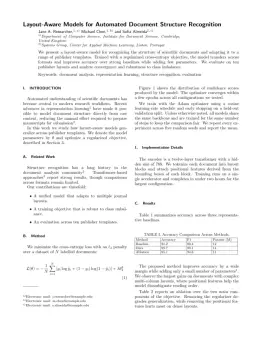
American Physical Society

Physical Review Physics Education Research Template

Write in a clean editor, then format for Physical Review Physics Education Research in one click — DocuGuru applies the official American Physical Society template with numbered references and exports a submission-ready PDF plus the editable LaTeX source. Free to start.

About the Physical Review Physics Education Research format

Physical Review Physics Education Research is a peer-reviewed journal published by American Physical Society, covering Science Education and Pedagogy, Educational Strategies and Epistemologies, Innovative Teaching Methods. Over its lifetime it has published 1,155 papers, which have received 22,343 citations.

PublisherAmerican Physical Society
Reference styleNumbered (APS)
Numbered — [1], [2] in the text
[1] A. Smith, B. Jones, and C. Lee, Physical Review Physics Education Research 12, 45 (2023).

Formats any DOI in Physical Review Physics Education Research style. No sign-up.

Publishes research inScience Education and Pedagogy Educational Strategies and Epistemologies Innovative Teaching Methods Career Development and Diversity Experimental Learning in Engineering
ISSN2469-9896
Citation impact (2-yr)3.56
h-index64
i10-index588
Article processing charge$2,000
Open accessYes — indexed in DOAJ
Top institutions publishing hereUniversity of Colorado Boulder
Journal websitejournals.aps.org
You getA submission-ready PDF and the editable LaTeX source — ready to submit.

Papers published in Physical Review Physics Education Research per year

96
2016
87
2017
89
2018
103
2019
117
2020
109
2021
104
2022
123
2023
117
2024
145
2025

Citation impact of Physical Review Physics Education Research by publication year

4.5K
2016
2.7K
2017
2.6K
2018
3.3K
2019
2.9K
2020
2K
2021
1.5K
2022
1.5K
2023
761
2024
334
2025

Citations each year’s papers have accumulated so far — the most recent years are still building up.

Most-cited papers in Physical Review Physics Education Research

Insights into teaching quantum mechanics in secondary and lower undergraduate education

K. Krijtenburg-Lewerissa, Hendrik Jan Pol, Alexander Brinkman et al. · 17 Feb 2017

This study presents a review of the current state of research on teaching quantum mechanics in secondary and lower undergraduate education. A conceptual approach to quantum mechanics is being implemented in more and more introductory physics courses around the world. Because of the differences between the conceptual nature of quantum mechanics and classical physics, research…

Beneath the numbers: A review of gender disparities in undergraduate education across science, technology, engineering, and math disciplines

Sarah L. Eddy, Sara E. Brownell · 1 Aug 2016

This paper is part of the Focused Collection on Gender in Physics.] This focused collection explores inequalities in the experiences of women in physics. Yet, it is important for researchers to also be aware of and draw insights from common patterns in the experiences of women across science, technology, engineering and mathematics (STEM) disciplines. Here,…

Female students with A’s have similar physics self-efficacy as male students with C’s in introductory courses: A cause for alarm?

Emily Marshman, Z. Yasemin Kalender, Timothy J. Nokes‐Malach et al. · 6 Dec 2018

Self-efficacy can affect performance, career goals, and persistence. Prior studies show that female students have lower self-efficacy than male students in various science, technology, engineering, and mathematics (STEM) domains, and the self-efficacy gap is a factor that contributes to the low representation of female students in STEM. However, prior research has not decoupled self-efficacy differences…

Fitting in or opting out: A review of key social-psychological factors influencing a sense of belonging for women in physics

Karyn L. Lewis, Jane G. Stout, Steven J. Pollock et al. · 1 Aug 2016

This paper is part of the Focused Collection on Gender in Physics.] A number of cultural, social, environmental, and biological factors have been suggested to explain women's relatively lower representation in physics and other science, technology, engineering, and math (STEM) fields. Given its persistence, the causes of gender disparities are likely to be complex and…

Gender discrimination in physics and astronomy: Graduate student experiences of sexism and gender microaggressions

Ramón S. Barthelemy, Melinda McCormick, Charles Henderson · 1 Aug 2016

This paper is part of the Focused Collection on Gender in Physics.] Sexism occurs when men are believed to be superior to women, and is thought to be one of the reasons for women's underrepresentation in physics and astronomy. The issue of sexism in physics and astronomy has not been thoroughly explored in the physics…

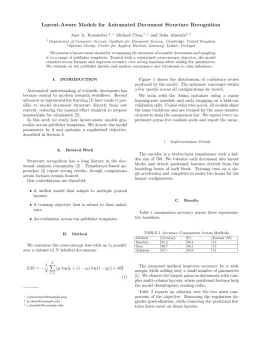
Physical Review Physics Education Research template — frequently asked questions

How do I write a paper in the Physical Review Physics Education Research format?
In DocuGuru you write your manuscript in a normal editor — no LaTeX setup required — and select the Physical Review Physics Education Research template. When you export, DocuGuru compiles the paper into the official American Physical Society format and hands you a submission-ready PDF along with the editable LaTeX source.
What reference style does Physical Review Physics Education Research use?
Physical Review Physics Education Research uses Numbered (APS) references, shown as numbered [1], [2] markers in the text. DocuGuru formats every in-text citation and the reference list in this exact style automatically. A reference appears like this: [1] A. Smith, B. Jones, and C. Lee, Physical Review Physics Education Research 12, 45 (2023).
Do I need to know LaTeX to submit to Physical Review Physics Education Research?
No. DocuGuru generates the revtex4-2 LaTeX class and compiles the PDF for you in the background, so you get a American Physical Society-ready Physical Review Physics Education Research document without writing any LaTeX. If you do want it, the LaTeX source is included in the export.
Can I import an existing draft into the Physical Review Physics Education Research template?
Yes. Paste or upload your current manuscript — Word, LaTeX, Markdown, or plain text — and DocuGuru reflows it into the Physical Review Physics Education Research format with correct headings, figures, tables, and numbered citations.
What is Physical Review Physics Education Research?
American Physical Society journal (REVTeX 4.2). It is a physics journal, published by American Physical Society.
Can I export a submission-ready Physical Review Physics Education Research PDF?
Yes — DocuGuru produces a PDF built with the official Physical Review Physics Education Research template (the revtex4-2 class) that is ready to submit to American Physical Society, together with the matching LaTeX source files.
How much does the Physical Review Physics Education Research template cost?
You can start writing in the Physical Review Physics Education Research template for free. Exporting the final submission-ready Physical Review Physics Education Research PDF and LaTeX source is part of DocuGuru's paid plans — see the app for current pricing.
Use the Physical Review Physics Education Research template