AIP Publishing

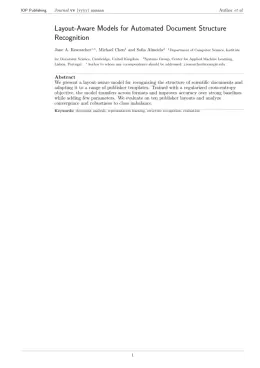
APL Quantum Template

Write in a clean editor, then format for APL Quantum in one click — DocuGuru applies the official AIP Publishing template with numbered references and exports a submission-ready PDF plus the editable LaTeX source. Free to start.

About the APL Quantum format

APL Quantum is a peer-reviewed journal published by AIP Publishing, covering Quantum Information and Cryptography, Quantum Computing Algorithms and Architecture, Quantum and electron transport phenomena. Over its lifetime it has published 233 papers, which have received 758 citations.

PublisherAIP Publishing
Reference styleNumbered (AIP)
Numbered — [1], [2] in the text
[1] A. Smith, B. Jones, and C. Lee, APL Quantum 12, 45 (2023).

Formats any DOI in APL Quantum style. No sign-up.

Publishes research inQuantum Information and Cryptography Quantum Computing Algorithms and Architecture Quantum and electron transport phenomena Quantum Mechanics and Applications Quantum optics and atomic interactions
ISSN2835-0103
Citation impact (2-yr)3.25
h-index11
i10-index14
Open accessYes — indexed in DOAJ
Top institutions publishing hereIndian Institute of Technology Delhi
You getA submission-ready PDF and the editable LaTeX source — ready to submit.

Papers published in APL Quantum per year

91
2024
105
2025
37
2026

Citation impact of APL Quantum by publication year

517
2024
230
2025
11
2026

Citations each year’s papers have accumulated so far — the most recent years are still building up.

Most-cited papers in APL Quantum

The ideal wavelength for daylight free-space quantum key distribution

Mostafa Abasifard, Chanaprom Cholsuk, Roberto G. Pousa et al. · 1 Mar 2024

Quantum key distribution (QKD) has matured in recent years from laboratory proof-of-principle demonstrations to commercially available systems. One of the major bottlenecks is the limited communication distance in fiber networks due to the exponential signal damping. To bridge intercontinental distances, low Earth orbit satellites transmitting quantum signals over the atmosphere can be used. These free-space…

Quantum metaphotonics: Recent advances and perspective

Jihua Zhang, Yuri S. Kivshar · 15 Apr 2024

Quantum metaphotonics has emerged as a cutting-edge subfield of meta-optics employing subwavelength resonators and their planar structures, such as metasurfaces, to generate, manipulate, and detect quantum states of light. It holds a great potential for the miniaturization of current bulky quantum optical elements by developing a design of on-chip quantum systems for various applications of…

Open hardware solutions in quantum technology

Nathan Shammah, Anurag Saha Roy, Carmen G. Almudéver et al. · 23 Feb 2024

Quantum technologies, such as communication, computing, and sensing, offer vast opportunities for advanced research and development. While an open-source ethos currently exists within some quantum technologies, especially in quantum computer programming, we argue that there are additional advantages in developing open quantum hardware (OQH). Open quantum hardware encompasses open-source software for the control of quantum…

A 4–8 GHz kinetic inductance traveling-wave parametric amplifier using four-wave mixing with near quantum-limited noise performance

Farzad Faramarzi, Ryan Stephenson, Sasha Sypkens et al. · 11 Jul 2024

Kinetic inductance traveling-wave parametric amplifiers (KI-TWPAs) have a wide instantaneous bandwidth with a near quantum-limited noise performance and a relatively high dynamic range. Because of this, they are suitable readout devices for cryogenic detectors and superconducting qubits and have a variety of applications in quantum sensing. This work discusses the design, fabrication, and performance of…

Quantum-enhanced super-sensitivity of Mach–Zehnder interferometer using squeezed Kerr state

Dhiraj Yadav, Gaurav Shukla, Priyanka Sharma et al. · 23 Feb 2024

We study the phase super–sensitivity of a Mach–Zehnder interferometer (MZI) with the squeezed Kerr state (SKS) and coherent state as the inputs. We discuss the lower bound in phase sensitivity by considering the quantum Fisher information and the corresponding quantum Cramér–Rao bound. With the help of single intensity detection, intensity difference detection, and homodyne detection…

APL Quantum template — frequently asked questions

How do I write a paper in the APL Quantum format?
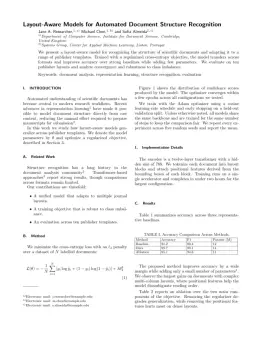
In DocuGuru you write your manuscript in a normal editor — no LaTeX setup required — and select the APL Quantum template. When you export, DocuGuru compiles the paper into the official AIP Publishing format and hands you a submission-ready PDF along with the editable LaTeX source.
What reference style does APL Quantum use?
APL Quantum uses Numbered (AIP) references, shown as numbered [1], [2] markers in the text. DocuGuru formats every in-text citation and the reference list in this exact style automatically. A reference appears like this: [1] A. Smith, B. Jones, and C. Lee, APL Quantum 12, 45 (2023).
Do I need to know LaTeX to submit to APL Quantum?
No. DocuGuru generates the revtex4-2 LaTeX class and compiles the PDF for you in the background, so you get a AIP Publishing-ready APL Quantum document without writing any LaTeX. If you do want it, the LaTeX source is included in the export.
Can I import an existing draft into the APL Quantum template?
Yes. Paste or upload your current manuscript — Word, LaTeX, Markdown, or plain text — and DocuGuru reflows it into the APL Quantum format with correct headings, figures, tables, and numbered citations.
What is APL Quantum?
AIP Publishing journal (REVTeX 4.2). It is a physics journal, published by AIP Publishing.
Can I export a submission-ready APL Quantum PDF?
Yes — DocuGuru produces a PDF built with the official APL Quantum template (the revtex4-2 class) that is ready to submit to AIP Publishing, together with the matching LaTeX source files.
How much does the APL Quantum template cost?
You can start writing in the APL Quantum template for free. Exporting the final submission-ready APL Quantum PDF and LaTeX source is part of DocuGuru's paid plans — see the app for current pricing.
Use the APL Quantum template