AGU (American Geophysical Union)

Global Biogeochemical Cycles Template

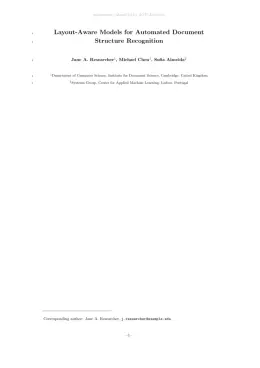
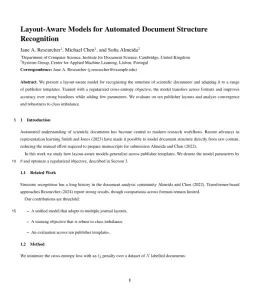
Write in a clean editor, then format for Global Biogeochemical Cycles in one click — DocuGuru applies the official AGU (American Geophysical Union) template with author–year references and exports a submission-ready PDF plus the editable LaTeX source. Free to start.

About the Global Biogeochemical Cycles format

Global Biogeochemical Cycles is a peer-reviewed journal published by AGU (American Geophysical Union), covering Marine and coastal ecosystems, Atmospheric and Environmental Gas Dynamics, Marine Biology and Ecology Research. Over its lifetime it has published 3,993 papers, which have received 410,766 citations.

PublisherAGU (American Geophysical Union)
Reference styleAuthor–year (APA)
Author–year — (Smith, 2023) in the text
Smith, A., Jones, B., & Lee, C. (2023). A representative article title. Global Biogeochemical Cycles, 12(3), 45–58.

Formats any DOI in Global Biogeochemical Cycles style. No sign-up.

Publishes research inMarine and coastal ecosystems Atmospheric and Environmental Gas Dynamics Marine Biology and Ecology Research Geology and Paleoclimatology Research Oceanographic and Atmospheric Processes
ISSN0886-6236
Citation impact (2-yr)4.27
h-index287
i10-index3,084
Article processing charge$3,700
Top institutions publishing hereCentre National de la Recherche Scientifique
Journal websiteagupubs.onlinelibrary.wiley.com
You getA submission-ready PDF and the editable LaTeX source — ready to submit.

Papers published in Global Biogeochemical Cycles per year

124
2014
150
2015
135
2016
126
2017
128
2018
121
2019
159
2020
155
2021
161
2022
147
2023
113
2024
194
2025

Citation impact of Global Biogeochemical Cycles by publication year

10K
2014
11.2K
2015
9.5K
2016
6.9K
2017
6.9K
2018
7.1K
2019
6.3K
2020
5.2K
2021
4.1K
2022
2.4K
2023
1.2K
2024
413
2025

Citations each year’s papers have accumulated so far — the most recent years are still building up.

Most-cited papers in Global Biogeochemical Cycles

Emission of trace gases and aerosols from biomass burning

Meinrat O. Andreae, P. Merlet · 1 Dec 2001

A large body of information on emissions from the various types of biomass burning has been accumulated over the past decade, to a large extent as a result of International Geosphere‐Biosphere Programme/International Global Atmospheric Chemistry research activities. Yet this information has not been readily accessible to the atmospheric chemistry community because it was scattered over…

4,348 citations Cite SaveGo to paper →
Terrestrial ecosystem production: A process model based on global satellite and surface data

Christopher Potter, James T. Randerson, Christopher B. Field et al. · 1 Dec 1993

This paper presents a modeling approach aimed at seasonal resolution of global climatic and edaphic controls on patterns of terrestrial ecosystem production and soil microbial respiration. We use satellite imagery (Advanced Very High Resolution Radiometer and International Satellite Cloud Climatology Project solar radiation), along with historical climate (monthly temperature and precipitation) and soil attributes (texture,…

3,063 citations Cite SaveGo to paper →
A dynamic global vegetation model for studies of the coupled atmosphere‐biosphere system

Gerhard Krinner, Nicolas Viovy, Nathalie de Noblet‐Ducoudré et al. · 25 Feb 2005

This work presents a new dynamic global vegetation model designed as an extension of an existing surface‐vegetation‐atmosphere transfer scheme which is included in a coupled ocean‐atmosphere general circulation model. The new dynamic global vegetation model simulates the principal processes of the continental biosphere influencing the global carbon cycle (photosynthesis, autotrophic and heterotrophic respiration of plants…

2,750 citations Cite SaveGo to paper →
Soil organic carbon pools in the northern circumpolar permafrost region

C. Tarnocai, Josep G. Canadell, Edward A. G. Schuur et al. · 1 Jun 2009

The Northern Circumpolar Soil Carbon Database was developed in order to determine carbon pools in soils of the northern circumpolar permafrost region. The area of all soils in the northern permafrost region is approximately 18,782 × 10 3 km 2 , or approximately 16% of the global soil area. In the northern permafrost region, organic…

2,667 citations Cite SaveGo to paper →
Estimating historical changes in global land cover: Croplands from 1700 to 1992

Navin Ramankutty, Jonathan A. Foley · 1 Dec 1999

Human activities over the last three centuries have significantly transformed the Earth's environment, primarily through the conversion of natural ecosystems to agriculture. This study presents a simple approach to derive geographically explicit changes in global croplands from 1700 to 1992. By calibrating a remotely sensed land cover classification data set against cropland inventory data, we…

2,137 citations Cite SaveGo to paper →

Global Biogeochemical Cycles template — frequently asked questions

How do I write a paper in the Global Biogeochemical Cycles format?
In DocuGuru you write your manuscript in a normal editor — no LaTeX setup required — and select the Global Biogeochemical Cycles template. When you export, DocuGuru compiles the paper into the official AGU (American Geophysical Union) format and hands you a submission-ready PDF along with the editable LaTeX source.
What reference style does Global Biogeochemical Cycles use?
Global Biogeochemical Cycles uses Author–year (APA) references, shown as author–year markers such as (Smith, 2023) in the text. DocuGuru formats every in-text citation and the reference list in this exact style automatically. A reference appears like this: Smith, A., Jones, B., & Lee, C. (2023). A representative article title. Global Biogeochemical Cycles, 12(3), 45–58.
Do I need to know LaTeX to submit to Global Biogeochemical Cycles?
No. DocuGuru generates the agujournal2025 LaTeX class and compiles the PDF for you in the background, so you get a AGU (American Geophysical Union)-ready Global Biogeochemical Cycles document without writing any LaTeX. If you do want it, the LaTeX source is included in the export.
Can I import an existing draft into the Global Biogeochemical Cycles template?
Yes. Paste or upload your current manuscript — Word, LaTeX, Markdown, or plain text — and DocuGuru reflows it into the Global Biogeochemical Cycles format with correct headings, figures, tables, and author–year citations.
What is Global Biogeochemical Cycles?
AGU journal. It is a earth and environmental sciences journal, published by AGU (American Geophysical Union).
Can I export a submission-ready Global Biogeochemical Cycles PDF?
Yes — DocuGuru produces a PDF built with the official Global Biogeochemical Cycles template (the agujournal2025 class) that is ready to submit to AGU (American Geophysical Union), together with the matching LaTeX source files.
How much does the Global Biogeochemical Cycles template cost?
You can start writing in the Global Biogeochemical Cycles template for free. Exporting the final submission-ready Global Biogeochemical Cycles PDF and LaTeX source is part of DocuGuru's paid plans — see the app for current pricing.
Use the Global Biogeochemical Cycles template