Copernicus Publications

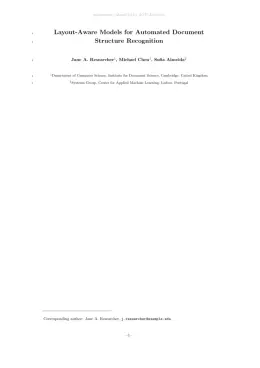
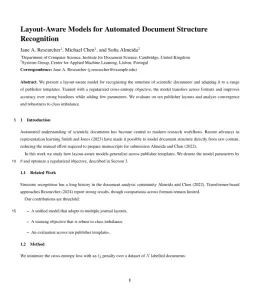
Earth System Science Data Template

Write in a clean editor, then format for Earth System Science Data in one click — DocuGuru applies the official Copernicus Publications template with author–year references and exports a submission-ready PDF plus the editable LaTeX source. Free to start.

About the Earth System Science Data format

Earth System Science Data is a peer-reviewed journal published by Copernicus Publications, covering Cryospheric studies and observations, Atmospheric and Environmental Gas Dynamics, Climate variability and models. Over its lifetime it has published 2,295 papers, which have received 138,772 citations.

PublisherCopernicus Publications
Reference styleAuthor–year (Copernicus)
Author–year — (Smith, 2023) in the text
Smith, A., Jones, B., and Lee, C.: A representative article title, Earth System Science Data, 12, 45–58, 2023.

Formats any DOI in Earth System Science Data style. No sign-up.

Publishes research inCryospheric studies and observations Atmospheric and Environmental Gas Dynamics Climate variability and models Climate change and permafrost Atmospheric chemistry and aerosols
ISSN1866-3508
Citation impact (2-yr)10.33
h-index168
i10-index1,450
Article processing charge$1,509
Open accessYes — indexed in DOAJ
Top institutions publishing hereCentre National de la Recherche Scientifique
Journal websitewww.earth-system-science-data.net
You getA submission-ready PDF and the editable LaTeX source — ready to submit.

Papers published in Earth System Science Data per year

27
2014
30
2015
43
2016
61
2017
128
2018
104
2019
193
2020
288
2021
269
2022
263
2023
259
2024
359
2025

Citation impact of Earth System Science Data by publication year

2.4K
2014
3K
2015
6.8K
2016
9.8K
2017
15.2K
2018
13.5K
2019
18.3K
2020
25.9K
2021
15.3K
2022
10.1K
2023
5.4K
2024
2.4K
2025

Citations each year’s papers have accumulated so far — the most recent years are still building up.

Most-cited papers in Earth System Science Data

ERA5-Land: a state-of-the-art global reanalysis dataset for land applications

Joaquín Muñoz‐Sabater, Emanuel Dutra, Anna Agustí‐Panareda et al. · 7 Sep 2021

Abstract. Framed within the Copernicus Climate Change Service (C3S) of the European Commission, the European Centre for Medium-Range Weather Forecasts (ECMWF) is producing an enhanced global dataset for the land component of the fifth generation of European ReAnalysis (ERA5), hereafter referred to as ERA5-Land. Once completed, the period covered will span from 1950 to the…

4,786 citations Cite SaveGo to paper →
The 30 m annual land cover dataset and its dynamics in China from 1990 to 2019

Jie Yang, Xin Huang · 11 Aug 2021

Abstract. Land cover (LC) determines the energy exchange, water and carbon cycle between Earth's spheres. Accurate LC information is a fundamental parameter for the environment and climate studies. Considering that the LC in China has been altered dramatically with the economic development in the past few decades, sequential and fine-scale LC monitoring is in urgent…

3,327 citations Cite SaveGo to paper →
Global Carbon Budget 2020

Pierre Friedlingstein, Michael O’Sullivan, Matthew W. Jones et al. · 10 Dec 2020

Abstract. Accurate assessment of anthropogenic carbon dioxide (CO2) emissions andtheir redistribution among the atmosphere, ocean, and terrestrial biospherein a changing climate – the “global carbon budget” – is important tobetter understand the global carbon cycle, support the development ofclimate policies, and project future climate change. Here we describe andsynthesize data sets and methodology to quantify…

2,549 citations Cite SaveGo to paper →
Global fire emissions estimates during 1997–2016

Guido R. van der Werf, James T. Randerson, Louis Giglio et al. · 12 Sep 2017

Abstract. Climate, land use, and other anthropogenic and natural drivers have the potential to influence fire dynamics in many regions. To develop a mechanistic understanding of the changing role of these drivers and their impact on atmospheric composition, long-term fire records are needed that fuse information from different satellite and in situ data streams. Here…

2,548 citations Cite SaveGo to paper →
Global Carbon Budget 2022

Pierre Friedlingstein, Michael O’Sullivan, Matthew W. Jones et al. · 8 Nov 2022

Abstract. Accurate assessment of anthropogenic carbon dioxide (CO2) emissions andtheir redistribution among the atmosphere, ocean, and terrestrial biospherein a changing climate is critical to better understand the global carboncycle, support the development of climate policies, and project futureclimate change. Here we describe and synthesize data sets and methodologies toquantify the five major components of the…

1,836 citations Cite SaveGo to paper →

Earth System Science Data template — frequently asked questions

How do I write a paper in the Earth System Science Data format?
In DocuGuru you write your manuscript in a normal editor — no LaTeX setup required — and select the Earth System Science Data template. When you export, DocuGuru compiles the paper into the official Copernicus Publications format and hands you a submission-ready PDF along with the editable LaTeX source.
What reference style does Earth System Science Data use?
Earth System Science Data uses Author–year (Copernicus) references, shown as author–year markers such as (Smith, 2023) in the text. DocuGuru formats every in-text citation and the reference list in this exact style automatically. A reference appears like this: Smith, A., Jones, B., and Lee, C.: A representative article title, Earth System Science Data, 12, 45–58, 2023.
Do I need to know LaTeX to submit to Earth System Science Data?
No. DocuGuru generates the copernicus LaTeX class and compiles the PDF for you in the background, so you get a Copernicus Publications-ready Earth System Science Data document without writing any LaTeX. If you do want it, the LaTeX source is included in the export.
Can I import an existing draft into the Earth System Science Data template?
Yes. Paste or upload your current manuscript — Word, LaTeX, Markdown, or plain text — and DocuGuru reflows it into the Earth System Science Data format with correct headings, figures, tables, and author–year citations.
What is Earth System Science Data?
Copernicus Publications journal. It is a earth and environmental sciences journal, published by Copernicus Publications.
Can I export a submission-ready Earth System Science Data PDF?
Yes — DocuGuru produces a PDF built with the official Earth System Science Data template (the copernicus class) that is ready to submit to Copernicus Publications, together with the matching LaTeX source files.
How much does the Earth System Science Data template cost?
You can start writing in the Earth System Science Data template for free. Exporting the final submission-ready Earth System Science Data PDF and LaTeX source is part of DocuGuru's paid plans — see the app for current pricing.
Use the Earth System Science Data template