AGU (American Geophysical Union)

Tectonics Template

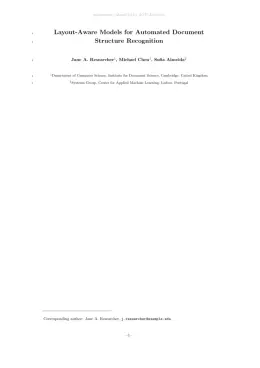
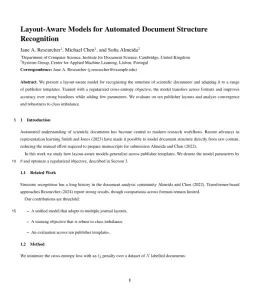
Write in a clean editor, then format for Tectonics in one click — DocuGuru applies the official AGU (American Geophysical Union) template with author–year references and exports a submission-ready PDF plus the editable LaTeX source. Free to start.

About the Tectonics format

Tectonics is a peer-reviewed journal published by AGU (American Geophysical Union), covering Geological and Geochemical Analysis, earthquake and tectonic studies, High-pressure geophysics and materials. Over its lifetime it has published 5,026 papers, which have received 293,391 citations.

PublisherAGU (American Geophysical Union)
Reference styleAuthor–year (APA)
Author–year — (Smith, 2023) in the text
Smith, A., Jones, B., & Lee, C. (2023). A representative article title. Tectonics, 12(3), 45–58.

Formats any DOI in Tectonics style. No sign-up.

Publishes research inGeological and Geochemical Analysis earthquake and tectonic studies High-pressure geophysics and materials Geology and Paleoclimatology Research Geological and Geophysical Studies Worldwide
ISSN0278-7407
Citation impact (2-yr)2.69
h-index217
i10-index3,694
Article processing charge$3,700
Top institutions publishing hereCentre National de la Recherche Scientifique
Journal websiteagupubs.onlinelibrary.wiley.com
You getA submission-ready PDF and the editable LaTeX source — ready to submit.

Papers published in Tectonics per year

141
2014
148
2015
159
2016
184
2017
242
2018
221
2019
246
2020
204
2021
178
2022
155
2023
156
2024
203
2025

Citation impact of Tectonics by publication year

8.8K
2014
7.1K
2015
7.1K
2016
7.4K
2017
8.3K
2018
7.8K
2019
6.1K
2020
3.4K
2021
2.3K
2022
1.5K
2023
751
2024
402
2025

Citations each year’s papers have accumulated so far — the most recent years are still building up.

Most-cited papers in Tectonics

Accretion leading to collision and the Permian Solonker suture, Inner Mongolia, China: Termination of the central Asian orogenic belt

Wenjiao Xiao, Brian F. Windley, Jie Hao et al. · 1 Dec 2003

The Solonker suture records the termination of the central Asian Orogenic Belt (CAOB). However, tectonic development of the Solonker suture is poorly understood. We report new field data for the Ondor Sum melange in the Ulan valley, and present a new evaluation of the orogenic belt extending from the southern Mongolia cratonic boundary to the…

2,056 citations Cite SaveGo to paper →
Extension in the Tyrrhenian Sea and shortening in the Apennines as result of arc migration driven by sinking of the lithosphere

Alberto Malinverno, William B. F. Ryan · 1 Apr 1986

Previously proposed models for the evolution of the Tyrrhenian basin‐Apenninic arc system do not seem to satisfactorily explain the dynamic relationship between extension in the Tyrrhenian and compression in the Apennines. The most important regional plate kinematic constraints that any model has to satisfy in this case are: (1) the timing of extension in the…

1,867 citations Cite SaveGo to paper →
Extensional collapse of orogens

John Dewey · 1 Dec 1988

Lithospheric extension is sited, preferentially, along orogenic belts because they have a thicker continental crust, contain structural inhomogeneities, and suffer extensional orogenic collapse caused by body forces resulting from isostatically compensated elevation and sharp elevation gradients. Collapse occurs especially where rapid advective thinning of the shortened thermal boundary conduction layer occurs beneath an orogen and…

1,509 citations Cite SaveGo to paper →
Mediterranean extension and the Africa‐Eurasia collision

Laurent Jolivet, Claudio Faccenna · 1 Dec 2000

A number of tectonic events occurred contemporaneously in the Mediterranean region and the Middle East 30–25 Myr ago. These events are contemporaneous to or immediately followed a strong reduction of the northward absolute motion of Africa. Geological observations in the Neogene extensional basins of the Mediterranean region reveal that extension started synchronously from west to…

1,082 citations Cite SaveGo to paper →
Strike‐slip fault geometry in Turkey and its influence on earthquake activity

Aykut Barka, Katharine Kadinsky‐Cade · 1 Jun 1988

The geometry of Turkish strike‐slip faults has been reviewed and described. From this data set it appears that fault geometry (the distribution of discontinuities such as bends and stepovers along the main fault trace) plays an important role in controlling the location of large earthquake rupture segments along the fault zones. Large earthquake ruptures generally…

1,072 citations Cite SaveGo to paper →

Tectonics template — frequently asked questions

How do I write a paper in the Tectonics format?
In DocuGuru you write your manuscript in a normal editor — no LaTeX setup required — and select the Tectonics template. When you export, DocuGuru compiles the paper into the official AGU (American Geophysical Union) format and hands you a submission-ready PDF along with the editable LaTeX source.
What reference style does Tectonics use?
Tectonics uses Author–year (APA) references, shown as author–year markers such as (Smith, 2023) in the text. DocuGuru formats every in-text citation and the reference list in this exact style automatically. A reference appears like this: Smith, A., Jones, B., & Lee, C. (2023). A representative article title. Tectonics, 12(3), 45–58.
Do I need to know LaTeX to submit to Tectonics?
No. DocuGuru generates the agujournal2025 LaTeX class and compiles the PDF for you in the background, so you get a AGU (American Geophysical Union)-ready Tectonics document without writing any LaTeX. If you do want it, the LaTeX source is included in the export.
Can I import an existing draft into the Tectonics template?
Yes. Paste or upload your current manuscript — Word, LaTeX, Markdown, or plain text — and DocuGuru reflows it into the Tectonics format with correct headings, figures, tables, and author–year citations.
What is Tectonics?
AGU journal. It is a earth and environmental sciences journal, published by AGU (American Geophysical Union).
Can I export a submission-ready Tectonics PDF?
Yes — DocuGuru produces a PDF built with the official Tectonics template (the agujournal2025 class) that is ready to submit to AGU (American Geophysical Union), together with the matching LaTeX source files.
How much does the Tectonics template cost?
You can start writing in the Tectonics template for free. Exporting the final submission-ready Tectonics PDF and LaTeX source is part of DocuGuru's paid plans — see the app for current pricing.
Use the Tectonics template