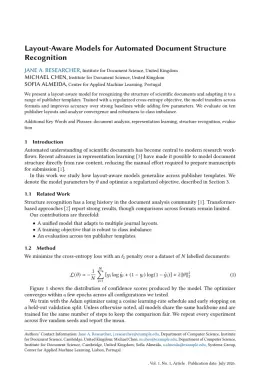
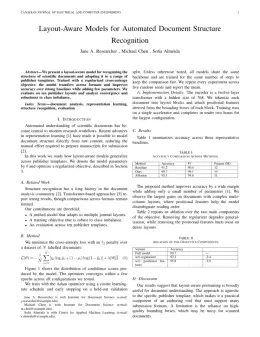
About the ACM Transactions on Computing Education format
ACM Transactions on Computing Education is a peer-reviewed journal published by ACM, covering Teaching and Learning Programming, Online Learning and Analytics, Gender and Technology in Education. Over its lifetime it has published 664 papers, which have received 20,263 citations.
| Publisher | ACM |
|---|
| Reference style | Numbered (ACM) Numbered — [1], [2] in the text
[1] Ada Smith, Ben Jones, and Cara Lee. 2023. A representative article title. ACM Transactions on Computing Education 12, 3, Article 45 (2023).
Formats any DOI in ACM Transactions on Computing Education style. No sign-up.
|
|---|
| Publishes research in | Teaching and Learning Programming Online Learning and Analytics Gender and Technology in Education Innovative Teaching and Learning Methods Educational Games and Gamification |
|---|
| ISSN | 1946-6226 |
|---|
| Citation impact (2-yr) | 3.14 |
|---|
| h-index | 71 |
|---|
| i10-index | 342 |
|---|
| Top institutions publishing here | University of Washington |
|---|
| You get | A submission-ready PDF and the editable LaTeX source — ready to submit. |
|---|
Papers published in ACM Transactions on Computing Education per year
Citation impact of ACM Transactions on Computing Education by publication year
Citations each year’s papers have accumulated so far — the most recent years are still building up.
Most-cited papers in ACM Transactions on Computing Education
The Scratch Programming Language and Environment
John Maloney, Mitchel Resnick, Natalie Rusk et al. · 1 Nov 2010
Scratch is a visual programming environment that allows users (primarily ages 8 to 16) to learn computer programming while working on personally meaningful projects such as animated stories and games. A key design goal of Scratch is to support self-directed learning through tinkering and collaboration with peers. This article explores how the Scratch programming language…
Computational Thinking in Elementary and Secondary Teacher Education
Aman Yadav, Chris Mayfield, Ninger Zhou et al. · 1 Mar 2014
Computational thinking (CT) is broadly defined as the mental activity for abstracting problems and formulating solutions that can be automated. In an increasingly information-based society, CT is becoming an essential skill for everyone. To ensure that students develop this ability at the K-12 level, it is important to provide teachers with an adequate knowledge about…
Students’ Misconceptions and Other Difficulties in Introductory Programming
Yizhou Qian, James Daniel Lehman · 27 Oct 2017
Efforts to improve computer science education are underway, and teachers of computer science are challenged in introductory programming courses to help learners develop their understanding of programming and computer science. Identifying and addressing students’ misconceptions is a key part of a computer science teacher's competence. However, relevant research on this topic is not as fully…
A Review of Generic Program Visualization Systems for Introductory Programming Education
Juha Sorva, Ville Karavirta, Lauri Malmi · 1 Nov 2013
This article is a survey of program visualization systems intended for teaching beginners about the runtime behavior of computer programs. Our focus is on generic systems that are capable of illustrating many kinds of programs and behaviors. We inclusively describe such systems from the last three decades and review findings from their empirical evaluations. A…
Comparing Block-Based and Text-Based Programming in High School Computer Science Classrooms
David Weintrop, Uri Wilensky · 27 Oct 2017
The number of students taking high school computer science classes is growing. Increasingly, these students are learning with graphical, block-based programming environments either in place of or prior to traditional text-based programming languages. Despite their growing use in formal settings, relatively little empirical work has been done to understand the impacts of using block-based programming…