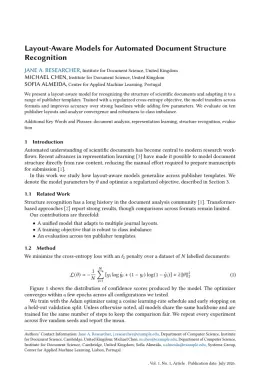
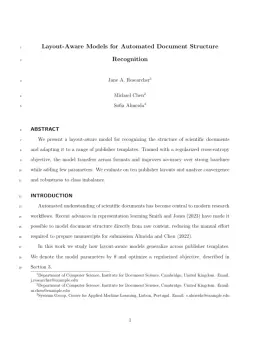
About the ACM Transactions on Quantum Computing format
ACM Transactions on Quantum Computing is a peer-reviewed journal published by ACM, covering Quantum Computing Algorithms and Architecture, Quantum Information and Cryptography, Quantum Mechanics and Applications. Over its lifetime it has published 169 papers, which have received 2,579 citations.
| Publisher | ACM |
|---|
| Reference style | Numbered (ACM) Numbered — [1], [2] in the text
[1] Ada Smith, Ben Jones, and Cara Lee. 2023. A representative article title. ACM Transactions on Quantum Computing 12, 3, Article 45 (2023).
Formats any DOI in ACM Transactions on Quantum Computing style. No sign-up.
|
|---|
| Publishes research in | Quantum Computing Algorithms and Architecture Quantum Information and Cryptography Quantum Mechanics and Applications Quantum-Dot Cellular Automata Parallel Computing and Optimization Techniques |
|---|
| ISSN | 2643-6809 |
|---|
| Citation impact (2-yr) | 4.86 |
|---|
| h-index | 26 |
|---|
| i10-index | 65 |
|---|
| Top institutions publishing here | Oak Ridge National Laboratory |
|---|
| You get | A submission-ready PDF and the editable LaTeX source — ready to submit. |
|---|
Papers published in ACM Transactions on Quantum Computing per year
Citation impact of ACM Transactions on Quantum Computing by publication year
Citations each year’s papers have accumulated so far — the most recent years are still building up.
Most-cited papers in ACM Transactions on Quantum Computing
QASMBench: A Low-Level Quantum Benchmark Suite for NISQ Evaluation and Simulation
Ang Li, Samuel Stein, Sriram Krishnamoorthy et al. · 30 Jul 2022
The rapid development of quantum computing (QC) in the NISQ era urgently demands a low-level benchmark suite and insightful evaluation metrics for characterizing the properties of prototype NISQ devices, the efficiency of QC programming compilers, schedulers and assemblers, and the capability of quantum system simulators in a classical computer. In this work, we fill this…
Quantum Algorithm Implementations for Beginners
J. Abhijith, Adetokunbo Adedoyin, John Ambrosiano et al. · 28 Mar 2022
As quantum computers become available to the general public, the need has arisen to train a cohort of quantum programmers, many of whom have been developing classical computer programs for most of their careers. While currently available quantum computers have less than 100 qubits, quantum computing hardware is widely expected to grow in terms of…
Efficient Estimation of Pauli Channels
Steven T. Flammia, Joel J. Wallman · 7 Dec 2020
Pauli channels are ubiquitous in quantum information, both as a dominant noise source in many computing architectures and as a practical model for analyzing error correction and fault tolerance. Here, we prove several results on efficiently learning Pauli channels and more generally the Pauli projection of a quantum channel. We first derive a procedure for…
A Quantum Interior Point Method for LPs and SDPs
Iordanis Kerenidis, Anupam Prakash · 2 Oct 2020
We present a quantum interior point method (IPM) for semi-definite programs that has a worst-case running time of Õ( n 2.5 / ξ 2 μ κ 3 log(1/ϵ)). The algorithm outputs a pair of matrices ( S,Y ) that have objective value within ϵ of the optimal and satisfy the constraints approximately to error xi.…
Parameter Transfer for Quantum Approximate Optimization of Weighted MaxCut
Ruslan Shaydulin, Phillip C. Lotshaw, Jeffrey Larson et al. · 17 Feb 2023
Finding high-quality parameters is a central obstacle to using the quantum approximate optimization algorithm (QAOA). Previous work partially addresses this issue for QAOA on unweighted MaxCut problems by leveraging similarities in the objective landscape among different problem instances. However, we show that the more general weighted MaxCut problem has significantly modified objective landscapes, with a…