ACM

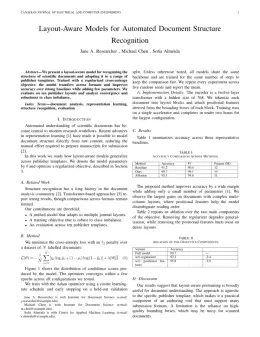
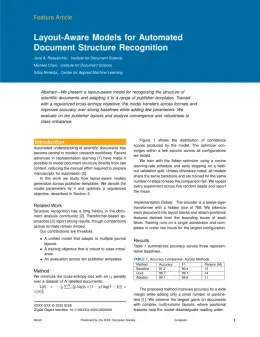
ACM Transactions on Accessible Computing Template

Write in a clean editor, then format for ACM Transactions on Accessible Computing in one click — DocuGuru applies the official ACM template with numbered references and exports a submission-ready PDF plus the editable LaTeX source. Free to start.

About the ACM Transactions on Accessible Computing format

ACM Transactions on Accessible Computing is a peer-reviewed journal published by ACM, covering Tactile and Sensory Interactions, Digital Accessibility for Disabilities, Assistive Technology in Communication and Mobility. Over its lifetime it has published 400 papers, which have received 9,560 citations.

PublisherACM
Reference styleNumbered (ACM)
Numbered — [1], [2] in the text
[1] Ada Smith, Ben Jones, and Cara Lee. 2023. A representative article title. ACM Transactions on Accessible Computing 12, 3, Article 45 (2023).

Formats any DOI in ACM Transactions on Accessible Computing style. No sign-up.

Publishes research inTactile and Sensory Interactions Digital Accessibility for Disabilities Assistive Technology in Communication and Mobility Technology Use by Older Adults Interactive and Immersive Displays
ISSN1936-7228
Citation impact (2-yr)4.31
h-index52
i10-index235
Top institutions publishing hereUniversity of Washington
You getA submission-ready PDF and the editable LaTeX source — ready to submit.

Papers published in ACM Transactions on Accessible Computing per year

9
2014
35
2015
24
2016
31
2017
27
2018
25
2019
21
2020
25
2021
46
2022
17
2023
22
2024
20
2025

Citation impact of ACM Transactions on Accessible Computing by publication year

205
2014
933
2015
898
2016
840
2017
619
2018
610
2019
549
2020
571
2021
907
2022
165
2023
153
2024
70
2025

Citations each year’s papers have accumulated so far — the most recent years are still building up.

Most-cited papers in ACM Transactions on Accessible Computing

Ability-Based Design

Jacob O. Wobbrock, Shaun K. Kane, Krzysztof Z. Gajos et al. · 1 Apr 2011

Current approaches to accessible computing share a common goal of making technology accessible to users with disabilities. Perhaps because of this goal, they may also share a tendency to centralize disability rather than ability. We present a refinement to these approaches called ability-based design that consists of focusing on ability throughout the design process in…

Self-Conscious or Self-Confident? A Diary Study Conceptualizing the Social Accessibility of Assistive Technology

Kristen Shinohara, Jacob O. Wobbrock · 13 Jan 2016

With the recent influx of smartphones, tablets, and wearables such as watches and glasses, personal interactive device use is increasingly visible and commonplace in public and social spaces. Assistive Technologies (ATs) used by people with disabilities are observable to others and, as a result, can affect how AT users are perceived. This raises the possibility…

How Older Adults Learn to Use Mobile Devices

Rock Leung, Charlotte Tang, Shathel Haddad et al. · 1 Dec 2012

Mobile computing devices, such as smart phones, offer benefits that may be especially valuable to older adults (age 65+). Yet, older adults have been shown to have difficulty learning to use these devices. In the research presented in this article, we sought to better understand how older adults learn to use mobile devices, their preferences…

The Current Status of Accessibility in Mobile Apps

Shunguo Yan, P. G. Ramachandran · 11 Feb 2019

This study evaluated the status of accessibility in mobile apps by investigating the graphical user interface (GUI) structures and conformance to accessibility guidelines of 479 Android apps in 23 business categories from Google Play. An automated tool, IBM Mobile Accessibility Checker (MAC), was used to identify the accessibility issues, which were categorized as a violation…

Investigating the Implications of 3D Printing in Special Education

Erin Buehler, Niara Comrie, Megan Hofmann et al. · 18 Mar 2016

Consumer-grade digital fabrication such as 3D printing is on the rise, and we believe it can be leveraged to great benefit in special education. Although 3D printing is infiltrating mainstream education, little research has explored 3D printing in the context of students with special support needs. We describe our studies on this topic and the…

ACM Transactions on Accessible Computing template — frequently asked questions

How do I write a paper in the ACM Transactions on Accessible Computing format?
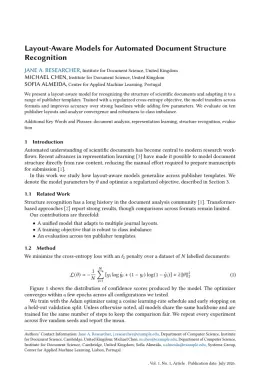
In DocuGuru you write your manuscript in a normal editor — no LaTeX setup required — and select the ACM Transactions on Accessible Computing template. When you export, DocuGuru compiles the paper into the official ACM format and hands you a submission-ready PDF along with the editable LaTeX source.
What reference style does ACM Transactions on Accessible Computing use?
ACM Transactions on Accessible Computing uses Numbered (ACM) references, shown as numbered [1], [2] markers in the text. DocuGuru formats every in-text citation and the reference list in this exact style automatically. A reference appears like this: [1] Ada Smith, Ben Jones, and Cara Lee. 2023. A representative article title. ACM Transactions on Accessible Computing 12, 3, Article 45 (2023).
Do I need to know LaTeX to submit to ACM Transactions on Accessible Computing?
No. DocuGuru generates the acmart LaTeX class and compiles the PDF for you in the background, so you get a ACM-ready ACM Transactions on Accessible Computing document without writing any LaTeX. If you do want it, the LaTeX source is included in the export.
Can I import an existing draft into the ACM Transactions on Accessible Computing template?
Yes. Paste or upload your current manuscript — Word, LaTeX, Markdown, or plain text — and DocuGuru reflows it into the ACM Transactions on Accessible Computing format with correct headings, figures, tables, and numbered citations.
What is ACM Transactions on Accessible Computing?
ACM journal. It is a engineering and computer science journal, published by ACM.
Can I export a submission-ready ACM Transactions on Accessible Computing PDF?
Yes — DocuGuru produces a PDF built with the official ACM Transactions on Accessible Computing template (the acmart class) that is ready to submit to ACM, together with the matching LaTeX source files.
How much does the ACM Transactions on Accessible Computing template cost?
You can start writing in the ACM Transactions on Accessible Computing template for free. Exporting the final submission-ready ACM Transactions on Accessible Computing PDF and LaTeX source is part of DocuGuru's paid plans — see the app for current pricing.
Use the ACM Transactions on Accessible Computing template