ACM

Proceedings of the ACM on Software Engineering Template

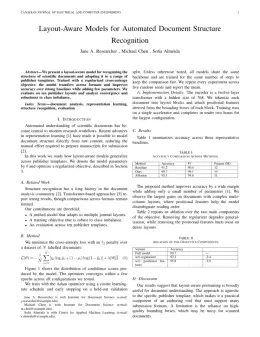
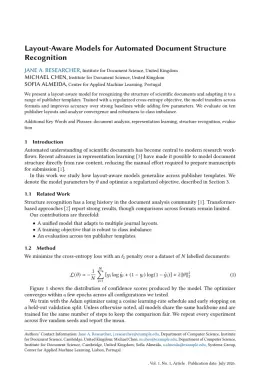
Write in a clean editor, then format for Proceedings of the ACM on Software Engineering in one click — DocuGuru applies the official ACM template with numbered references and exports a submission-ready PDF plus the editable LaTeX source. Free to start.

About the Proceedings of the ACM on Software Engineering format

Proceedings of the ACM on Software Engineering is a peer-reviewed journal published by ACM, covering Software Engineering Research, Software Testing and Debugging Techniques, Advanced Malware Detection Techniques. Over its lifetime it has published 574 papers, which have received 2,756 citations.

PublisherACM
Reference styleNumbered (ACM)
Numbered — [1], [2] in the text
[1] Ada Smith, Ben Jones, and Cara Lee. 2023. A representative article title. Proceedings of the ACM on Software Engineering 12, 3, Article 45 (2023).

Formats any DOI in Proceedings of the ACM on Software Engineering style. No sign-up.

Publishes research inSoftware Engineering Research Software Testing and Debugging Techniques Advanced Malware Detection Techniques Software System Performance and Reliability Software Reliability and Analysis Research
Papers published last year≈242
ISSN2994-970X
Citation impact (2-yr)4.8
h-index23
i10-index68
Top institutions publishing hereZhejiang University
Journal websitedl.acm.org
You getA submission-ready PDF and the editable LaTeX source — ready to submit.

Most-cited papers in Proceedings of the ACM on Software Engineering

Evaluating and Improving ChatGPT for Unit Test Generation

Zhiqiang Yuan, Mingwei Liu, Shiji Ding et al. · 12 Jul 2024

Unit testing plays an essential role in detecting bugs in functionally-discrete program units ( e.g. , methods). Manually writing high-quality unit tests is time-consuming and laborious. Although the traditional techniques are able to generate tests with reasonable coverage, they are shown to exhibit low readability and still cannot be directly adopted by developers in practice.…

LILAC: Log Parsing using LLMs with Adaptive Parsing Cache

Zhihan Jiang, Jinyang Liu, Zhuangbin Chen et al. · 12 Jul 2024

Log parsing transforms log messages into structured formats, serving as the prerequisite step for various log analysis tasks. Although a variety of log parsing approaches have been proposed, their performance on complicated log data remains compromised due to the use of human-crafted rules or learning-based models with limited training data. The recent emergence of powerful…

A Quantitative and Qualitative Evaluation of LLM-Based Explainable Fault Localization

Sungmin Kang, Gabin An, Shin Yoo · 12 Jul 2024

Fault Localization (FL), in which a developer seeks to identify which part of the code is malfunctioning and needs to be fixed, is a recurring challenge in debugging. To reduce developer burden, many automated FL techniques have been proposed. However, prior work has noted that existing techniques fail to provide rationales for the suggested locations,…

Exploring and Unleashing the Power of Large Language Models in Automated Code Translation

Zhen Yang, Fang Liu, Zhongxing Yu et al. · 12 Jul 2024

Code translation tools, namely transpilers, are developed for automatic source-to-source translation. Latest learning-based transpilers have shown impressive enhancement against rule-based counterparts in both translation accuracy and readability, owing to their task-specific pre-training on extensive monolingual corpora. Nevertheless, their current performance still remains unsatisfactory for practical deployment, and the associated training resources are also prohibitively expensive.…

Code-Aware Prompting: A Study of Coverage-Guided Test Generation in Regression Setting using LLM

Gabriel Ryan, Siddhartha Jain, Mingyue Shang et al. · 12 Jul 2024

Testing plays a pivotal role in ensuring software quality, yet conventional Search Based Software Testing (SBST) methods often struggle with complex software units, achieving suboptimal test coverage. Recent work using large language models (LLMs) for test generation have focused on improving generation quality through optimizing the test generation context and correcting errors in model outputs,…

Proceedings of the ACM on Software Engineering template — frequently asked questions

How do I write a paper in the Proceedings of the ACM on Software Engineering format?
In DocuGuru you write your manuscript in a normal editor — no LaTeX setup required — and select the Proceedings of the ACM on Software Engineering template. When you export, DocuGuru compiles the paper into the official ACM format and hands you a submission-ready PDF along with the editable LaTeX source.
What reference style does Proceedings of the ACM on Software Engineering use?
Proceedings of the ACM on Software Engineering uses Numbered (ACM) references, shown as numbered [1], [2] markers in the text. DocuGuru formats every in-text citation and the reference list in this exact style automatically. A reference appears like this: [1] Ada Smith, Ben Jones, and Cara Lee. 2023. A representative article title. Proceedings of the ACM on Software Engineering 12, 3, Article 45 (2023).
Do I need to know LaTeX to submit to Proceedings of the ACM on Software Engineering?
No. DocuGuru generates the acmart LaTeX class and compiles the PDF for you in the background, so you get a ACM-ready Proceedings of the ACM on Software Engineering document without writing any LaTeX. If you do want it, the LaTeX source is included in the export.
Can I import an existing draft into the Proceedings of the ACM on Software Engineering template?
Yes. Paste or upload your current manuscript — Word, LaTeX, Markdown, or plain text — and DocuGuru reflows it into the Proceedings of the ACM on Software Engineering format with correct headings, figures, tables, and numbered citations.
What is Proceedings of the ACM on Software Engineering?
ACM journal. It is a engineering and computer science journal, published by ACM.
Can I export a submission-ready Proceedings of the ACM on Software Engineering PDF?
Yes — DocuGuru produces a PDF built with the official Proceedings of the ACM on Software Engineering template (the acmart class) that is ready to submit to ACM, together with the matching LaTeX source files.
How much does the Proceedings of the ACM on Software Engineering template cost?
You can start writing in the Proceedings of the ACM on Software Engineering template for free. Exporting the final submission-ready Proceedings of the ACM on Software Engineering PDF and LaTeX source is part of DocuGuru's paid plans — see the app for current pricing.
Use the Proceedings of the ACM on Software Engineering template